How to Choose the Right Bottle Color


Bottle color is not just a branding decision. It affects UV protection, recyclability, PCR availability, consumer perception, and regulatory compliance. A clear PET bottle and an amber PET bottle are the same resin but behave completely differently on shelf, in the recycling stream, and under SB 54 requirements.
This guide covers every standard bottle color, what it does and does not protect against, which materials it works in, and what tradeoffs you accept when you choose it. If you source packaging for beauty, wellness, supplements, or household products, this is the reference.
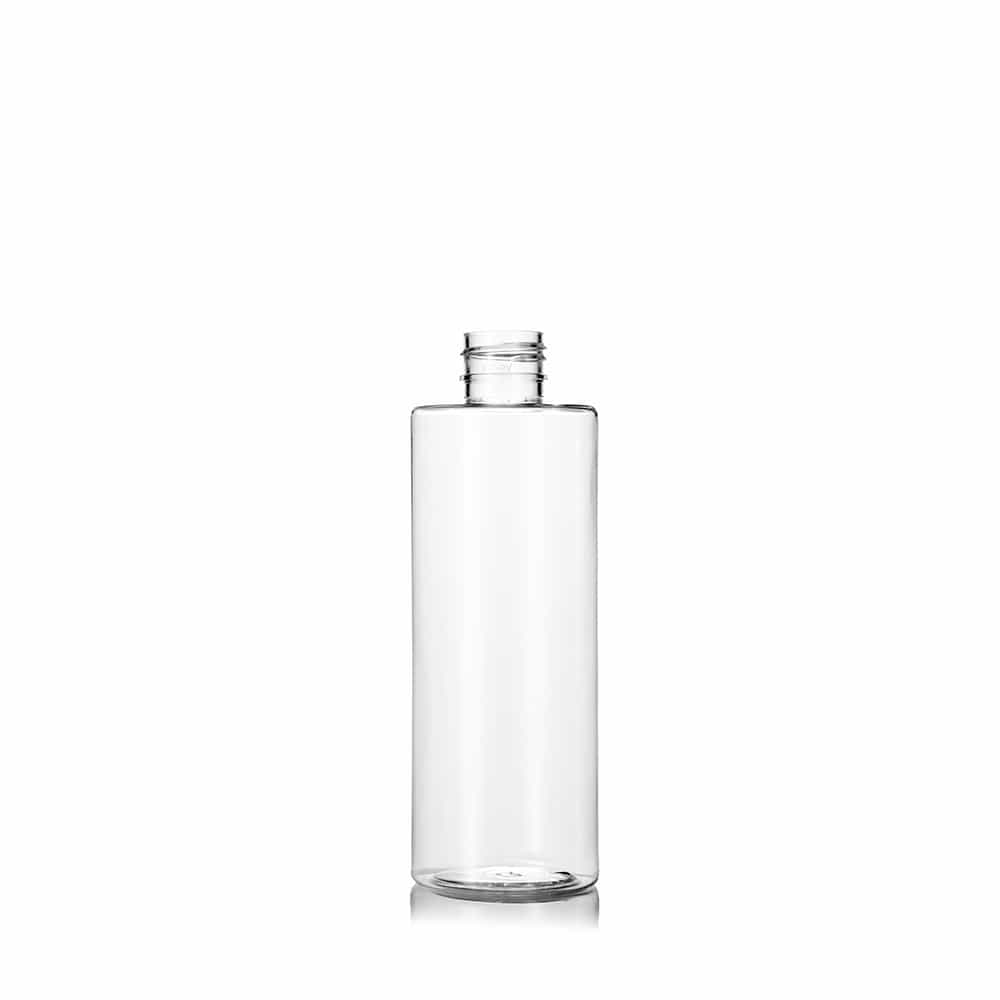
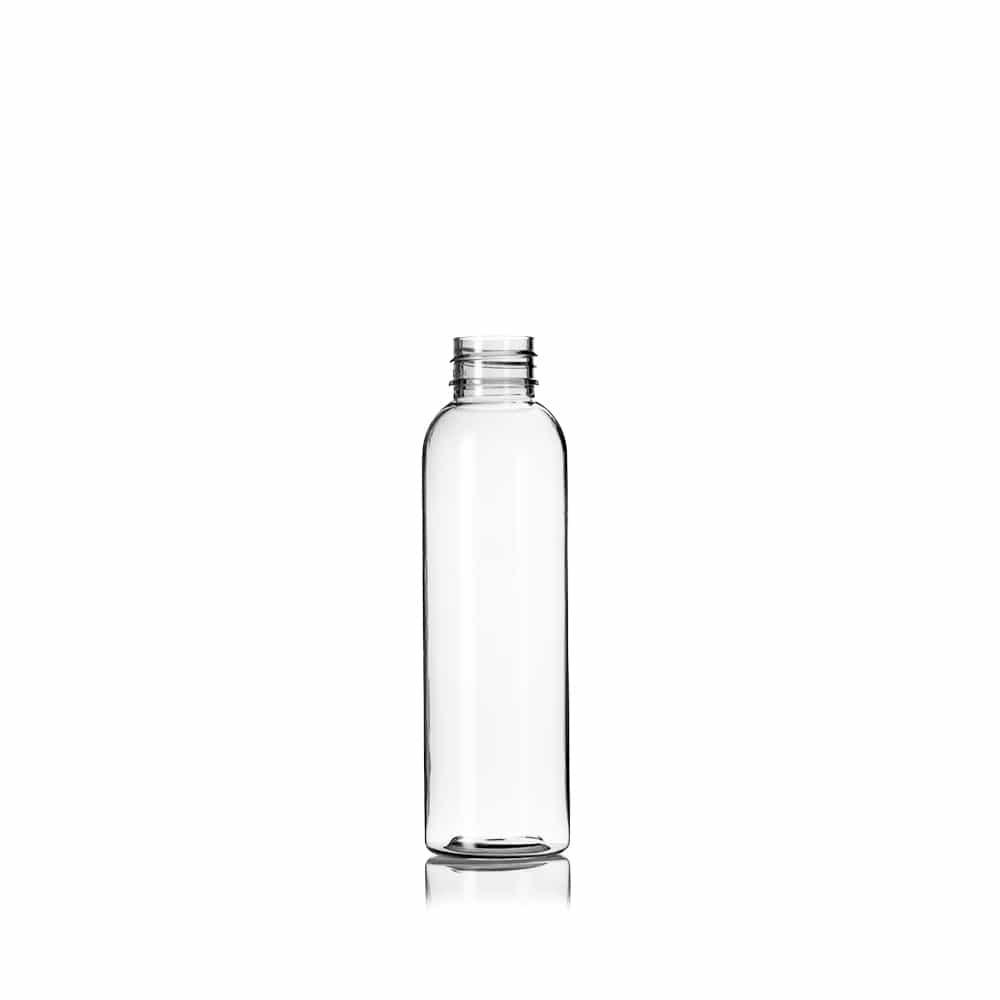
Clear
 Clear transparent PET plastic bottles in various sizes with black caps and lotion pumps
Clear is the default for a reason. It lets customers see the product, which builds trust and communicates purity. Clear PET has excellent optical transparency comparable to glass at a fraction of the weight, and it is the single most recyclable and PCR-available packaging material on the market.
UV Protection
Minimal. Clear PET transmits 80 to 90% of visible light and a significant portion of UVA radiation above 340nm. The polymer itself blocks most UVB and UVC below 320nm, but that is not enough for light-sensitive products. Clear containers do not meet USP light transmission requirements (must not exceed 10% transmission at 290 to 450nm). If your product degrades under light, clear is the wrong choice.
Recyclability and PCR
Clear PET has the highest value in recycling streams and the best PCR supply chain of any color. It can be recycled back into food-grade bottles in a true closed loop. This is exactly why Sprite switched from green to clear in 2022. At higher PCR percentages (above 50%), clear bottles may develop a slight grey or yellow tint, which can be offset with blue toners. Propacks carries clear rPET bottles with verified recycled content.
Best For
- Beverages (water, juices, clear spirits)
- Personal care where product visibility matters (clear shampoo, body wash, liquid soap)
- Household cleaners where customers want to see fill level
- Any product that is not light-sensitive and benefits from a "see what you are buying" presentation
PET vs HDPE
PET is the material for clear bottles. HDPE cannot be truly clear (only translucent/natural). If you need a clear rigid bottle, you are choosing PET.
Brand Examples
Evian, Fiji Water, Dasani (water). Absolut, Grey Goose, Tito's (spirits). Method (cleaning). Sprite (post-2022).
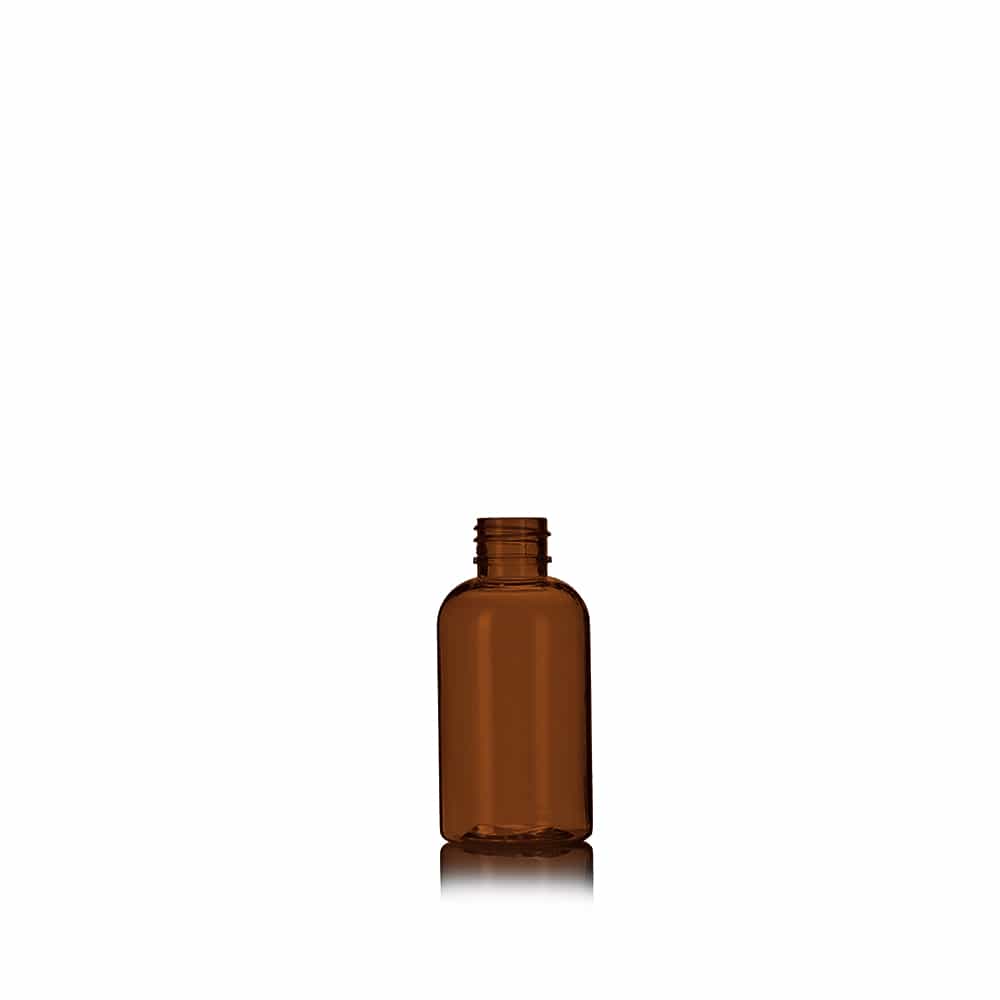
Amber
 Amber PET plastic bottles in various sizes with black caps and lotion pumps
Amber is the gold standard for UV protection in packaging. Amber pigment blocks up to 99% of UV radiation and virtually all wavelengths below 450nm, including UVA, UVB, UVC, and high-energy blue light. Amber glass meets USP requirements for light-protective pharmaceutical containers (less than 10% spectral transmission at 290 to 450nm).
UV Protection
Amber provides the broadest and most effective UV filtering of any bottle color. It blocks the specific wavelengths (around 350nm) that cause beer skunking by reacting with hop compounds. It blocks the UVA that degrades retinol, vitamin C, and essential oils. It blocks the blue light that breaks down hydrogen peroxide. When protection from photodegradation is the primary packaging requirement, amber is the answer.
PET vs HDPE
Amber PET bottles are translucent with a warm honey tone. They offer a good oxygen barrier in addition to UV protection, which makes them suitable for beverages, supplements, and liquid vitamins. Amber HDPE bottles are opaque with a darker, more matte finish. They offer better chemical resistance and stress-crack resistance, making them the standard for pharmaceuticals (the classic orange prescription bottle), essential oils, and hydrogen peroxide.
Recyclability and PCR
Amber PET is recyclable but separated from clear PET during sorting. It is typically downcycled into fiber, strapping, or carpeting rather than recycled bottle-to-bottle. PCR amber PET and HDPE exist but in more limited supply than clear PCR. Color consistency can be challenging with PCR amber because recycled resin introduces shade variation between batches. Propacks carries amber bottles in both PET and HDPE.
Best For
- Pharmaceuticals and liquid medications
- Essential oils and aromatherapy
- Supplements, tinctures, and herbal extracts
- Hydrogen peroxide and light-sensitive chemicals
- Craft beer and beverages sensitive to skunking
- Any product where UV degradation is the primary shelf-life limiter
Brand Examples
Samuel Adams, Sierra Nevada (beer). doTERRA, Young Living (essential oils). CVS and Walgreens pharmacy bottles. Eden Foods (glass jars). Most hydrogen peroxide brands.
White Opaque
 White opaque HDPE plastic bottles in various sizes with black caps and lotion pumps
White opaque is the workhorse of functional packaging. The titanium dioxide (TiO₂) pigment used in white bottles reflects and scatters UV light effectively, providing excellent total light protection through opacity rather than selective filtration. White signals cleanliness, clinical trust, and pharmaceutical-grade quality. It also provides a blank canvas for bold label designs with high contrast.
UV Protection
Very good. White opaque HDPE blocks virtually all visible light and shows absence of light transmittance across the 200 to 400nm UV range. The protection comes from opacity, not wavelength-selective filtering like amber. The practical result is similar: products inside white bottles are shielded from photodegradation. White meets USP requirements for opaque containers.
PET vs HDPE
White HDPE is the primary material for white bottles. It is rigid, opaque, and has excellent chemical resistance. The classic supplement packer (vitamins, OTC meds) is white HDPE. White PET exists but is less common in opaque form. When choosing between them: HDPE for pharmaceuticals, supplements, household chemicals, and anything that needs chemical resistance. PET if you need a slightly different finish or barrier properties.
The PCR Tradeoff
White is less forgiving than amber or black when it comes to PCR content. Recycled HDPE introduces grey or off-white tones that become progressively visible at higher PCR percentages. A 30% PCR white bottle will look noticeably different from a 100% virgin white bottle. This matters for brands with strict color standards. Request samples at your target PCR percentage before committing to production quantities. Propacks carries white bottles with verified PCR content and can provide samples for color matching.
Best For
- OTC supplements and vitamins (the white HDPE packer is an industry standard)
- Skincare and personal care with clinical positioning
- Baby care products
- Medical and pharmaceutical packaging
- Household chemicals (bleach, cleaning products)
- Any product that benefits from a "clean, clinical, no-nonsense" appearance
Brand Examples
Nature Made, Centrum, Kirkland (supplements). Clorox (bleach). Tide (detergent). Tylenol, Advil (OTC meds). CeraVe (skincare).
Cobalt Blue
 Cobalt blue PET plastic bottles in various sizes with black caps and lotion pumps
Cobalt blue is an aesthetic choice first and a UV protector second. Blue pigment filters some UV wavelengths but is significantly less effective than amber. Cobalt blue blocks approximately 50 to 70% of UV light, primarily filtering yellow, orange, and red wavelengths (550 to 700nm) while allowing much of the UVA and blue/violet light (300 to 450nm) to pass through. Ironically, the wavelengths cobalt blue transmits most strongly (400 to 480nm) include some of the most damaging for photosensitive compounds.
UV Protection
Moderate. Cobalt blue does not meet USP light transmission requirements for pharmaceutical containers. It provides some protection, enough to slow photodegradation compared to clear, but nowhere near amber's 99%+ blocking. For products with genuine photosensitivity (retinol, vitamin C serums, essential oils), amber is the better functional choice. Cobalt blue works when you want some UV filtering with premium visual differentiation.
How Cobalt Blue Compares
Compared to amber: significantly less UV protection, but stronger shelf differentiation and premium perception. Compared to black: less total light blocking, but better recyclability (NIR detectable where carbon black is not). Compared to clear: meaningfully better UV protection with a distinct luxury aesthetic. The choice between cobalt blue and amber comes down to whether UV protection or brand differentiation is the higher priority.
PET vs HDPE
Cobalt blue PET bottles are translucent with a jewel-like tone. They catch light and create shelf impact, which is why they dominate in beauty and essential oil packaging. Cobalt blue HDPE bottles are opaque and darker, with a matte finish. PET is the more common choice for cobalt blue because the translucency is part of the appeal.
Recyclability and PCR
Cobalt blue PET is NIR-sortable and recyclable, but the small market share makes dedicated recycling streams uneconomical. Cobalt blue is typically sorted into the mixed-color stream and downcycled. PCR cobalt blue is essentially unavailable because the feedstock volume is too small. Color matching with recycled content is very difficult. Brands choosing cobalt blue should expect to use mostly virgin material or accept color variation with PCR.
Best For
- Essential oils and aromatherapy where premium positioning matters
- Beauty and skincare serums with moderate light sensitivity
- Wellness and supplement brands seeking shelf differentiation
- Any product where the apothecary/artisanal aesthetic is part of the brand story
Brand Examples
Neal's Yard Remedies (iconic cobalt blue packaging). SKYY Vodka. Acqua di Parma. Many artisanal essential oil and supplement brands.
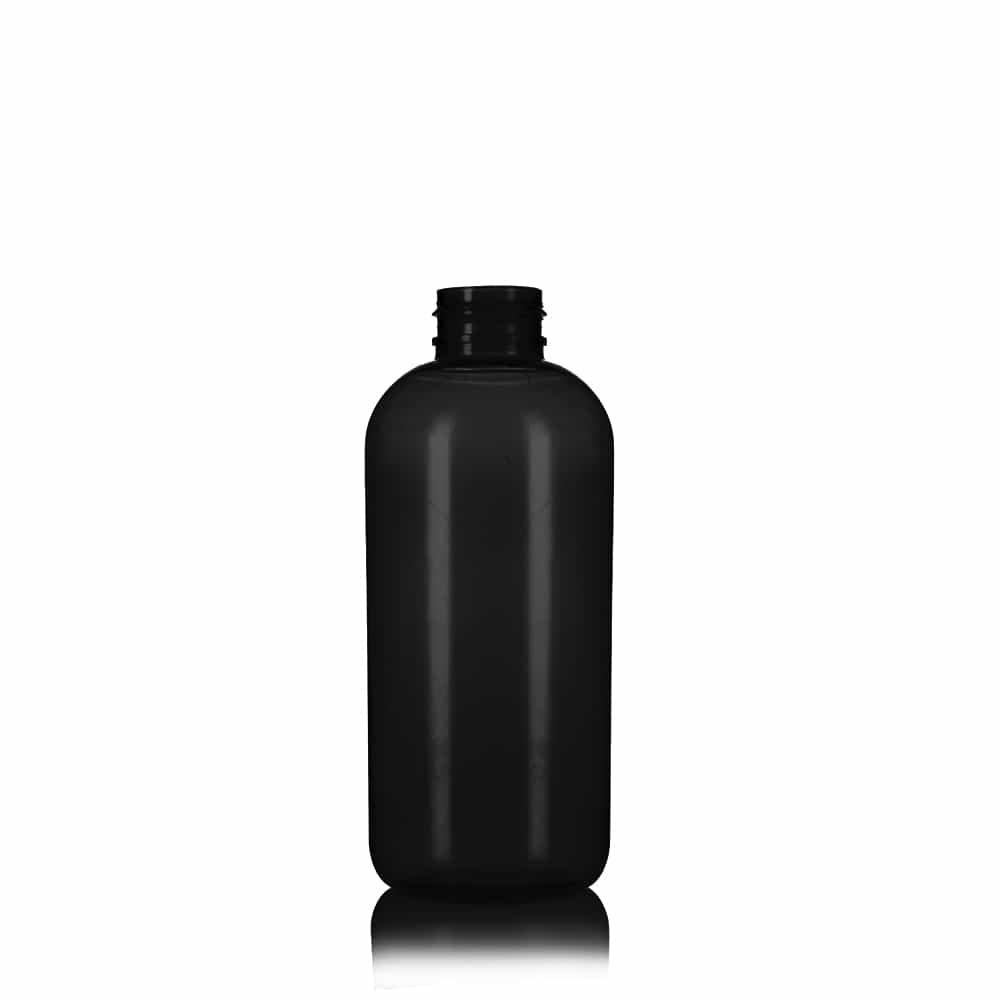
Black
 Black plastic bottles in various sizes with black caps and lotion pumps
Black provides the maximum possible light protection. Total opacity means zero UV and zero visible light transmission. It is the luxury color in packaging, signaling sophistication, exclusivity, and premium positioning. Black dominates men's grooming, cannabis, premium skincare, and high-end personal care. The tradeoff is a serious recycling problem.
UV Protection
Maximum. Black bottles block virtually 100% of all UV and visible light. The protection comes from total opacity, not selective filtration. For products that need absolute light protection and where amber's warm tone does not fit the brand identity, black is functionally superior to every other option.
The Recycling Problem
Traditional black plastic uses carbon black pigment, which absorbs the near-infrared (NIR) radiation used by sorting equipment at Material Recovery Facilities. This makes black bottles invisible to automated recycling systems. They fall through to waste even when consumers put them in the recycling bin. UK supermarkets (Tesco, Waitrose) pledged to eliminate carbon-black plastic. The World Economic Forum has highlighted this as a significant recycling barrier.
NIR-Detectable Alternatives
NIR-detectable black pigments exist and solve the sorting problem. Iron oxide pigments like LANXESS Bayferrox 303T reflect enough NIR radiation (around 20%) for sorting equipment to identify the material. When sourcing black bottles, ask your supplier whether they use NIR-detectable pigment. If they cannot confirm, the bottles will be functionally unrecyclable regardless of the resin code. Propacks uses NIR-detectable pigments in black packaging.
PET vs HDPE
Black PET bottles have a glossy, high-sheen finish that photographs well and signals premium quality. Black HDPE bottles have a more matte, solid finish with better chemical resistance. For beauty and fragrance, black PET is the usual choice. For men's grooming, cleaning, and cannabis, black HDPE is more common. Both can be manufactured with NIR-detectable pigments.
Best For
- Men's grooming and personal care
- Premium skincare and beauty
- Cannabis and CBD products
- Wellness and supplements targeting a luxury demographic
- Any product where brand identity demands black and label design works on a dark substrate
Brand Examples
TRESemmé. Axe/Lynx. Various men's grooming brands. Premium cannabis packaging. Many luxury fragrance houses.
What to Verify Before Ordering
- Confirm NIR-sortable pigment (not carbon black)
- Verify PCR content availability (limited for black)
- Test label adhesion on black surface (ink contrast and adhesive behavior differ from lighter substrates)
- Confirm closure compatibility (black bottles from different suppliers may have slight dimensional variation)
Purple
 Purple PET plastic bottles in various sizes with black caps and lotion pumps
Purple is a branding choice, not a UV protection choice. Purple pigment provides moderate light filtering, blocking some UV and visible light, but less than amber, less than black, and less than cobalt blue in the critical 290 to 450nm range. What purple does offer is immediate shelf differentiation. Purple bottles stand out because almost nobody uses them, which is exactly the point.
UV Protection
Moderate at best. Purple filters some wavelengths but does not provide the broad-spectrum blocking needed for highly photosensitive products. For retinol, vitamin C serums, or essential oils, amber or black are better functional choices. Purple works when your product has moderate light sensitivity and shelf impact is the higher priority.
PET vs HDPE
Purple PET bottles are translucent with a jewel-tone finish that catches retail lighting. The effect is distinctive and premium. Purple HDPE bottles are opaque and darker, with a matte surface that reads as more utilitarian. For beauty and wellness, purple PET is the usual choice because the translucency drives the shelf impact. For hair care and personal care where a deeper tone fits better, purple HDPE works.
PCR Considerations
PCR can shift the final shade of purple bottles. Recycled resin introduces variation that is harder to control with darker, more saturated colors. Request samples at your target PCR percentage before committing. The difference between a 25% PCR purple and a 50% PCR purple can be visible enough to matter for brand consistency. Purple is a harder color to match batch-to-batch than clear, amber, or white.
Best For
- Beauty and skincare brands seeking shelf differentiation
- Hair care (purple is a natural fit for purple shampoo / toning products)
- Wellness, bath, and body products with a luxury or feminine positioning
- Any product where being visually distinct from competitors matters more than maximum UV protection
Purple vs Other Colors
Purple vs clear: significantly better UV protection and much stronger brand differentiation. Purple vs amber: less UV protection but far more distinctive on shelf. Purple vs cobalt blue: comparable UV filtering, but purple reads as more feminine/luxury while blue reads as apothecary/clinical. Purple vs black: less total light blocking, but better recyclability and a warmer aesthetic.
Natural (Translucent HDPE)
 Natural translucent HDPE plastic bottles in various sizes with black caps and lotion pumps
Natural HDPE is the translucent, slightly milky plastic used for chemical bottles, squeeze bottles, and applications where fill-level visibility matters but glass-like clarity is not required. Natural is the HDPE equivalent of clear PET: the unpigmented, default state of the material.
UV Protection
Limited. Natural HDPE is translucent and allows 30 to 60% of visible light through depending on wall thickness. It offers some inherent UV blocking from the HDPE polymer itself, but far less than amber, white, or black. Not suitable for light-sensitive products without an outer carton or secondary packaging.
Recyclability and PCR
Excellent. Natural HDPE is the second most recycled plastic after clear PET. Milk jug recycling provides a large, clean feedstock. Natural HDPE PCR is widely available and preferred by recyclers because unpigmented recycled HDPE can be re-colored for downstream applications. The tradeoff: PCR natural HDPE often has a grey or brownish tint that may not appeal to brands wanting pristine translucency.
Best For
- Household chemicals and cleaning products
- Squeeze bottles (shampoo, conditioner, sauces)
- Industrial and lab chemical storage
- Any application where fill-level visibility matters and HDPE's chemical resistance is needed
Green
 Green PET plastic bottles in various sizes with black caps and lotion pumps
Green bottles are common in beverages (beer, wine, sparkling water) but declining in plastic packaging. Green glass primarily filters yellow and red light (550 to 700nm) while allowing most UV radiation to pass through. Green provides only 20 to 50% UV blocking, which is why green-bottled beers like Heineken are more susceptible to lightstruck flavor (skunking) than amber-bottled beers.
The Sprite Effect
Green PET's biggest challenge is recyclability. Green PET is sorted separately from clear PET and typically downcycled into fiber, strapping, or carpeting rather than recycled back into bottles. When Coca-Cola switched Sprite from green to clear bottles in 2022, it signaled a watershed moment for the industry. The message was clear: recyclability now outweighs brand tradition. Green PET supply for PCR has declined since that switch because one of the largest sources of green PET feedstock disappeared.
Best For
Green glass remains standard for wine and some beer. In plastic packaging, green has limited justification for new products. If your brand identity requires green, glass is the better substrate than PET because glass recycling handles green better than plastic recycling does. Propacks does not carry green bottles because the recyclability profile conflicts with PCR and sustainability positioning.
Frosted
Frosted is a surface treatment, not a color. Acid etching or sandblasting creates a matte, diffused finish on glass or PET. The frosted effect scatters light, reducing direct UV transmission by roughly 20 to 40% compared to clear glass of the same thickness, but it is not a substitute for amber or opaque packaging for UV protection.
What frosted does offer is tactile premium. Frosted bottles feel expensive, hide fingerprints, and reduce glare under retail lighting. The matte surface creates a "soft luxury" aesthetic that photographs well and reinforces brand positioning in cosmetics, fragrance, and premium spirits.
Recyclability
No impact. Frosting is a surface treatment that does not change the base material. NIR sorting reads polymer composition, not surface texture. Frosted glass recycles with clear glass. Frosted PET recycles normally. The one consideration: spray-on coatings (as opposed to acid-etched frosting) may create contamination if they contain non-compatible materials. Acid-etched frosting is always preferable for recycling compatibility.
Best For
- Premium cosmetics and skincare (serums, face creams, foundations)
- Fragrance and perfume
- Spirits (vodka, gin, tequila)
- Any product where the tactile experience reinforces premium positioning
Brand Examples
Absolut Elyx. Belvedere Vodka. Patrón Tequila. Many K-beauty and J-beauty brands. Drunk Elephant (some SKUs). Various luxury fragrance houses.
How to Choose the Right Bottle Color
Color selection comes down to four variables: UV protection requirements, brand positioning, recyclability targets, and PCR availability. Here is how to think through the decision.
If UV Protection Is the Priority
Amber first. It blocks 99%+ of damaging wavelengths and meets USP pharmaceutical standards. Black provides total opacity but creates recycling problems with carbon black pigment. White opaque provides excellent protection through opacity with better recyclability than black. Cobalt blue and purple provide moderate protection but are not sufficient for highly photosensitive formulations.
If Recyclability and PCR Are the Priority
Clear PET first. It has the highest recycling rate, the most available PCR supply, and can be recycled bottle-to-bottle. Natural HDPE second (strongest HDPE PCR supply from milk jugs). White HDPE third. Amber fourth. Black and colored bottles trail significantly because feedstock volumes are small and PCR supply is limited.
If Brand Differentiation Is the Priority
Cobalt blue for apothecary/premium wellness. Purple for feminine luxury and shelf standout. Black for masculine premium and sophistication. Frosted for tactile luxury at any color. Green for beverage tradition (glass only). These choices sacrifice some recyclability for visual impact. The tradeoff is worth it when shelf differentiation directly drives revenue, but know what you are giving up.
If Compliance Is the Priority
Under California SB 54 and the EU PPWR, packaging must be recyclable and meet increasing PCR content targets. Colors that create recycling barriers (carbon-black plastic especially) will face growing compliance pressure. NIR-detectable black pigments solve this for black bottles. Clear, natural, and white are the safest choices for long-term regulatory compliance. Propacks can help you evaluate color options against your specific compliance requirements. Contact us for guidance.
Shop Bottles by Color at Propacks
Propacks carries clear, amber, white, black, cobalt blue, and purple bottles in PET and HDPE with verified PCR content. Browse the full catalog or filter by color to find the right packaging for your product.
Frequently asked questions
Does bottle color affect UV protection?+
Yes. Amber blocks up to 99% of UV radiation below 450nm, the broadest protection of any color. Black blocks 100% of all light through total opacity. White opaque blocks over 95% through opacity. Cobalt blue blocks 50 to 70%. Purple provides moderate filtering. Clear provides minimal UV protection. Green blocks only 20 to 50%. The color you choose directly affects how fast light-sensitive products degrade on shelf.
Which bottle color is best for recyclability?+
Clear PET has the highest value in recycling streams and can be recycled bottle-to-bottle in a true closed loop. Natural (translucent) HDPE is the second most recyclable. White HDPE is third. Amber and cobalt blue PET are recyclable but typically downcycled. Black bottles using carbon black pigment are the worst for recycling because they are invisible to NIR sorting equipment. Green PET is declining after Sprite switched to clear in 2022.
Can I get PCR (recycled) bottles in any color?+
PCR availability varies significantly by color. Clear PET has the best PCR supply. Natural and white HDPE have good PCR supply from milk jug and detergent bottle recycling. Amber has moderate PCR availability. Cobalt blue, purple, and black have very limited PCR supply because the feedstock volumes are too small. PCR can also shift the final shade of colored bottles, so request samples at your target PCR percentage before committing.
Why are pharmacy bottles amber/orange?+
Amber blocks the UV wavelengths (290 to 450nm) that degrade active pharmaceutical ingredients. USP requires pharmaceutical light-protective containers to transmit less than 10% of light in this range, and amber glass and plastic meet this requirement. The amber color has been the pharmaceutical standard for decades because it provides the broadest, most consistent UV protection at reasonable cost.
Are black plastic bottles recyclable?+
It depends on the pigment. Traditional carbon black pigment absorbs near-infrared (NIR) radiation, making bottles invisible to automated sorting equipment at recycling facilities. These bottles end up in landfill even when consumers recycle them. NIR-detectable black pigments (like iron oxide-based alternatives) solve this problem by reflecting enough NIR for sorting equipment to identify the material. When sourcing black bottles, always confirm the supplier uses NIR-detectable pigment.
Why did Sprite switch from green to clear bottles?+
Coca-Cola switched Sprite from green to clear PET in 2022 to improve recyclability. Green PET can only be downcycled into fiber, strapping, or carpeting. Clear PET can be recycled back into new bottles. The switch signaled a broader industry trend: recyclability is now a higher priority than brand-traditional color for packaging decisions.
Does bottle color affect how consumers perceive a product?+
Yes. Clear signals purity and transparency. Amber signals pharmaceutical quality and protection. White signals clinical cleanliness. Black signals luxury and sophistication. Cobalt blue signals premium apothecary heritage. Purple signals differentiation and feminine luxury. Green signals natural and eco-friendly. Frosted signals premium quality through tactile experience. The color you choose becomes part of the brand message before the customer reads the label.
What is the difference between amber PET and amber HDPE?+
Amber PET is translucent with a warm honey tone and provides a good oxygen barrier in addition to UV protection. It is best for beverages, supplements, and liquid vitamins. Amber HDPE is opaque with a darker, matte finish and offers superior chemical resistance and stress-crack resistance. It is the standard for pharmaceuticals, essential oils, and hydrogen peroxide. Choose PET when you need clarity or an oxygen barrier, HDPE when you need chemical resistance.
Will PCR content change the color of my bottles?+
It can. PCR introduces recycled resin that may shift the shade, especially in white (turns grey), clear (turns slightly yellow), and saturated colors like purple (shade variation between batches). At low PCR percentages (15 to 25%), the difference is usually manageable. At 50%+ PCR, the color shift becomes more noticeable. Always request samples at your target PCR percentage before committing to production. Amber and black are the most forgiving colors for PCR because minor tint shifts are less visible.
What bottle color is required for SB 54 compliance?+
SB 54 does not mandate a specific bottle color, but it requires packaging to be recyclable and to meet escalating PCR content targets (15% by 2027, 25% by 2030, 50% by 2032). Colors with strong PCR supply and good recyclability (clear PET, natural HDPE, white HDPE) are easier to bring into compliance. Colors with limited PCR supply or recycling challenges (carbon-black, cobalt blue, purple) will require more effort to comply.

Written by
Queenie FongQueenie Fong is the founder of Propack Solutions, a woman-owned sustainable packaging company based in Ontario, CA. With nearly a decade of experience in the packaging industry, she specializes in post-consumer recycled (PCR) materials, helping brands source rPET, PCR HDPE, and PCR PP packaging that meets regulatory requirements and sustainability goals.