How to Choose PCR Packaging for Hand Soap, Body Wash, and Liquid Cleaners


Hand soap, body wash, and liquid cleaners share a common packaging challenge. They are water based, high volume products that move fast, get handled wet, and sit next to a sink or shower for weeks. The bottle needs to survive all of that while meeting growing recycled content requirements. Choosing the right PCR packaging for these products comes down to material, closure type, PCR percentage, and chemical compatibility.
Start With the Right Material
For water based liquid products like hand soap, body wash, and household cleaners, two materials dominate the packaging market: PET and HDPE. Both are available in post consumer recycled (PCR) versions, but they serve different purposes.
PCR PET (rPET) is the better choice when shelf appearance matters. It offers clarity, so consumers can see the product inside. Clear or lightly tinted rPET bottles work well for transparent hand soaps, body washes with visible color, and liquid cleaners where the product itself is part of the branding. rPET carries resin identification code #1, which means it is accepted by virtually every curbside recycling program in the United States.
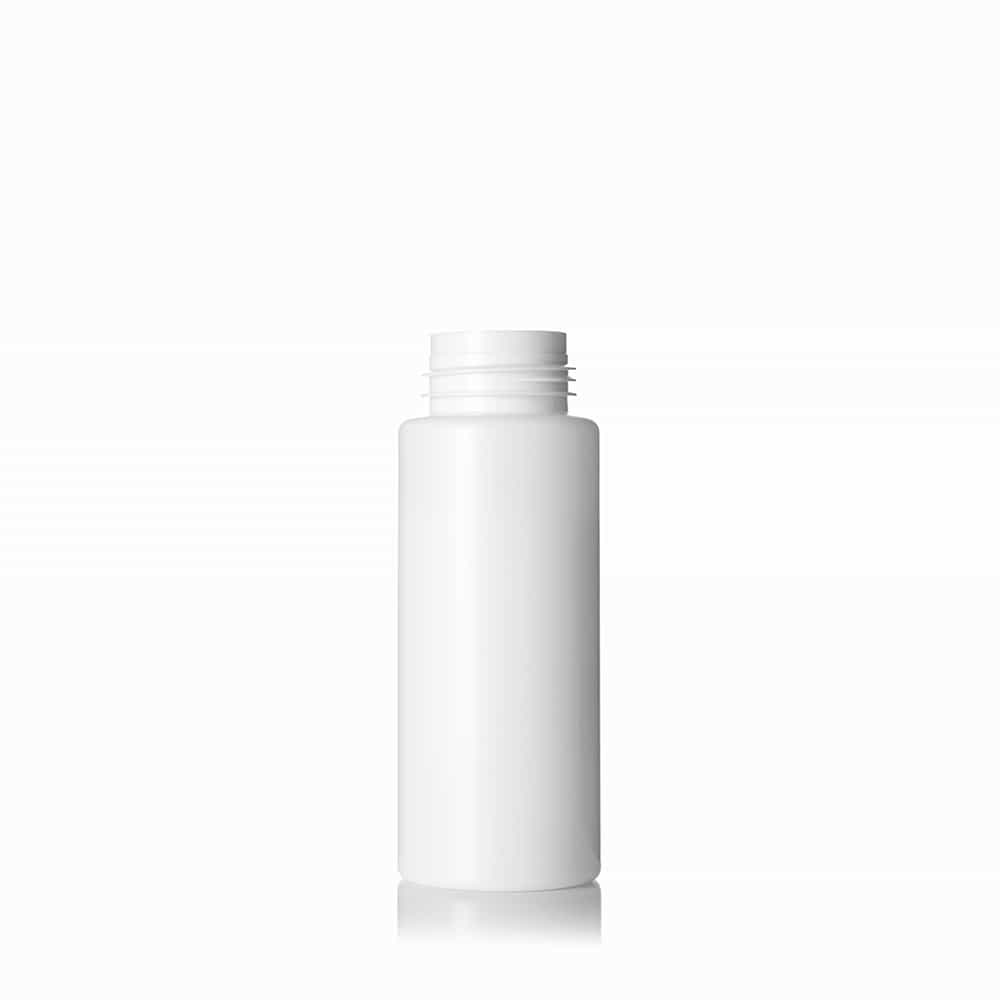
PCR HDPE (rHDPE) is the standard for opaque bottles. It handles a wider range of chemical formulations, including products with higher pH levels or surfactant concentrations that could stress PET over time. Most commercial liquid cleaners, concentrated soaps, and body washes in opaque packaging use HDPE. It carries resin code #2 and is widely recyclable.
If your product is clear and mild, go with rPET. If it is opaque, concentrated, or contains aggressive surfactants, go with rHDPE.
Choosing the Right PCR Percentage
PCR content is measured as a percentage of the total resin weight in the bottle. Common options are 0% (virgin), 35%, and 50%. The right choice depends on your regulatory requirements, brand positioning, and budget.
California SB 54 mandates minimum recycled content thresholds for plastic packaging sold in the state. The requirement reaches 50% PCR by 2030 for covered categories. Brands selling into California should plan for this now rather than scrambling later when supply tightens.
If you are an emerging brand building a sustainability story, 35% PCR is a meaningful starting point that demonstrates commitment without the slight cost premium of 50%. If you want to lead on sustainability or future proof against tightening regulations, 50% PCR positions you ahead of the curve.
One thing to know: higher PCR percentages can introduce minor visual variation between production batches, especially in clear bottles. This is normal for recycled content and does not affect performance. Amber, white, and colored bottles mask these variations well.
Matching Closures to Liquid Products
The closure matters as much as the bottle for hand soap, body wash, and cleaners. Each product type has an ideal dispensing mechanism.
Hand Soap
Lotion pumps are the standard for hand soap. They dispense a controlled amount per stroke, typically 1cc to 2cc, which matches how consumers use the product. For foaming hand soap formulations, use a foaming pump instead. Foaming pumps mix air into the liquid during dispensing, creating foam from a diluted soap base. The bottle design matters here too. Foaming pumps require foaming pump bottles with the correct neck finish.
Body Wash
Disc top caps and flip top caps are the most common closures for body wash. They allow consumers to squeeze the product out in the shower with wet hands. Lotion pumps also work for body wash, especially for larger format bottles (16 oz and above) that sit on a shelf rather than being held in the shower. The key requirement is a closure that opens and closes easily with one wet hand.
Liquid Cleaners
Trigger sprayers are standard for spray cleaners. They attach to bottles with wider neck finishes (typically 28/410) and allow directional application. For pour cleaners and concentrates, screw caps or disc top caps work well. Mist sprayers serve products that need fine, even coverage like glass cleaners or fabric refreshers.
Neck Finish Compatibility
Every bottle has a specific neck finish measured in millimeters and thread style. A 24/410 bottle requires a 24/410 closure. This is not interchangeable. The most common neck finishes for hand soap, body wash, and cleaner bottles are 24/410 (standard for most personal care bottles), 28/410 (common for larger bottles and trigger sprayers), and 20/410 (smaller bottles, typically 4 oz and under).
Always confirm neck finish compatibility between your bottle and closure before ordering. A mismatched neck finish means the closure will not seal properly, which leads to leaking during shipping and on store shelves.
Chemical Compatibility Matters More Than You Think
Not every plastic handles every formulation equally. Water based hand soaps with mild surfactants are safe in both rPET and rHDPE. But products with high concentrations of sodium lauryl sulfate (SLS), essential oils, or alkaline cleaning agents can cause stress cracking in PET over time.
If your formula contains any of the following, test compatibility or default to HDPE:
High pH cleaning agents (above pH 10). Concentrated essential oils, especially citrus oils. High surfactant loads above 20% active concentration. Solvents like isopropyl alcohol or d-limonene.
The simplest approach is to request a sample bottle and fill it with your actual product for a 30 day shelf test. Check for hazing, cracking, warping, or seal degradation. This costs almost nothing and prevents expensive failures after a full production run.
Bottle Size and Shape Selection
Hand soap bottles typically range from 8 oz to 16 oz. The 8 oz size is standard for countertop dispensers. 16 oz serves refill or high traffic locations like commercial restrooms.
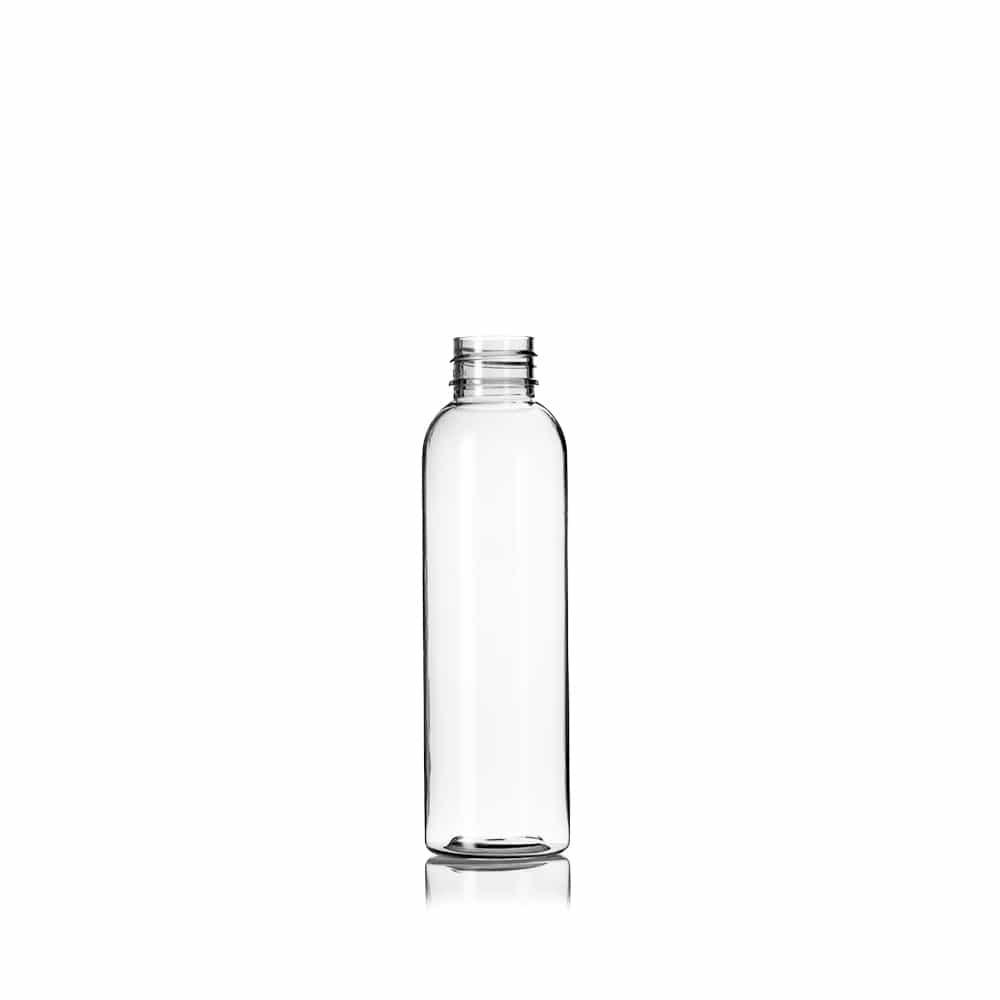
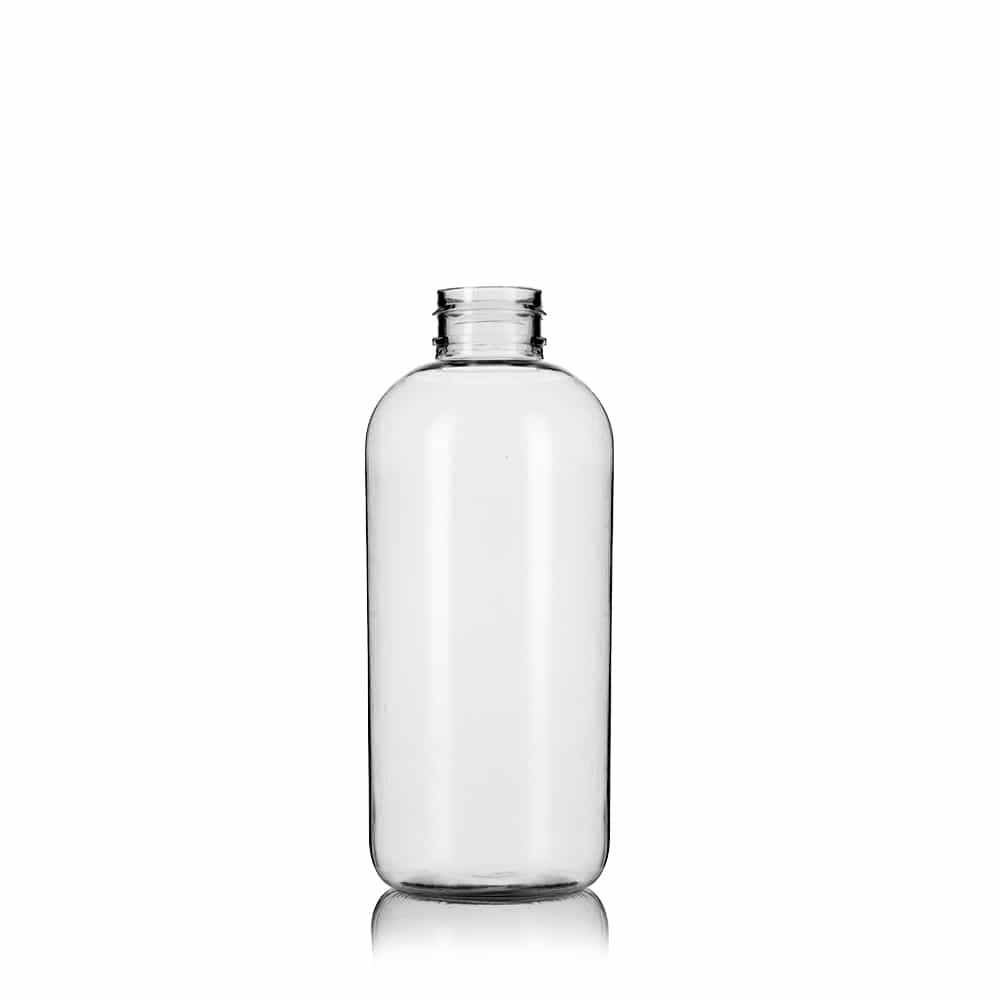
Body wash bottles sit in the 8 oz to 16 oz range as well, with 12 oz and 16 oz being the most common retail sizes. Boston round and cosmo round shapes are standard. Cosmo round bottles have a tapered shoulder that gives a slightly more premium look on shelf.
Liquid cleaners range from 16 oz to 32 oz. Trigger sprayer bottles tend to be cylinder or boston round shapes in the 16 oz to 32 oz range. Concentrated refills can go smaller (8 oz to 12 oz) if the consumer dilutes at home.
Putting It All Together
For a typical hand soap: choose a PCR PET or PCR HDPE boston round bottle in 8 oz or 10 oz, 24/410 neck finish, paired with a lotion pump or foaming pump, at 35% or 50% PCR content.
For a typical body wash: choose a PCR PET cosmo round in 12 oz or 16 oz, 24/410 neck finish, with a disc top or flip top cap, at 35% or 50% PCR.
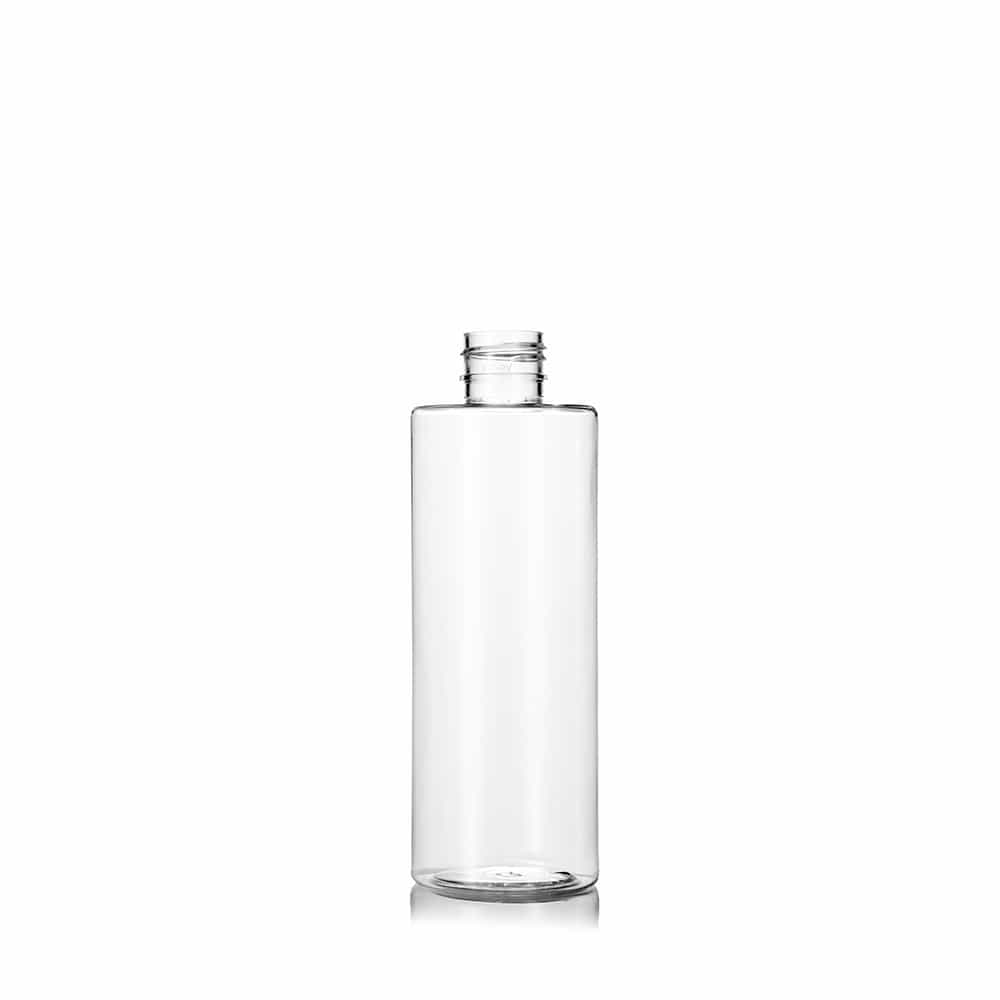
For a typical liquid cleaner: choose a PCR HDPE cylinder round in 16 oz or 32 oz, 28/410 neck finish, with a trigger sprayer, at 50% PCR.
These are starting points. Every product is different. The best approach is to order samples, test your formulation, and confirm compatibility before committing to a full production order.
Frequently asked questions
What PCR material is best for hand soap bottles?+
PCR PET works well for clear hand soap bottles where product visibility matters. PCR HDPE is the better choice for opaque bottles or formulations with strong surfactants or high pH levels.
Can PCR bottles handle liquid cleaner formulations?+
Yes, but material choice matters. HDPE handles a wider range of cleaning chemicals than PET. For products with solvents, high pH, or concentrated essential oils, PCR HDPE is the safer option. Always run a compatibility test with your specific formula.
What PCR percentage should I choose for body wash packaging?+
35% PCR is a solid starting point for brands building a sustainability claim. 50% PCR positions you ahead of California SB 54 requirements reaching 50% by 2030. Both percentages perform identically in terms of bottle durability and function.
Do PCR bottles look different from virgin plastic bottles?+
Higher PCR content can introduce slight color variation between batches, especially in clear bottles. Amber, white, black, and colored bottles minimize visible differences. The variation does not affect structural performance or chemical compatibility.
What closure type works best for foaming hand soap?+
Foaming pumps are specifically designed for foaming hand soap. They mix air into a diluted soap base to produce foam during dispensing. Standard lotion pumps will not create foam. Make sure the foaming pump matches your bottle neck finish.

Written by
Queenie FongQueenie Fong is the founder of Propack Solutions, a woman-owned sustainable packaging company based in Ontario, CA. With nearly a decade of experience in the packaging industry, she specializes in post-consumer recycled (PCR) materials, helping brands source rPET, PCR HDPE, and PCR PP packaging that meets regulatory requirements and sustainability goals.