m vs mm vs mL vs mil: What Do They Mean in Packaging?


If you have ever browsed a packaging catalog and wondered what all those abbreviations mean, you are not alone. Here is the short answer: m stands for meters, a unit of length. mm stands for millimeters, a much smaller unit of length equal to one thousandth of a meter. mL stands for milliliters, a unit of liquid volume. And mil is a unit of thickness equal to one thousandth of an inch. These four abbreviations look almost identical on a spec sheet, but they measure completely different things. Mixing them up can lead to ordering the wrong bottle, the wrong cap, or packaging that does not protect your product. This guide will break down each unit, show you exactly when each one is used in the packaging world, and help you avoid the most common mistakes.
What Each Unit Actually Means
Let us start with definitions before getting into the packaging applications.
Meter (m) is the base unit of length in the International System of Units, commonly known as SI. The Bureau International des Poids et Mesures (BIPM) defines the meter as the distance light travels in a vacuum in 1/299,792,458 of a second. In everyday terms, one meter is about 3.28 feet or 39.37 inches. You will rarely see meters on a packaging spec sheet because most bottles, jars, and closures are far smaller than a meter. However, meters do show up when measuring pallet dimensions, conveyor lengths, or warehouse layouts.
Millimeter (mm) is one thousandth of a meter. That makes it roughly the thickness of a credit card. In packaging, millimeters are everywhere. Bottle diameters, heights, neck finish sizes, and cap dimensions are almost always specified in millimeters. When you see a neck finish labeled "24-410," the 24 refers to 24 mm, which is the outer diameter of the bottle opening. The National Institute of Standards and Technology (NIST) maintains the official U.S. guidelines for SI unit usage, and millimeters are the standard for physical dimensions in manufacturing.
Milliliter (mL) is a unit of volume equal to one thousandth of a liter. One milliliter is the same as one cubic centimeter (cc). In packaging, milliliters describe how much liquid a container holds. A standard 4 oz bottle holds approximately 118 mL. A 1 oz essential oil bottle holds about 30 mL. If you are filling bottles with liquids, creams, or serums, mL is the unit you will deal with most often. For help converting between ounces and milliliters, check out our oz to mL conversion guide.
Mil is where things get tricky. A mil is not short for millimeter or milliliter. A mil equals one thousandth of an inch (0.001 inch), which translates to roughly 0.0254 mm. The packaging industry uses mils to measure the thickness of thin materials: bottle walls, shrink bands, poly bags, label stock, and protective films. When a supplier says "this bottle has 15 mil walls," they mean the plastic is 0.015 inches thick. The mil is part of the U.S. customary measurement system and is formally recognized in ASTM International standards for measuring plastic film and sheet thickness (such as ASTM D374).
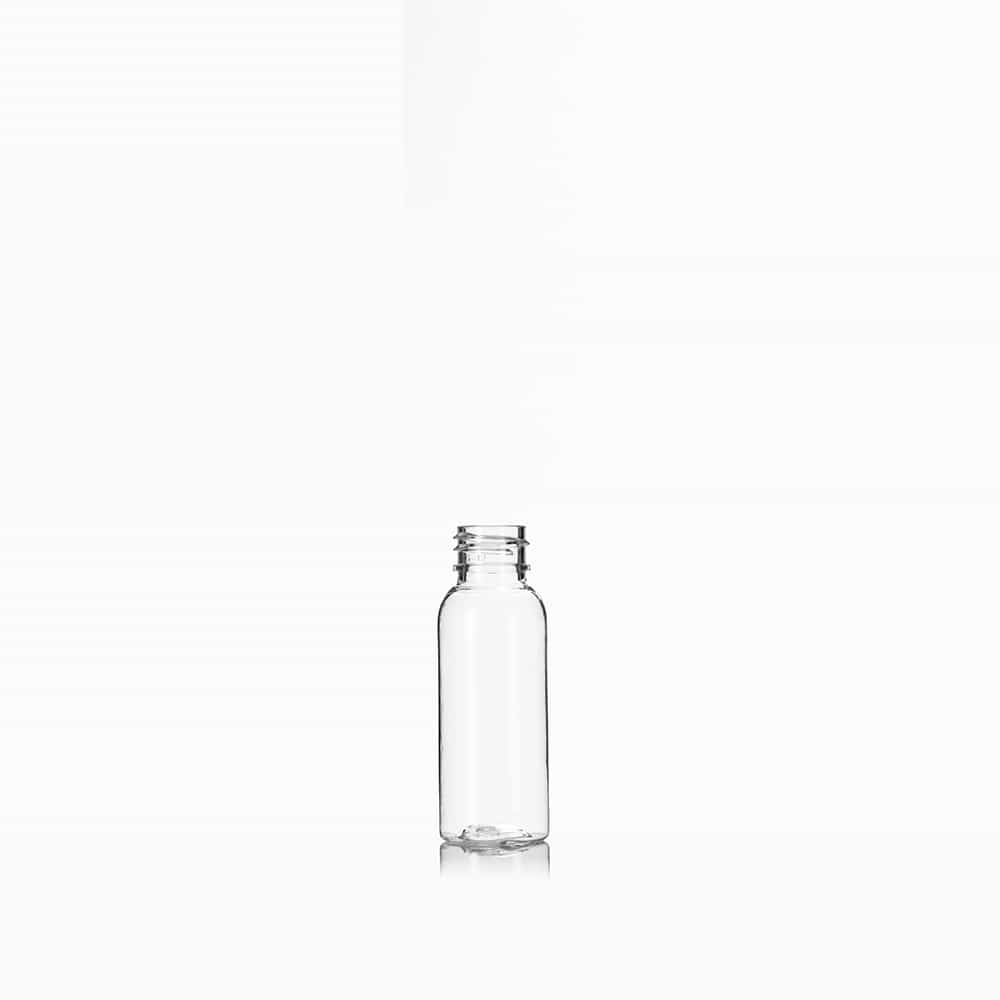
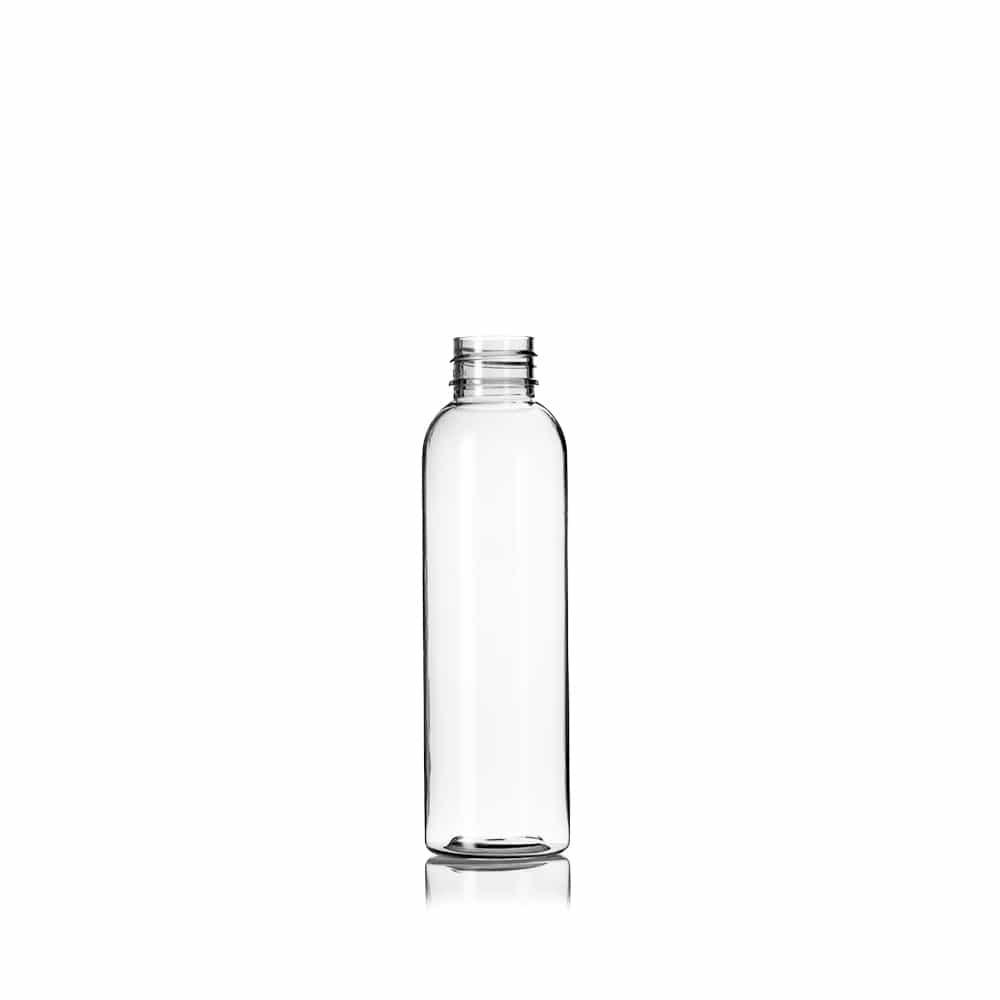
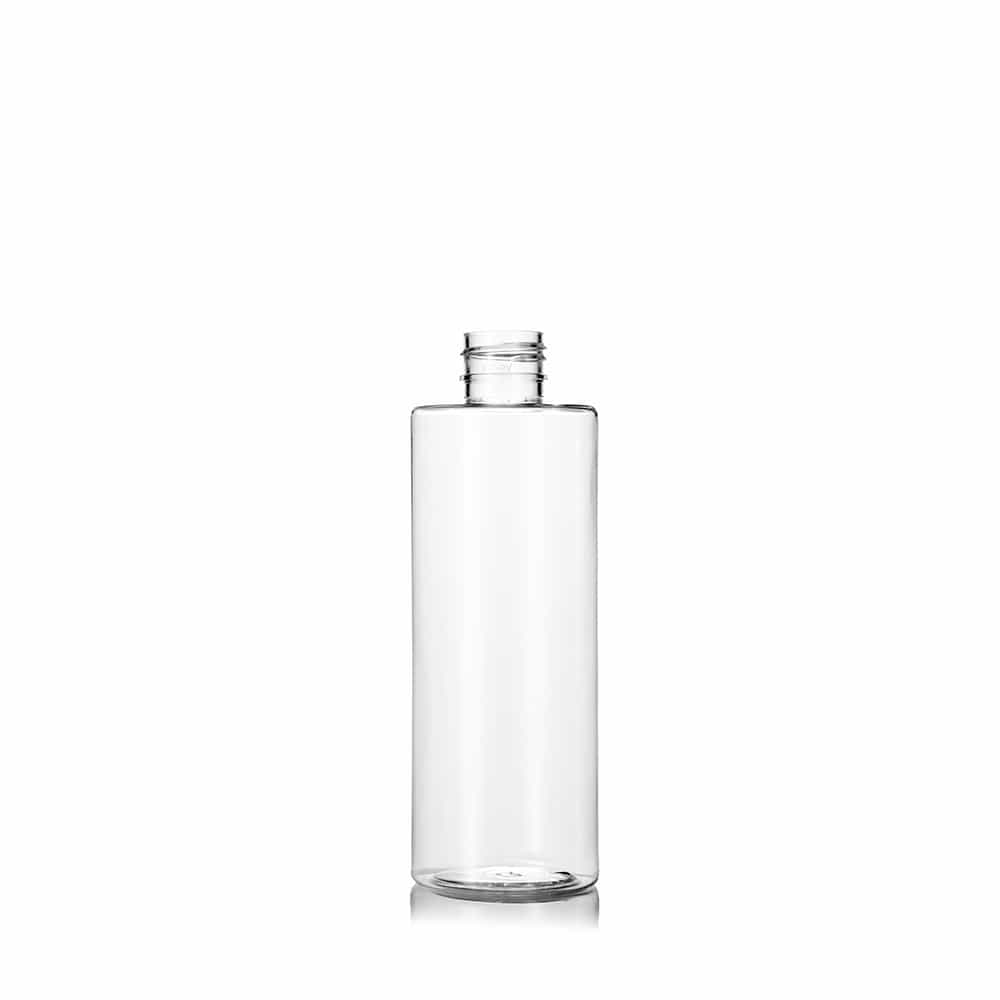
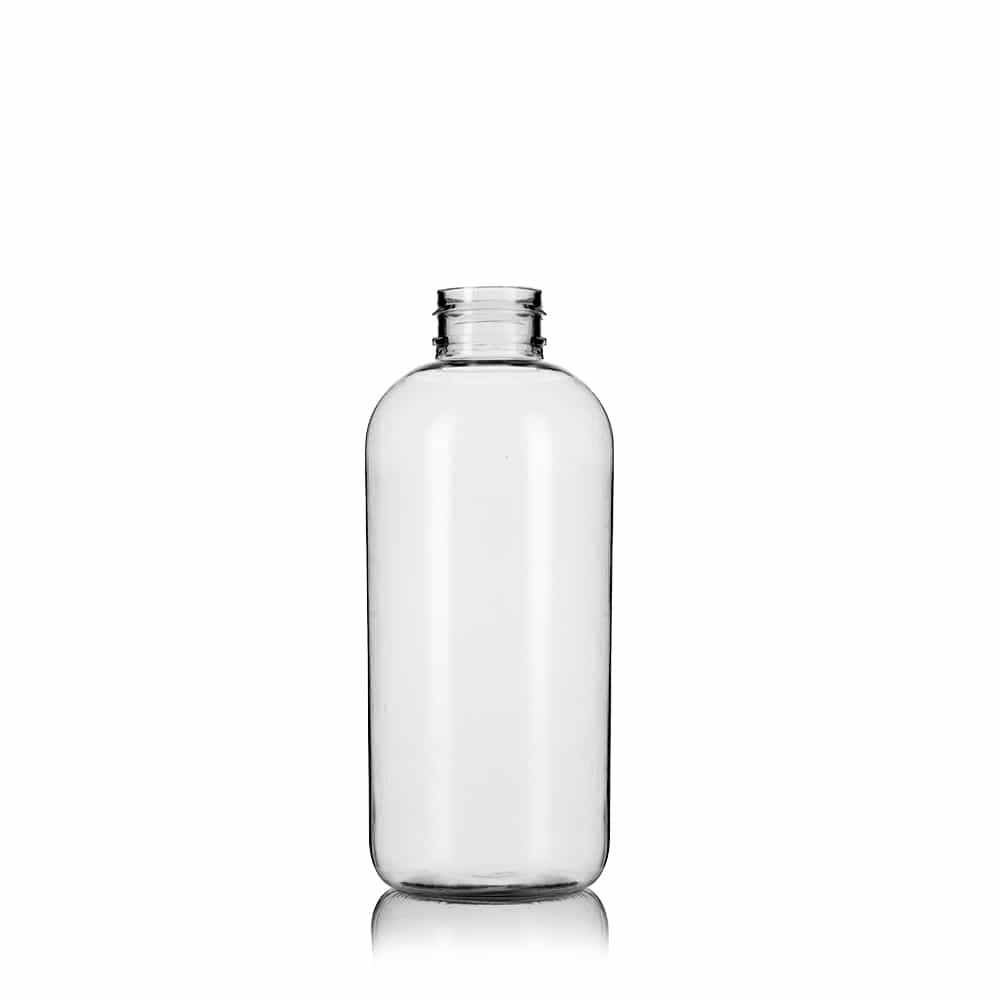
 Four packaging measurement units compared: meter, millimeter, milliliter, and mil
How These Units Differ at a Glance
The table below puts all four abbreviations side by side so you can see exactly what each one measures and where it appears in packaging.
| Abbreviation | Full Name | What It Measures | System | Packaging Example |
|---|---|---|---|---|
| m | meter | Length/distance | Metric (SI) | Pallet height: 1.2 m |
| mm | millimeter | Length/dimensions | Metric (SI) | Bottle neck diameter: 24 mm |
| mL | milliliter | Volume/capacity | Metric (SI) | Bottle fill volume: 118 mL |
| mil | mil (thou) | Thickness | U.S. customary | Bottle wall thickness: 15 mil |
Notice that three of these units (m, mm, mL) belong to the metric system, while mil belongs to the U.S. customary system. That distinction is important because it explains why mil and mm do not convert neatly into each other, even though both measure small physical dimensions.
When Each Unit Is Used in Packaging
Understanding which unit applies to which specification will save you time and prevent costly errors.
Meters appear mostly in logistics and facility planning. Pallet stacking heights, shipping container dimensions, and warehouse aisle widths are sometimes given in meters, especially for international shipments. You will almost never see a bottle dimension listed in meters.
Millimeters are the default unit for physical dimensions of bottles, jars, closures, pumps, and sprayers. Bottle height, bottle diameter, neck finish diameter, label panel width, and closure skirt length are all typically expressed in millimeters. For example, a standard Boston round bottle might be listed as 51 mm in diameter and 146 mm tall with a 24-410 neck finish. If you need help interpreting these numbers, our guide on how to read bottle dimensions walks through each measurement step by step. You can also use our dimension converter tool to switch between inches and millimeters.
Milliliters dominate when the spec sheet is talking about what goes inside the container. Bottle capacity, fill volume, and overflow capacity all use mL. Regulatory labeling in many countries requires volume to be declared in milliliters. You will see mL on every FDA nutrition label, every cosmetic container, and every pharmaceutical bottle. Our volume converter tool makes it easy to jump between mL, ounces, liters, and gallons.
Mils show up when the specification involves material thickness. Plastic bottle wall thickness, shrink sleeve thickness, tamper evident band gauge, label material thickness, and bag film thickness are all measured in mils. A typical PET bottle might have walls between 10 and 30 mil thick. A shrink band is usually 40 to 60 mil. A standard poly bag for shipping is often 2 to 4 mil. If someone hands you a spec that says "60 mil PVC band," they are talking about a shrink sleeve that is 0.060 inches thick, not 60 millimeters and definitely not 60 milliliters.
Common Mistakes (and How to Avoid Them)
Two mix ups happen again and again in the packaging industry, and both can lead to expensive mistakes.
Mistake 1: Confusing mil with mL. This is the most dangerous one. Mil measures thickness (a physical dimension), while mL measures volume (how much liquid fits inside). They sound almost identical when spoken aloud, and they look similar in writing if the capitalization is inconsistent. A customer who asks for a "60 mil bottle" might mean a bottle with 60 mil thick walls, or they might actually want a 60 mL capacity bottle. Those are two completely different specifications. The best way to avoid this confusion is to always clarify whether the conversation is about wall thickness or fill volume. In writing, always capitalize the L in mL (as the NIST Guide for the Use of the SI recommends) to distinguish it from the lowercase abbreviation mil.
Mistake 2: Confusing mm with mil. Both units measure small physical dimensions, so it is natural to assume they are the same thing. They are not. Millimeters are metric. Mils are U.S. customary. One millimeter equals approximately 39.37 mils. So if a specification calls for 1 mm thick material and you supply 1 mil thick material instead, you have delivered something roughly 40 times thinner than expected. To keep them straight, remember that mm describes dimensions you can see and measure with a ruler (bottle height, cap diameter), while mil describes thicknesses you would need calipers or a micrometer to measure. Our guide on packaging measurements in inches and millimeters covers this distinction in more detail.
Mistake 3: Assuming "ml" and "mL" are different units. They are not. Both abbreviations refer to milliliters. However, the SI convention recommends capitalizing the L to avoid confusion with the numeral 1 or the lowercase letter l. In packaging documentation, you will see both forms, but best practice is to write mL.
 Digital caliper measuring plastic bottle wall thickness in mils
Conversion Reference Table
The following table provides the most useful conversions for anyone working with packaging specifications. Keep this handy when reviewing spec sheets from different suppliers.
| Conversion | Formula | Example |
|---|---|---|
| m to mm | Multiply by 1,000 | 1 m = 1,000 mm |
| mm to m | Divide by 1,000 | 25 mm = 0.025 m |
| mm to inches | Divide by 25.4 | 24 mm = 0.945 inches |
| inches to mm | Multiply by 25.4 | 1 inch = 25.4 mm |
| mil to inches | Divide by 1,000 | 15 mil = 0.015 inches |
| inches to mil | Multiply by 1,000 | 0.020 inches = 20 mil |
| mil to mm | Multiply by 0.0254 | 15 mil = 0.381 mm |
| mm to mil | Divide by 0.0254 (or multiply by 39.37) | 1 mm = 39.37 mil |
| mL to fl oz (US) | Divide by 29.5735 | 118 mL = 4 fl oz |
| fl oz (US) to mL | Multiply by 29.5735 | 8 fl oz = 236.6 mL |
| mL to liters | Divide by 1,000 | 500 mL = 0.5 L |
| liters to mL | Multiply by 1,000 | 2 L = 2,000 mL |
One quick mental shortcut: there are roughly 30 mL in one fluid ounce. That is not exact (it is 29.5735), but it is close enough for quick estimates when you are comparing bottles.
Practical Packaging Examples
Let us walk through some real world scenarios to see how these units show up on actual spec sheets and purchase orders.
Example 1: Ordering a 4 oz Boston round bottle. The spec sheet might read: Capacity: 118 mL (4 oz). Height: 108 mm. Diameter: 37 mm. Neck finish: 24-410. Wall thickness: 18 mil. In this single listing, you see three of our four units at work. The volume is in mL, the physical size is in mm, and the material thickness is in mil.
Example 2: Selecting a shrink band for tamper evidence. A supplier offers a shrink band listed as: Height: 25 mm. Thickness: 55 mil. Shrink ratio: 60%. The height (how tall the band is) uses millimeters because that is a dimension you measure with a ruler. The thickness uses mils because you are talking about a thin film.
Example 3: Choosing a poly bag for shipping. A bag described as 2 mil is a lightweight bag suitable for protecting items from dust and moisture during transit. A 4 mil bag is noticeably more robust and better for heavier items. A 6 mil bag provides serious puncture resistance. In all cases, the number refers to the thickness of the plastic film in thousandths of an inch.
Example 4: Specifying essential oil bottles. An essential oil bottle might list: Capacity: 15 mL (0.5 oz). Height: 62 mm. Diameter: 22 mm. Neck finish: 18-415. The 18 in that neck finish means the opening is 18 mm across. You need a dropper or orifice reducer with a matching 18 mm fitment.
Example 5: International shipping documentation. When shipping a pallet of bottles overseas, the pallet dimensions might be listed as 1.2 m x 1.0 m x 1.5 m high. The bottle specs on the commercial invoice will use mm and mL. And the packaging film wrapping the pallet might be described as 80 gauge (roughly 0.8 mil). Multiple measurement systems coexist in a single shipment.
 Bottle spec sheet showing measurements in mm, mL, and mil side by side
Frequently asked questions
What does mil mean in packaging?+
In packaging, mil refers to one thousandth of an inch (0.001 inch). It is used to measure the thickness of thin materials such as plastic bottle walls, shrink bands, label stock, and poly bags. A 15 mil bottle wall is 0.015 inches thick. Mil is not related to millimeters or milliliters despite the similar spelling.
Is mil the same as mL?+
No. Mil and mL measure completely different things. Mil measures thickness in thousandths of an inch. mL (milliliters) measures liquid volume. A 60 mil specification refers to material that is 0.060 inches thick, while a 60 mL specification refers to a container that holds 60 milliliters of liquid (roughly 2 fluid ounces).
Is mil the same as mm?+
No. Mil and mm are both used to measure small physical dimensions, but they belong to different measurement systems. One mil equals 0.0254 mm. One mm equals approximately 39.37 mil. Mixing up mil and mm can result in material that is roughly 40 times thicker or thinner than intended.
What does the number before the dash in a neck finish mean?+
The first number in a neck finish designation (such as 24-410) represents the outer diameter of the bottle opening in millimeters. So 24-410 means the opening is 24 mm across. The second number (410) refers to the thread style and is defined by industry standards maintained by organizations like the Glass Packaging Institute (GPI) and the International Society of Beverage Technologists (ISBT).
How many mL are in an ounce?+
One U.S. fluid ounce equals approximately 29.57 mL. For quick mental math, you can round to 30 mL per ounce. That means a 4 oz bottle holds about 118 mL, an 8 oz bottle holds about 237 mL, and a 16 oz bottle holds about 473 mL.
Why do packaging specs use both metric and imperial units?+
The U.S. packaging industry straddles two systems. Bottle dimensions and volumes typically use metric units (mm and mL) because international manufacturing standards are metric. However, material thickness often uses mils because many U.S. based manufacturers and buyers still work in the imperial system. This dual system is a practical reality, and understanding both sets of units is essential for anyone sourcing packaging.
How thick is 1 mil?+
One mil is 0.001 inches, or roughly 0.025 mm. To put that in perspective, a standard sheet of copy paper is about 4 mil thick. A human hair is roughly 3 mil in diameter. A standard plastic grocery bag is about 0.5 to 1 mil thick. In packaging, bottle walls typically range from 10 to 30 mil, while shrink bands run 40 to 60 mil.
What is the exact conversion from inches to mm?+
One inch is exactly 25.4 millimeters. This is the international standard defined in 1959 and is used for all scientific, engineering, and manufacturing conversions.
Why are bottle caps measured in mm?+
Bottle caps and neck finishes use millimeters for precision. The fit between a cap and a bottle requires very tight tolerances to create a proper seal and prevent leaks. Millimeters provide the necessary accuracy. Global standards, like the 28-410 neck finish, use the millimeter as the base unit for diameter.
How do I convert fractional inches to mm?+
First, convert the fraction to a decimal by dividing the top number by the bottom number. For example, 3/4 inches becomes 0.75 inches. Then, multiply the decimal value by 25.4. So, 0.75 multiplied by 25.4 equals 19.05 mm.
Can I just use an online converter for packaging measurements?+
Online converters are useful for quick estimates and informal discussions. For any official work, such as placing an order, designing a label, or creating tooling, you must use the dimensions on the official technical specification sheet from your supplier. This document prevents costly errors.
What is a common measurement mistake US packaging buyers make?+
A common mistake is approximating measurements or using a standard tape measure for technical work. A 1/16 inch error is easy to make with a ruler. This small fraction translates to a 1.5875 mm difference. In packaging, that is a massive gap that can cause failures in capping, labeling, or automated filling. Always use digital calipers for physical samples and rely on official spec sheets for all decisions.

Written by
Queenie FongQueenie Fong is the founder of Propack Solutions, a woman-owned sustainable packaging company based in Ontario, CA. With nearly a decade of experience in the packaging industry, she specializes in post-consumer recycled (PCR) materials, helping brands source rPET, PCR HDPE, and PCR PP packaging that meets regulatory requirements and sustainability goals.