What Is PCR Packaging? Post-Consumer Recycled Plastic Explained


PCR packaging is packaging made from post-consumer recycled plastic. That means plastic that was used by a real person, placed in a recycling bin, collected by a waste hauler, sorted at a materials recovery facility, cleaned, melted down, and reprocessed into new resin. That resin is then molded into new bottles, jars, closures, and tubes.
The key word is "post-consumer." This is not factory scrap that never left the production floor. This is plastic that completed its first life cycle as a shampoo bottle, water bottle, or laundry detergent container, and is now starting a second life as your packaging.
In 2022, over 5 billion pounds of plastic packaging was recycled in the United States, according to the Association of Plastic Recyclers. That material drove jobs and revenue, reduced natural resource extraction and greenhouse gas emissions, and fed the growing supply chain for PCR packaging.
How PCR Plastic Is Made
The journey from recycling bin to finished bottle involves more steps than most people realize.
Collection. Curbside programs, drop-off centers, and bottle deposit systems gather used plastic containers. The quality and volume of collected material vary enormously by region. States with bottle deposit laws, like California, Oregon, and Michigan, consistently achieve higher collection rates.
Sorting. At a materials recovery facility, optical scanners and manual sorters separate plastics by resin type. PET (resin code 1) and HDPE (resin code 2) are the most commonly recycled and the most valuable. PP (resin code 5) recycling is growing but still lags behind.
Cleaning and processing. Sorted plastic is shredded into flakes, washed to remove labels, adhesives, and contaminants, and then dried. For food-grade applications, the flakes go through additional decontamination steps, often involving high heat or vacuum processes that remove trace chemicals.
Pelletizing. Clean flakes are melted and extruded into uniform pellets that packaging manufacturers can feed into injection molding or blow molding machines, just like virgin resin.
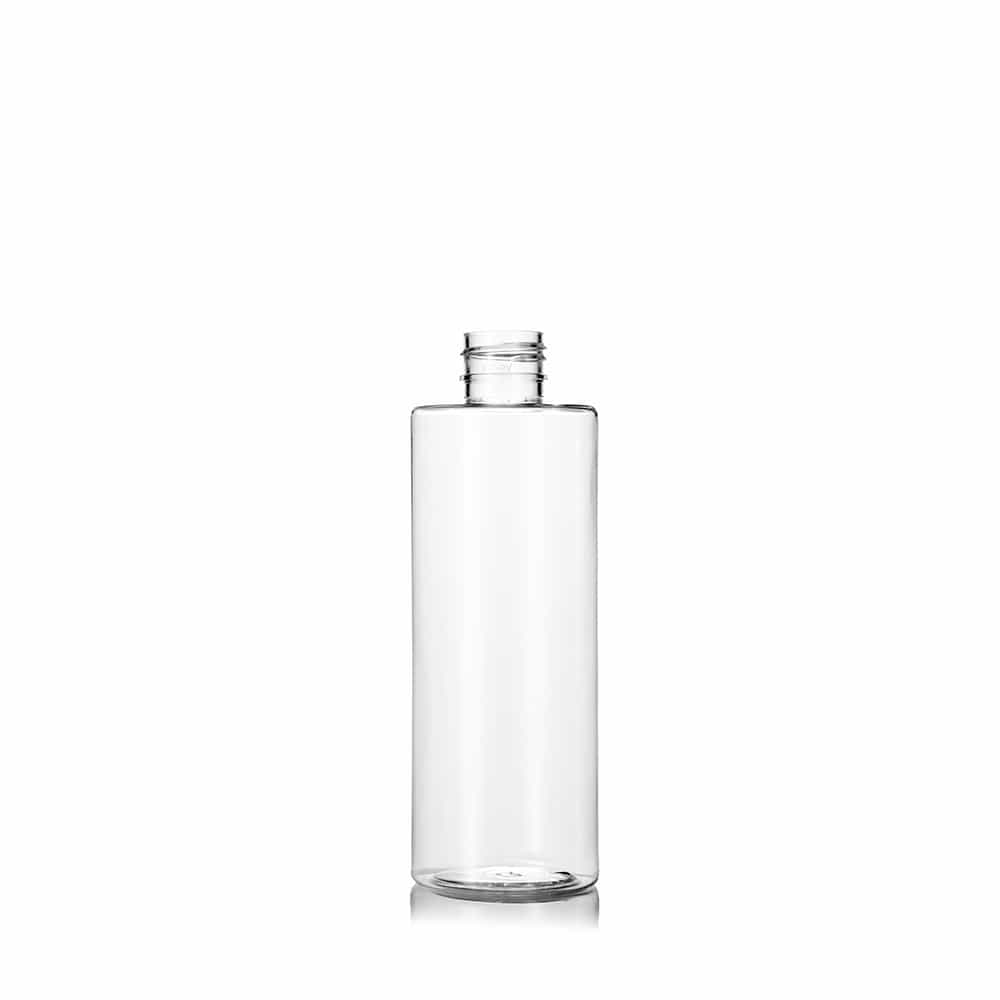
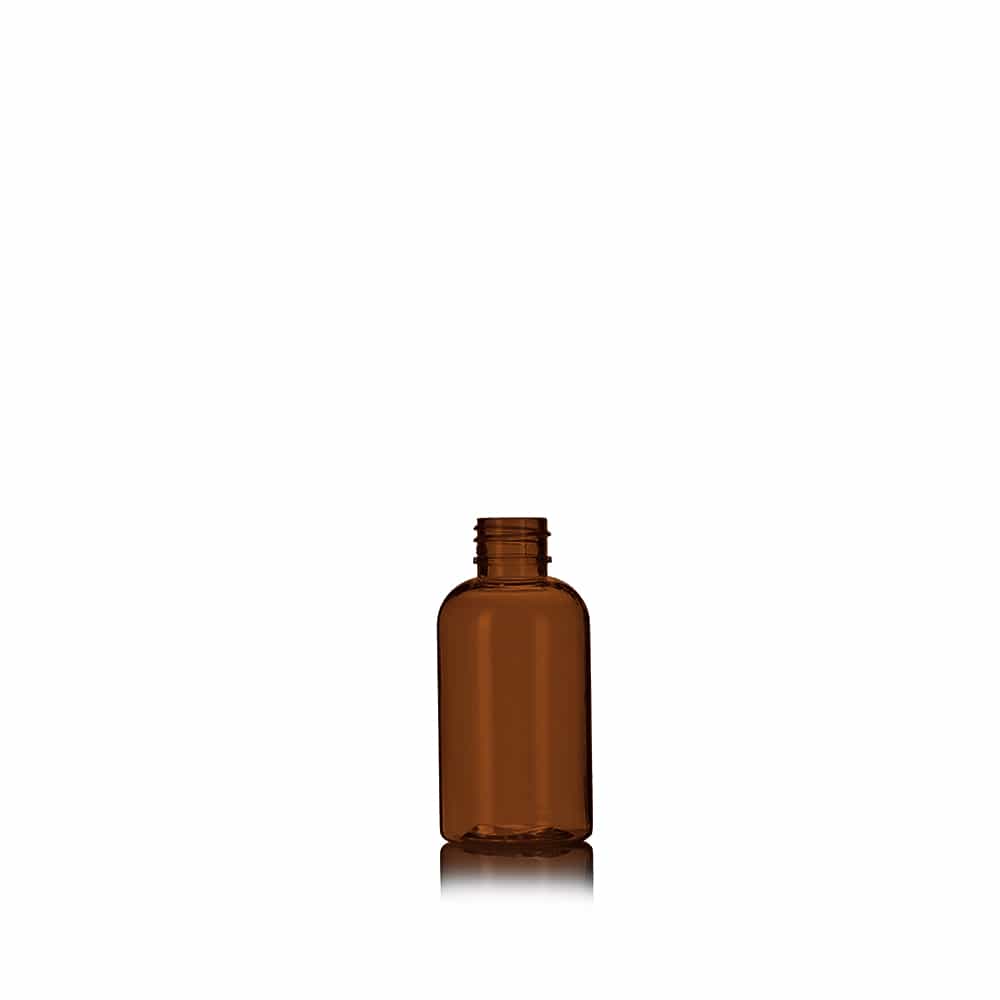
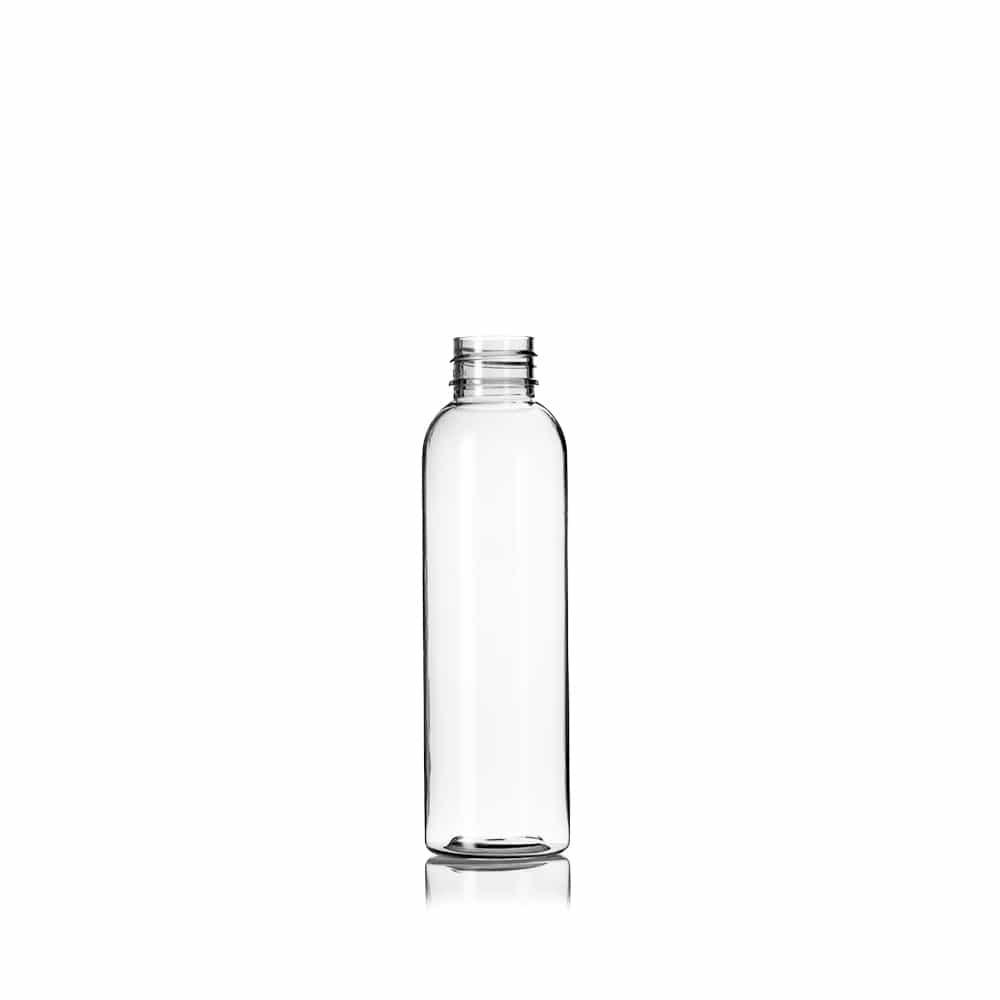
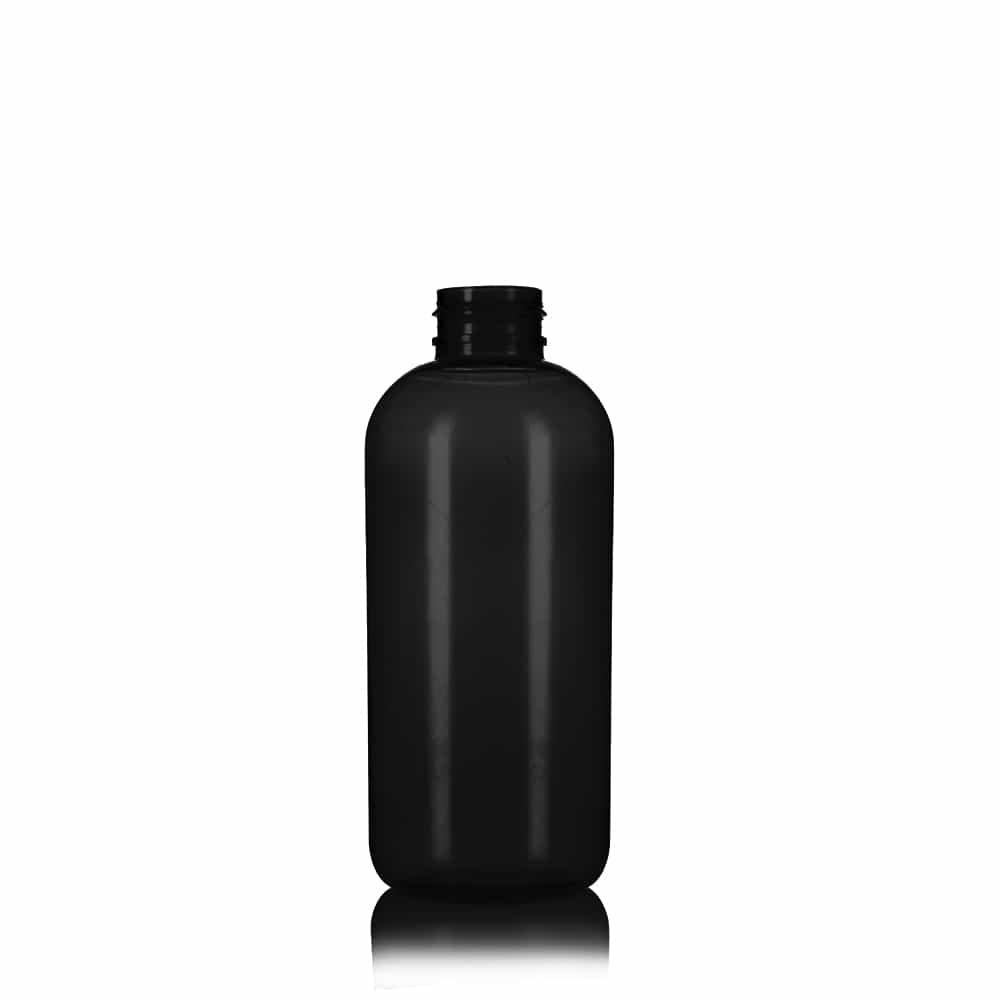
Molding. The PCR pellets become new bottles, jars, and closures. Depending on the PCR percentage and the quality of the input material, the finished product can be nearly indistinguishable from virgin plastic, or it can have slight color variations that signal its recycled origin.
PCR vs PIR: The Difference That Matters
Not all recycled plastic is the same, and the distinction between PCR and PIR is more than academic.
PCR (post-consumer recycled) comes from the consumer waste stream. It represents actual waste diversion, meaning plastic that would have otherwise ended up in a landfill, incinerator, or the ocean.
PIR (post-industrial recycled) comes from manufacturing scrap. When a plastics manufacturer generates trim waste or defective parts, they can grind that material and feed it back into their production process. As packaging consultant Atlantic Packaging noted in a 2024 deep dive, "Most packaging manufacturers are collecting and recycling their production scrap as just a matter of doing good business."
PIR is cleaner and easier to process because it never left the factory. But sustainability advocates are increasingly skeptical of PIR claims. Atlantic Packaging observed that "some manufacturers are touting their use of PIR as a sustainability attribute of their product," which some advocates consider "hollow, or may even call greenwashing."
When California's AB 793 mandates recycled content in beverage containers, it specifies post-consumer content. When a brand claims "made with recycled plastic," consumers generally assume PCR, not PIR. The regulatory and reputational distinction matters.
What About rPET?
rPET stands for recycled polyethylene terephthalate, which is recycled PET plastic (resin code 1). It is the most common form of PCR because PET bottles have the highest collection and recycling rates of any plastic type.
The National Association for PET Container Resources (NAPCOR) reported a U.S. PET bottle recycling rate of 30.2 percent in 2024, down from 32.5 percent the year before. That decline, despite PET being the most recyclable plastic, underscores the challenges facing the entire recycling system.
So rPET is a specific type of PCR. All rPET is PCR, but not all PCR is rPET. PCR can also refer to recycled HDPE (milk jugs, detergent bottles) or recycled PP (yogurt containers, bottle caps).
Who Uses PCR Packaging and Why
The shift toward PCR is being driven by three forces converging at once: regulation, brand commitments, and consumer expectations.
Regulation is no longer optional. California requires beverage containers to contain 25 percent PCR as of 2025, escalating to 50 percent by 2030 under AB 793. The state's SB 54 establishes extended producer responsibility for all packaging categories. India mandated 30 percent recycled content in PET bottles in April 2025. Japan requires up to 60 percent recycled content in cosmetics packaging. Europe's Packaging and Packaging Waste Regulation sets binding targets by 2030.
Major brands are buying in volume. According to CalRecycle data from April 2025, Niagara Bottling averaged 31 percent PCR in its California bottles. PepsiCo hit 36 percent. Brands collectively used 1.8 million metric tons of recycled resin in 2023, up from 1.6 million the year prior, while virgin plastic use dropped 4 percent, the largest decline since 2018.
But progress is uneven. PepsiCo reduced its global PCR target from 50 percent by 2030 to 40 percent by 2035, citing supply constraints. Coca-Cola's PCR percentage in California actually dropped from 22 percent to 20 percent between 2023 and 2024, though the company also reduced total PET use. These rollbacks reflect real supply challenges, not a lack of commitment.
The Cost Question
PCR resin costs approximately 33 percent more than virgin polymer at the commodity level, according to the Smithers consultancy's 2026 report "The Future of PCR Packaging to 2031." That premium creates what Smithers describes as a self-reinforcing problem: higher prices reduce demand, which discourages investment in recycling infrastructure, which keeps supply tight and prices high.
But the commodity spread does not necessarily translate to a finished-product premium. Suppliers that run dedicated PCR production at scale, stock standard sizes, and maintain relationships with reclaimers can absorb much of the cost difference. The per-unit price gap between a PCR bottle and a virgin bottle from the same supplier can be as little as a few cents, or it can be significant, depending entirely on the supplier's business model.
Propacks stocks PCR bottles at the same price point as virgin alternatives for exactly this reason. When the price is the same, the decision becomes simple.
How to Verify PCR Content
This is where the industry has a trust problem.
California State Senator Catherine Blakespear introduced SB 633 in 2025 to require country-of-origin reporting for PCR in beverage containers. During a July 2025 hearing, she stated: "No current system exists to verify the authenticity of recycled content claims. Recycled plastic is indistinguishable from new plastic after it has been processed by reclaimers and pelletized."
She cited a revealing precedent: when California required reusable grocery bag manufacturers to prove their bags contained recycled content, "a majority of manufacturers were unable to prove their bags were made from recycled material."
For brands buying PCR packaging, verification matters. Look for:
- GRS (Global Recycled Standard) certification. Third-party verified chain of custody for recycled content. This is the gold standard.
- SCS Global Services certification. Independent verification of recycled content percentages.
- APR PCR Certification. The Association of Plastic Recyclers offers its own certification program.
- Supplier documentation. At minimum, your supplier should provide a certificate of compliance stating the PCR percentage and the source of the recycled material.
As the PCR market from consumer packaging matures, the industry is evolving to include QR codes on packaging that can track material origin and recycled content through the supply chain.
The Market Trajectory
The global PCR packaging market was valued at $23.25 billion in 2025 and is projected to reach $46.86 billion by 2034, growing at 8.17 percent annually, according to Fortune Business Insights. North America represents 35.18 percent of that market.
But the market faces a fundamental constraint: supply. The OECD found that global plastic waste reached 353 million metric tons in 2019, but only 9 percent was recycled. Half was landfilled, a fifth incinerated, and roughly a fifth was mismanaged entirely.
European recycling capacity growth has already slowed from 17 percent in 2021 to 6 percent in 2023. Many major brands missed their own 2025 PCR targets. Without significant infrastructure investment, the 2030 legislative deadlines will be equally challenging.
For small and mid-size brands, the supply constraint is actually an advantage. You are not competing with PepsiCo for allocation. A supplier like Propacks that stocks PCR bottles in standard sizes can serve your volume without supply chain drama.
Getting Started With PCR Packaging
If you are evaluating PCR packaging for the first time, here is the practical path:
1. Start with stock bottles. Custom molds cost $5,000 to $20,000 and add 8 to 12 weeks of lead time. Stock PCR bottles ship immediately and cost the same as virgin.
2. Choose common neck finishes. 24-410 and 20-410 are the most widely available and have the broadest closure compatibility. Stick with these unless your product requires a specialty pump or sprayer.
3. Request certification. Ask your supplier for GRS certification or equivalent documentation verifying the PCR percentage. If they cannot provide it, that is a red flag.
4. Update your packaging copy. Include the PCR percentage on your label and product page. Consumers value transparency but cannot act on information they do not see.
5. Talk about it. The brands getting traction with sustainability messaging are specific, not vague. "Made with 100 percent post-consumer recycled plastic" beats "eco-friendly packaging" every time.

Written by
Queenie FongQueenie Fong is the founder of Propack Solutions, a woman-owned sustainable packaging company based in Ontario, CA. With nearly a decade of experience in the packaging industry, she specializes in post-consumer recycled (PCR) materials, helping brands source rPET, PCR HDPE, and PCR PP packaging that meets regulatory requirements and sustainability goals.