How to Choose PCR Packaging for Lotions, Serums, and Hair Care in 2026


Choosing the wrong PCR packaging for a beauty product can ruin formulations, disappoint customers, and waste thousands of dollars in inventory. The right bottle for a water-based toner is the wrong bottle for an oil-based serum. The closure that works for a thick hair mask will not work for a lightweight spray.
This is not a generic sustainability pitch. This is a compatibility guide for brands that have already decided to use recycled packaging and need to get the material science right.
Why Formulation Compatibility Is the First Question
Different skincare and hair care formulations place different demands on their packaging. A professional guide published by Xumin Packaging identified the key variables: oxidation resistance, shelf life, hygiene, user convenience, and transport safety. Each formula type has different priorities.
Water-based products (toners, micellar water, essences). These are the easiest to package. Water-based formulations have minimal chemical interaction with plastic containers. PCR PET and PCR HDPE both work well. The main concern is closure seal quality because thin liquids find every gap.
Oil-based products (facial oils, hair oils, body oils). Oils can interact with certain plastics over time, causing stress cracking, clouding, or scent absorption. PCR PET handles most cosmetic oils well, but essential-oil-heavy formulations (tea tree, eucalyptus, citrus) are more aggressive. For high-concentration essential oil products, glass remains the safer choice. For products where essential oils are a minor ingredient (under 2 percent of the formula), PCR PET performs fine.
Emulsions (lotions, creams, conditioners). These are oil-in-water or water-in-oil mixtures stabilized by emulsifiers. The main packaging concern is not chemical compatibility but dispensing. Thick lotions need wider mouth openings or pump dispensers. Thin lotions work with disc-top caps. The PCR material itself is not the variable here; the bottle shape and closure type are.
Active-ingredient products (serums with vitamin C, retinol, AHAs/BHAs). These are where packaging decisions get consequential. Vitamin C (ascorbic acid) is notoriously unstable and degrades with light and air exposure. Retinol is similarly photosensitive. For these formulations, consider:
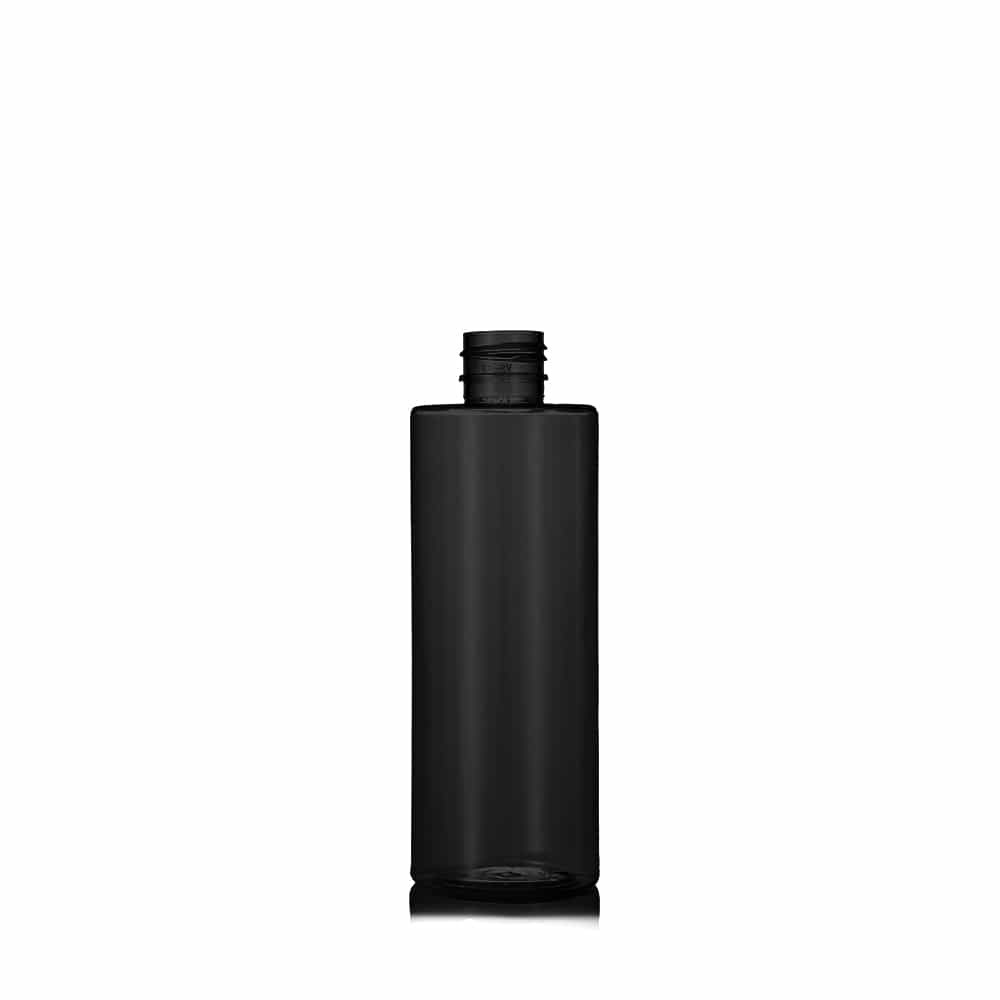
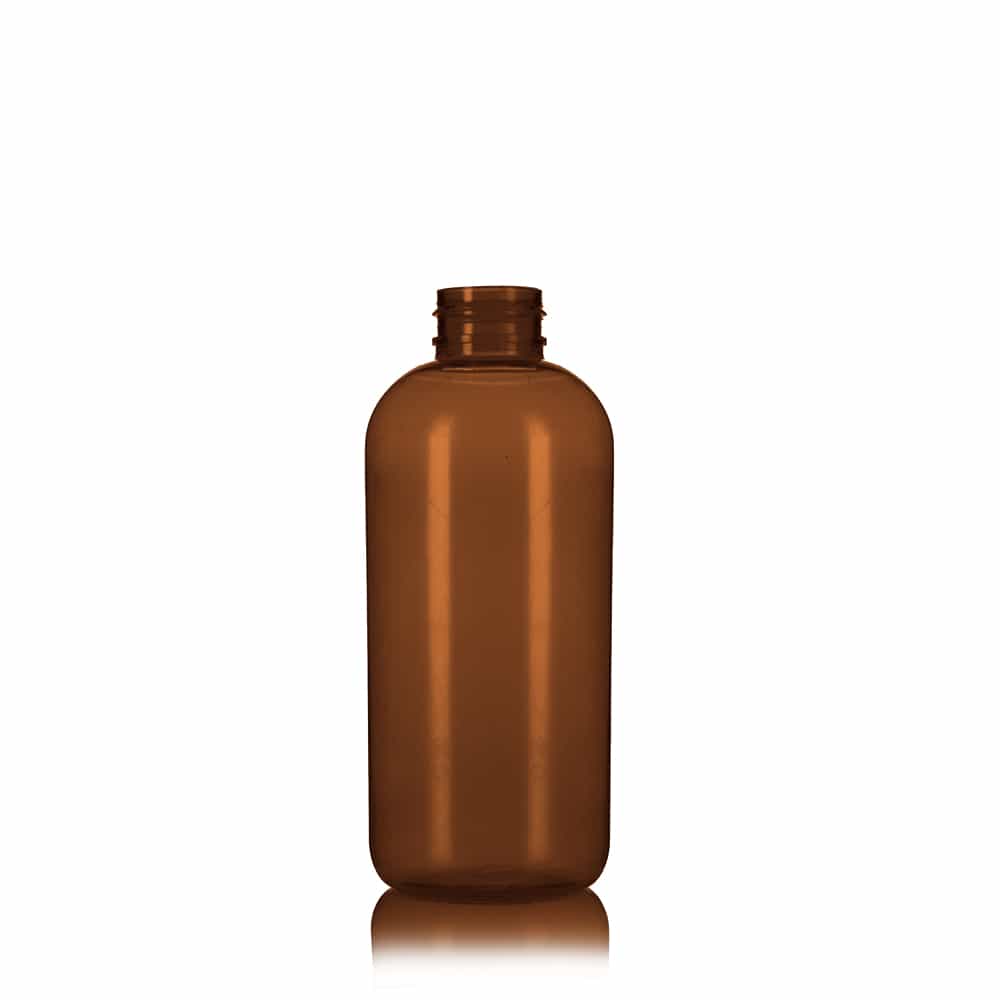
- Opaque or amber PCR bottles to block UV light
- Airless pump systems to minimize oxygen exposure
- Dropper bottles with UV-protective coatings if transparency is important for the brand aesthetic
PCR material does not inherently affect active ingredient stability any more than virgin material does. The resin type and the container design matter more than whether the plastic is recycled.
Hair care products (shampoos, conditioners, treatments). High-volume, lower-margin products that need packaging tough enough for shower use. PCR HDPE is the standard choice: impact-resistant, squeeze-friendly, and compatible with the surfactants in most shampoo formulations. Flip-top caps and disc-top caps are the most common closures for this category.
Matching PCR Material to Product Type
| Product Type | Best PCR Material | Recommended Closure | Watch Out For |
|---|---|---|---|
| Toner / Micellar Water | PCR PET | Disc-top cap, spray | Thin liquid leaks through loose closures |
| Facial Oil | PCR PET (glass for EO-heavy) | Dropper, treatment pump | Essential oil stress cracking |
| Lotion / Body Cream | PCR HDPE or PCR PP | Pump, disc-top | Thick formula needs wide opening or pump |
| Serum (Vitamin C, Retinol) | Amber/Opaque PCR PET | Airless pump, dropper | UV degradation of actives |
| Shampoo / Conditioner | PCR HDPE | Flip-top, disc-top | Impact resistance for shower use |
| Hair Treatment / Mask | PCR HDPE or PCR PP | Wide-mouth jar, flip-top | Viscosity requires wide opening |
| Body Spray / Setting Spray | PCR PET | Fine mist sprayer | Sprayer dip tube length critical |
The Color and Clarity Trade-Off
One of the most common questions about PCR packaging is whether it looks different from virgin plastic. The honest answer: it depends on the PCR percentage and the source material.
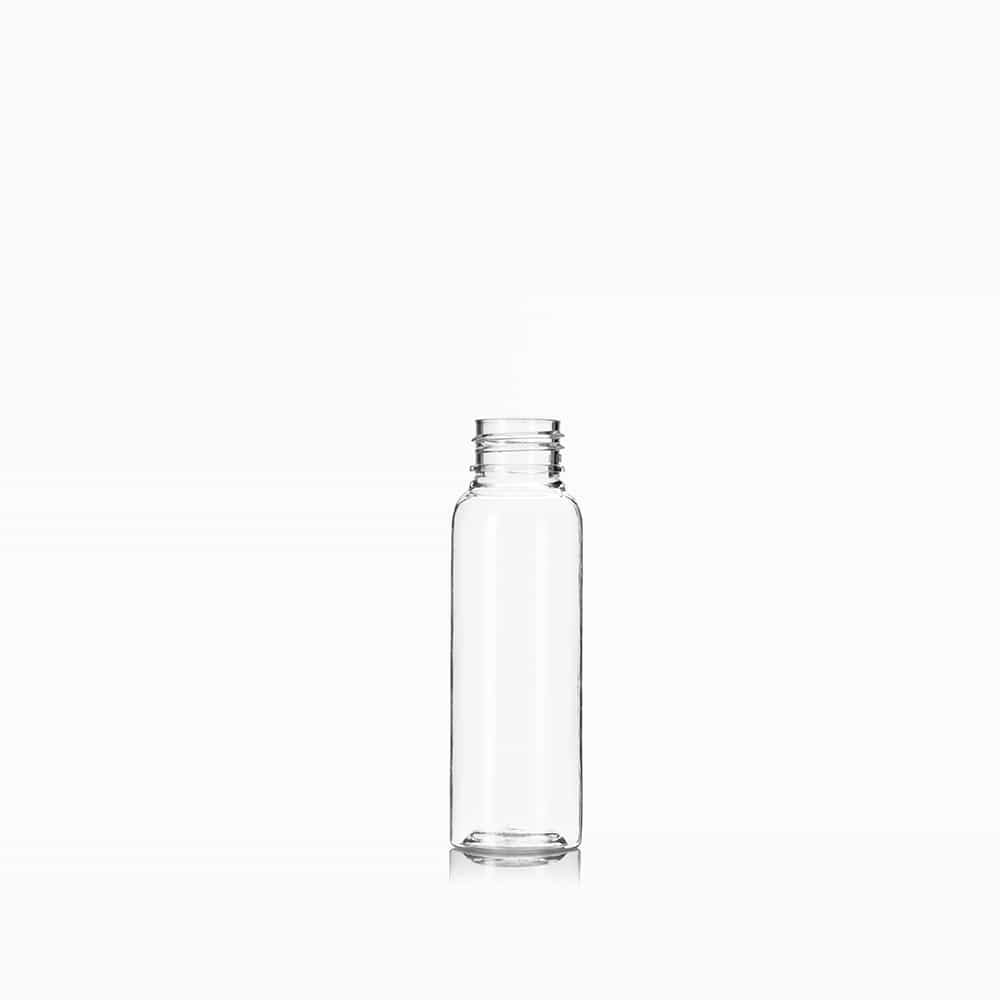
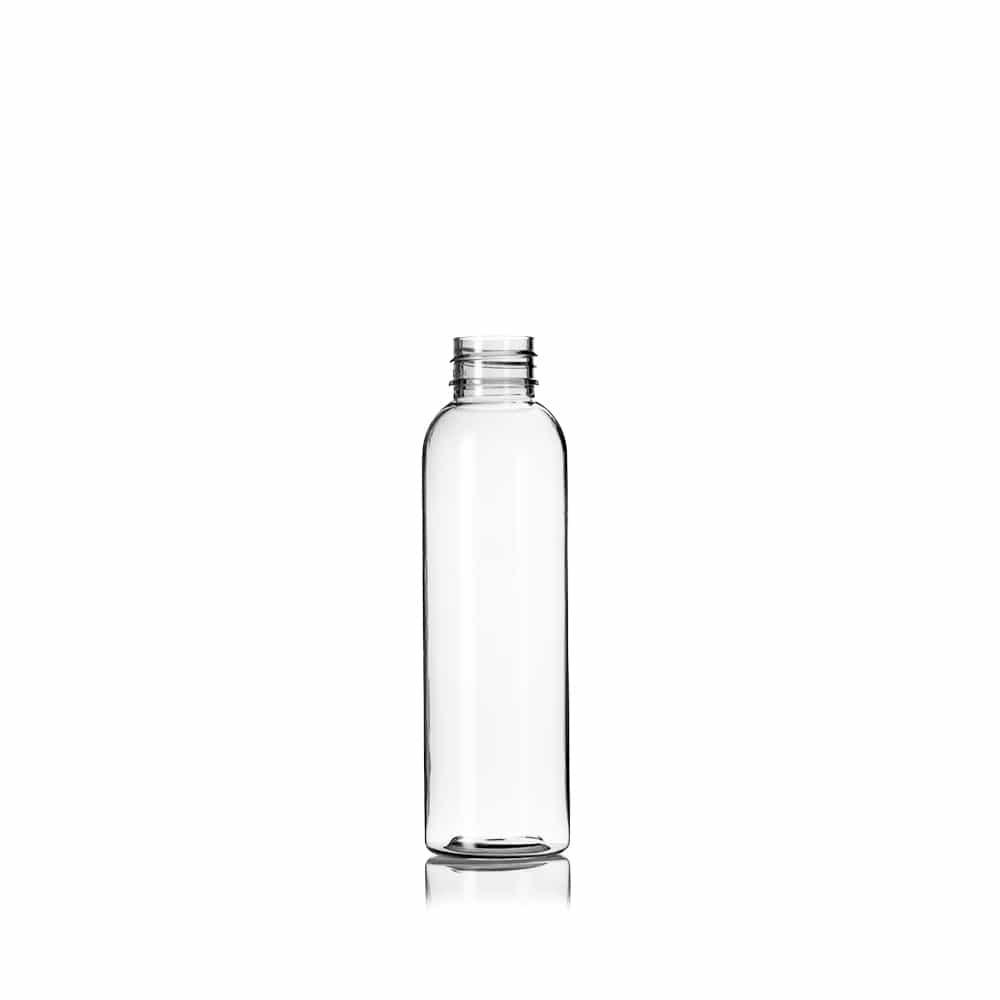
100% PCR PET typically has a slight grayish or amber tint compared to crystal-clear virgin PET. For brands that want a "clean" transparent aesthetic, this can be a concern. For brands using colored or opaque bottles, it is irrelevant.
50% PCR blends split the difference. The tint is minimal, and most consumers cannot distinguish a 50% PCR bottle from a virgin bottle without being told.
PCR HDPE naturally comes in white or natural (translucent) colors and shows virtually no visual difference from virgin HDPE. This is one reason HDPE is popular for hair care and body care: the recycled material looks identical to conventional.
The Smithers 2026 report on PCR packaging trends noted that "improve PCR color consistency for packaging" is an active area of R&D. Propacks addresses this by curating bottles from manufacturing partners that maintain tighter color specifications than the industry average.
For brands where the bottle aesthetic is central to the brand identity, request samples before ordering. Put the PCR bottle next to your current virgin bottle and decide if the difference matters to your customer. Often it does not.
Closure Compatibility: The Expensive Mistake
The most expensive packaging mistake in beauty is ordering bottles and closures with incompatible neck finishes. This is true for virgin and PCR packaging alike, but it bears repeating because the cost is total: mismatched closures mean your entire order is unusable.
Neck finish notation. A "24-410" means 24mm diameter and 410 thread style. A "20-410" is 20mm diameter with the same thread. These are not interchangeable. A 24-410 closure will not seal on a 24-400 bottle, even though the diameter is the same, because the thread pattern is different.
According to Berlin Packaging's technical guide on dip tube measurement, pump and sprayer closures require a dip tube cut to the exact inner height of the bottle to function properly. A dip tube that is too short leaves product at the bottom. A dip tube that is too long buckles and blocks flow. The formula:
Dip tube length = bottle inner height minus 0.25 inches
This measurement must be taken with the specific bottle you are using, not estimated from spec sheets, because PCR bottles can have slightly different wall thicknesses than their virgin equivalents.
The safest closures for PCR bottles:
- 24-410 disc-top caps, the universal standard for lotions, shampoos, and liquid skincare
- 20-410 treatment pumps, standard for serums and lightweight liquids
- 24-410 flip-top caps, standard for shampoos and body washes
- Fine mist sprayers (20-410 or 24-410), for toners, setting sprays, and body mists
Propacks stocks all of these closures in sizes matched to their PCR bottle inventory, which eliminates the compatibility risk entirely. If you are sourcing bottles and closures from different suppliers, verify neck finish compatibility with physical samples before placing a production order.
What the Big Brands Are Actually Doing
Looking at what enterprise brands have committed to provides useful context for smaller brands making the same decision.
Estée Lauder reported making progress toward its sustainable packaging goals, including increasing PCR content across its portfolio. P&G, through its VP of Global Sustainability Virginie Helias, publicly stated the company wants "to lead a movement to use plastics in a more responsible way."
But the most revealing data comes from California's compliance reports. CalRecycle data from April 2025 shows Niagara Bottling at 31 percent PCR, PepsiCo at 36 percent, and many other bottlers above the state's 25 percent mandate. These companies are not using PCR because it is trendy. They are using it because the law requires it.
For beauty brands, Japan's recycled content targets of up to 60 percent for cosmetics packaging represent the most aggressive mandate in the category. Brands selling into the Japanese market will need PCR sourcing strategies regardless of their position on sustainability.
The practical takeaway: if you plan to sell in California, Japan, or the EU within the next five years, start building your PCR supply chain now. The brands that have relationships with reliable PCR suppliers will have an advantage when mandates tighten.
The Stability Testing Protocol
Before committing to PCR packaging for any formulation, run this stability protocol:
- Fill 10 bottles with your actual product. Not water, not a test solution. Your real formula.
- Store 5 bottles at room temperature (72°F/22°C) and 5 at accelerated conditions (100°F/38°C).
- Check at 2 weeks, 30 days, 60 days, and 90 days. Look for: color change in the product, color change in the bottle, scent changes, closure fit changes, leaking, stress cracking, and label adhesion issues.
- Do a squeeze test at each interval (for HDPE bottles). PCR HDPE should maintain flexibility. If the bottle becomes brittle, the PCR quality may be insufficient.
- Compare to a control group using your current virgin packaging.
If the PCR bottles perform equivalently to virgin through 90 days at accelerated conditions, you have your answer. If there are differences, they will usually appear within the first 30 days at elevated temperature.
Getting Started
The path from "considering PCR" to "shipping in PCR" does not need to take months.
Week 1: Order samples of PCR bottles in your target size and neck finish. Fill them with product and begin stability testing.
Week 2 to 4: While stability tests run, update your product page copy and prepare the sustainability messaging. "Made with 100% post-consumer recycled plastic" is specific and verifiable.
Week 4 to 6: Review stability results. If passing, place your first production order.
Week 6+: Ship, tell your customers, and add the PCR story to your brand narrative.
The global PCR packaging market is growing at 8.17 percent annually, from $23.25 billion in 2025 to a projected $46.86 billion by 2034. The question is not whether your brand will eventually use recycled packaging. The question is whether you get there ahead of your competitors or behind them.

Written by
Queenie FongQueenie Fong is the founder of Propack Solutions, a woman-owned sustainable packaging company based in Ontario, CA. With nearly a decade of experience in the packaging industry, she specializes in post-consumer recycled (PCR) materials, helping brands source rPET, PCR HDPE, and PCR PP packaging that meets regulatory requirements and sustainability goals.