Oz to ML Conversion for Bottles: Beauty and Personal Care Sizes


1 fluid ounce equals 29.57 milliliters. But if you are sourcing bottles for a beauty or personal care product, the conversion is only half the answer. You also need to know that a "4 oz bottle" does not hold exactly 4 oz of product, and the size printed on a supplier's catalog may refer to overflow capacity rather than fill capacity.
This guide gives you the exact conversion plus the practical context for every standard bottle size used in beauty, skincare, hair care, and wellness packaging.
Need bottles now? Browse our full catalog with visible pricing, no minimum order, and fast shipping from Los Angeles.
Standard Conversion Chart
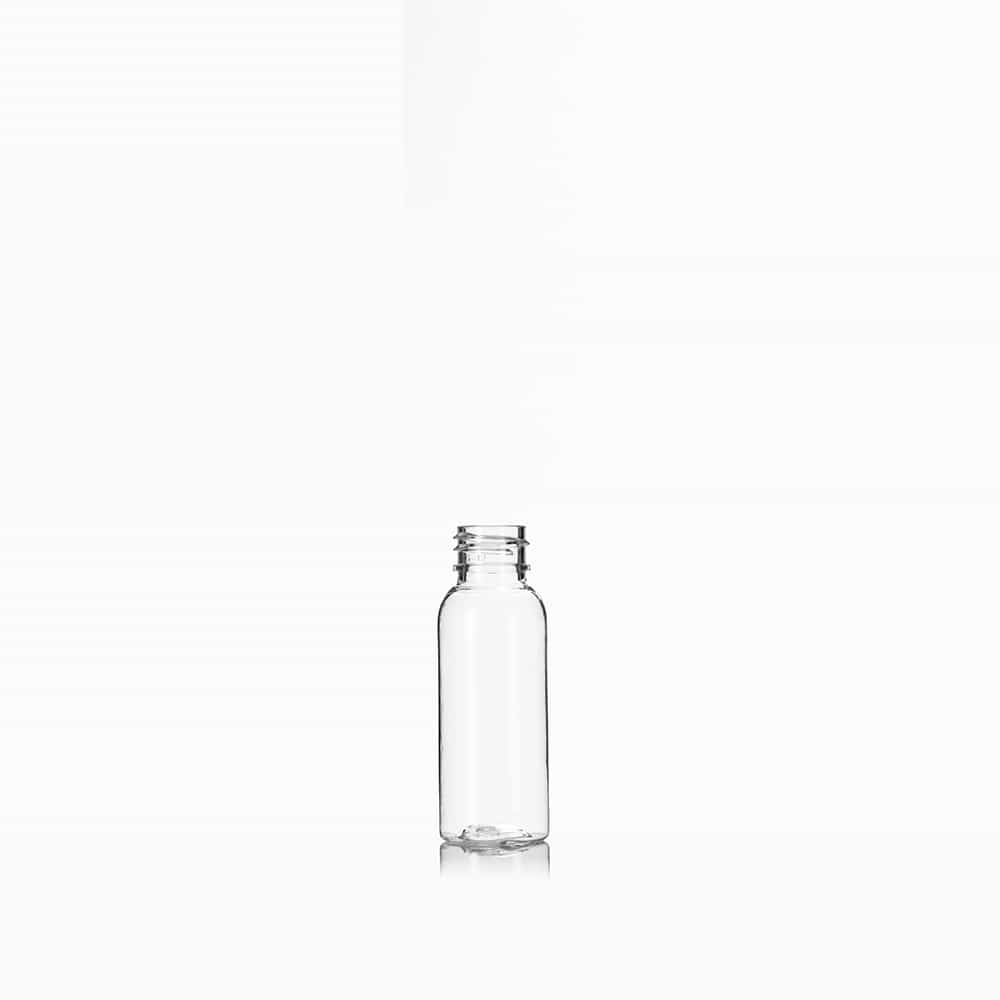
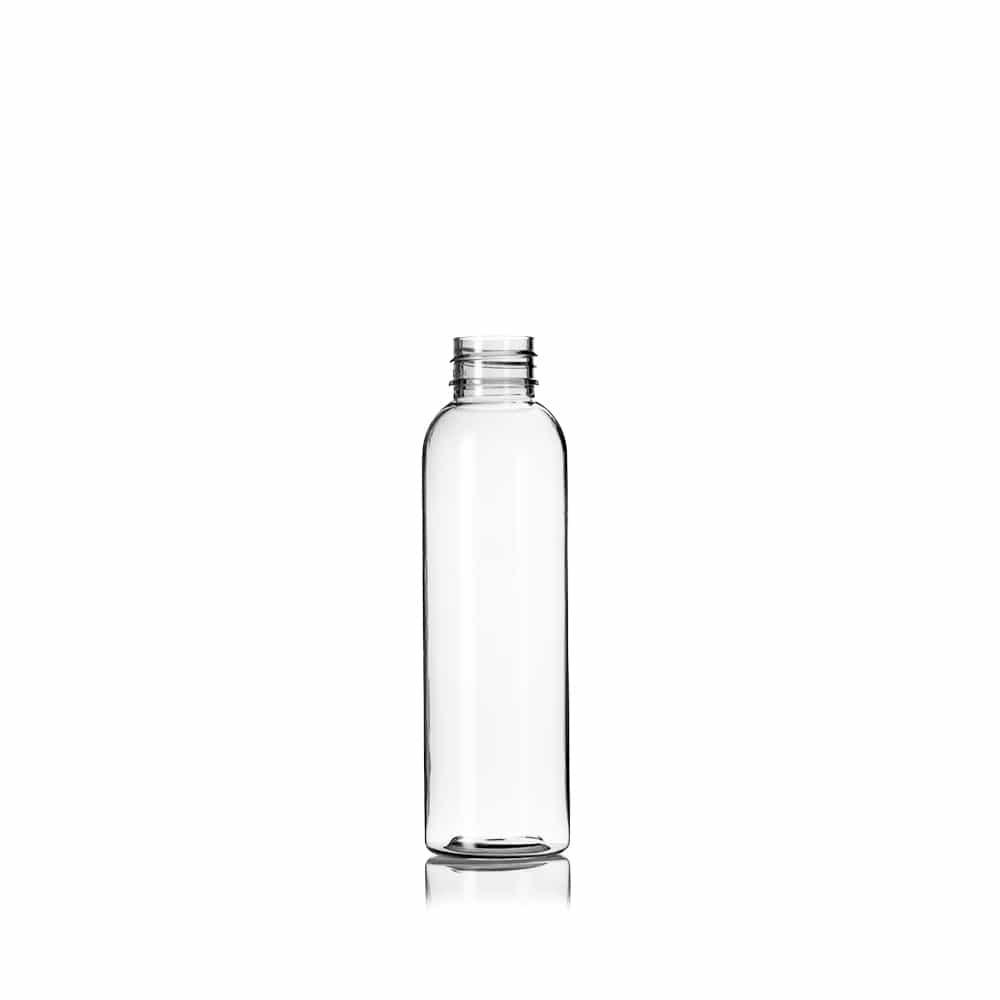
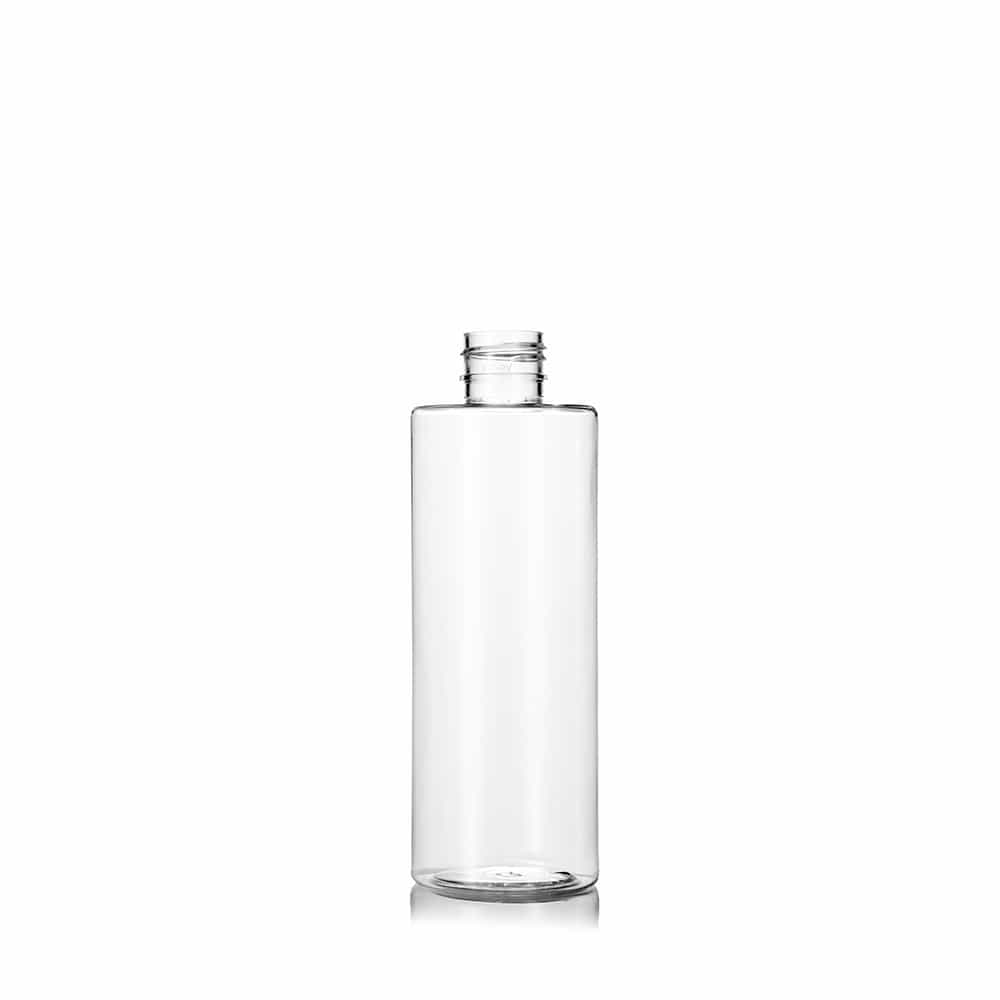
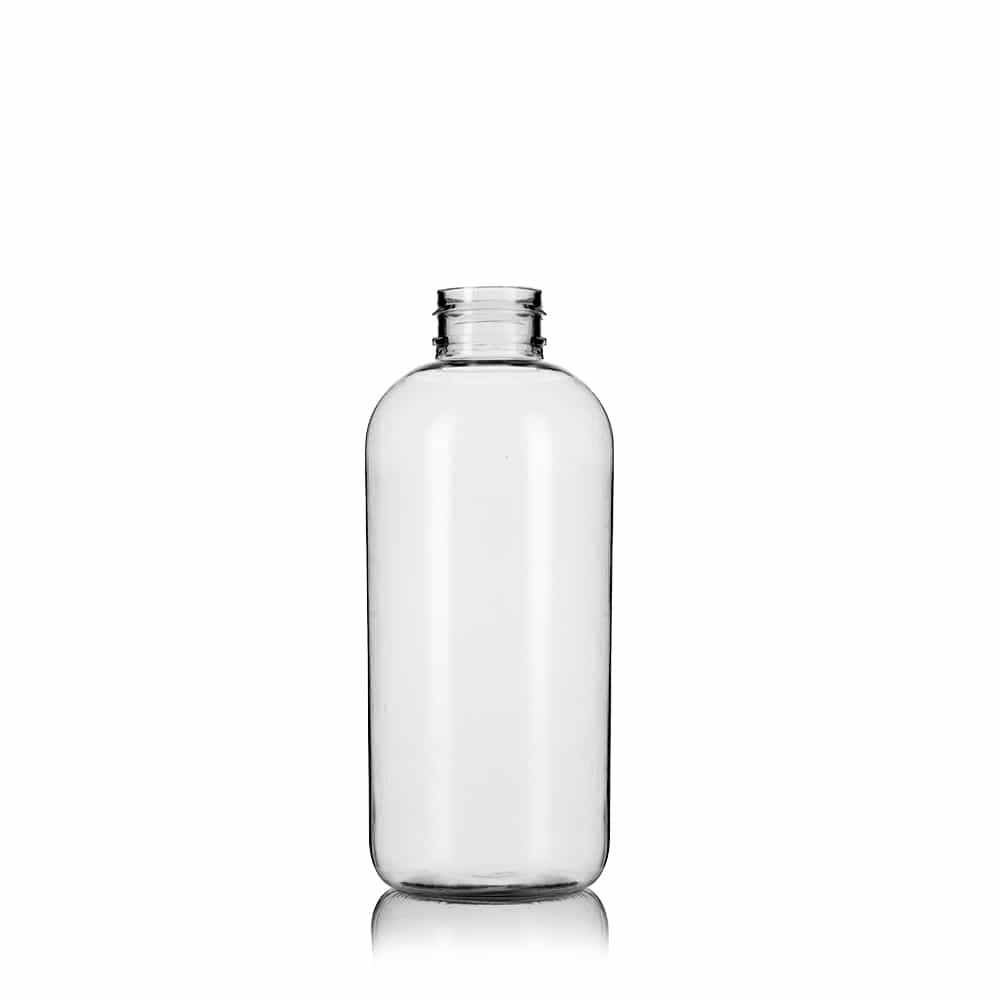
 PET bottles lined up by height from 1 oz to 32 oz showing standard bottle size progression
| Fluid Ounces (oz) | Milliliters (ml) | Common Name | Typical Products |
|---|---|---|---|
| 0.17 oz | 5 ml | Sample vial | Perfume samples, serum samples |
| 0.5 oz | 15 ml | Half ounce | Eye serums, lip oils, essential oils |
| 1 oz | 30 ml | One ounce | Facial serums, facial oils, foundations |
| 1.7 oz | 50 ml | Travel size | Moisturizers, sunscreens (TSA carry-on limit) |
| 2 oz | 60 ml | Two ounce | Facial treatments, eye creams, travel products |
| 3 oz | 90 ml | Three ounce | Small lotions, hair oils, travel sizes |
| 3.4 oz | 100 ml | TSA liquid limit | Travel sizes, mists, toners (max for carry-on) |
| 4 oz | 120 ml | Four ounce | Toners, facial mists, treatments, small shampoos |
| 6 oz | 180 ml | Six ounce | Lotions, body creams, small body washes |
| 8 oz | 240 ml | Eight ounce (half pint) | Lotions, shampoos, conditioners, body washes |
| 10 oz | 300 ml | Ten ounce | Standard shampoo, conditioner, body wash |
| 12 oz | 355 ml | Twelve ounce | Hand soap, body wash, larger shampoo |
| 16 oz | 480 ml | Sixteen ounce (pint) | Large shampoo, conditioner, body lotion |
| 32 oz | 950 ml | Thirty-two ounce (quart) | Salon sizes, refill bottles, bulk dispensers |
| 64 oz | 1,893 ml | Half gallon | Salon backbar, bulk refills |
For detailed measurements including diameter, height, and neck finish dimensions, see our bottle dimensions guide.
Overflow vs Fill Capacity: Why Your "8 oz Bottle" Is Not 8 oz
 Two bottles showing overflow capacity filled to the brim versus fill capacity with headspace
Every bottle has two capacity measurements:
Overflow capacity is the total volume the bottle can physically hold when filled to the absolute brim. This is the number most suppliers print in their catalogs.
Fill capacity (also called working capacity or fill line) is the practical volume when the bottle is filled to the shoulder, leaving headspace for the closure, expansion, and shipping safety. Fill capacity is typically 90 to 95 percent of overflow capacity.
| Supplier Lists As | Overflow Capacity | Actual Fill Capacity | You Can Fill |
|---|---|---|---|
| 1 oz bottle | 30 ml | 27 to 28 ml | 0.9 to 0.95 oz |
| 2 oz bottle | 60 ml | 54 to 57 ml | 1.8 to 1.9 oz |
| 4 oz bottle | 120 ml | 108 to 114 ml | 3.6 to 3.8 oz |
| 8 oz bottle | 240 ml | 216 to 228 ml | 7.3 to 7.7 oz |
| 16 oz bottle | 480 ml | 432 to 456 ml | 14.6 to 15.4 oz |
This matters because if your product label says "8 fl oz (237 ml)" but you are filling an "8 oz" bottle to the fill line, you are only dispensing about 216 to 228 ml. That is a labeling compliance gap. Note that 8 fl oz equals 236.59 ml exactly. Some brands round to 237 ml (standard math rounding) or use nominal sizes such as 240 ml (a marketing convention, not the exact conversion). The declared quantity should match the actual net contents and the rules for the product category.
The fix: either use a bottle with a slightly larger overflow capacity than your labeled volume (e.g., a 9 oz overflow bottle for an 8 oz product), or adjust your label to reflect the actual fill volume.
Metric vs Imperial: Which Markets Use What
| Market | Primary Unit | Label Requirement |
|---|---|---|
| United States | Fluid ounces (oz) | US customary units required. Metric is optional for FDA regulated cosmetics (21 CFR 701.13), but required alongside US units for FTC regulated consumer commodities (16 CFR 500.8) |
| Canada | Milliliters (ml) | Metric required, oz optional |
| European Union | Milliliters (ml) | Metric only, "e" mark for estimated quantity |
| United Kingdom | Milliliters (ml) | Metric required since 1995 |
| Australia | Milliliters (ml) | Metric only |
| Japan | Milliliters (ml) | Metric required |
In the United States, many consumer products must state net quantity clearly, and FTC regulated consumer commodities generally require both US customary and metric units. FDA regulated categories, including cosmetics, have category specific rules: metric is permitted but not mandatory under 21 CFR 701.13. Brands should confirm the rule that applies to their product type and target market.
For cosmetics specifically, FDA requires liquids to be declared by fluid measure and solids, semisolids, viscous products, and mixtures of solid and liquid to be declared by weight. Creams, gels, and thick lotions may need different label treatment than water thin liquids. There is also a trade custom exception under 21 CFR 701.13(a) that allows established practices to override the default rule.
Liquids are usually labeled by volume, but production lines commonly fill by weight using a density conversion because gravimetric filling is faster and more accurate. Formulas and costing often use weight too, so teams need to connect the product density, target fill volume, and label claim. The regulatory requirement is that the declared quantity is accurate, not that it was measured by a specific method.
Common Bottle Sizes by Product Category
 Beauty and personal care bottles in different sizes from serum dropper to shampoo pump
Skincare
| Product | Typical Size | Why |
|---|---|---|
| Facial serum | 1 oz (30 ml) | Concentrated formula, high price per ml, small dropper bottle |
| Facial oil | 1 oz (30 ml) | Same reasoning as serum |
| Eye cream | 0.5 oz (15 ml) | Small application area, high concentration |
| Moisturizer | 1.7 oz (50 ml) or 2 oz (60 ml) | Daily use product, mid-range price point |
| Toner | 4 oz (120 ml) or 8 oz (240 ml) | High usage rate, lower price per ml |
| Sunscreen | 1.7 oz (50 ml) or 3 oz (90 ml) | Travel-friendly sizing, frequent reapplication |
Hair Care
| Product | Typical Size | Why |
|---|---|---|
| Shampoo | 8 oz (240 ml) to 12 oz (355 ml) | Standard retail shelf size |
| Conditioner | 8 oz (240 ml) to 12 oz (355 ml) | Matched to shampoo for set pricing |
| Hair oil | 2 oz (60 ml) to 4 oz (120 ml) | Concentrated, small application |
| Hair mask | 8 oz (240 ml) | Thick formula, wide-mouth jar |
| Salon size | 32 oz (950 ml) | Professional backbar use |
Body Care
| Product | Typical Size | Why |
|---|---|---|
| Body lotion | 8 oz (240 ml) to 16 oz (480 ml) | Large application area, daily use |
| Body wash | 10 oz (300 ml) to 16 oz (480 ml) | High usage rate in shower |
| Hand soap | 8 oz (240 ml) to 12 oz (355 ml) | Countertop pump dispenser size |
| Body spray | 4 oz (120 ml) to 8 oz (240 ml) | Mist application, moderate usage |
Quick Reference: The Conversions You Will Actually Use
| To Convert | Multiply By | Example |
|---|---|---|
| Oz to ml | 29.5735 | 4 oz × 29.5735 = 118.29 ml |
| Ml to oz | 0.0338 | 250 ml × 0.0338 = 8.45 oz |
| Oz to liters | 0.0296 | 32 oz × 0.0296 = 0.946 L |
| Liters to oz | 33.814 | 1 L × 33.814 = 33.81 oz |
For practical bottle sourcing, you almost never need exact conversions. The industry uses standard sizes (1 oz, 2 oz, 4 oz, 8 oz, 16 oz, 32 oz) that are close enough to their metric equivalents (30 ml, 60 ml, 120 ml, 240 ml, 480 ml, 950 ml) that the difference is within manufacturing tolerance.
Shop Bottles by Size
Now that you know the conversions, find the right bottle. Propacks carries PCR bottles in every standard size: 1 oz (30 mL), 2 oz (60 mL), 4 oz (120 mL), 8 oz (240 mL), 12 oz (355 mL), 16 oz (475 mL), and 32 oz (950 mL). All bottles ship with no MOQ from Ontario, California. We also carry travel size bottles for brands that need TSA compliant packaging.
Looking for more measurement guides? Check out our cc vs mL explainer, the m vs mm vs mL vs mil guide, or our full liquid measurement conversion chart. If you are packing for a trip, our travel size bottle guide covers TSA rules and common sizes. And if you are comparing bottle materials, read our HDPE plastic guide. For the reverse direction, see our mL to oz conversion guide.
Frequently asked questions
How many ml is a 1 oz bottle?+
A 1 fluid ounce bottle has an overflow capacity of approximately 30 ml (29.57 ml exactly). The actual fill capacity with headspace is typically 27 to 28 ml. This is the standard size for facial serums, facial oils, and essential oils in the beauty industry.
What is the TSA liquid limit in oz and ml?+
The TSA limit for carry-on liquids is 3.4 oz (100 ml) per container. This is why travel-size beauty products are commonly packaged in 3.4 oz or 100 ml bottles. Products labeled as 3 oz (90 ml) also comply. Products labeled as 4 oz (120 ml) do not, even if the actual fill volume is under 100 ml.
Why does my 8 oz bottle not hold 8 oz of product?+
Bottle capacity listed by suppliers is typically overflow capacity, which is the volume when filled to the absolute brim. Practical fill capacity (with headspace for the closure and thermal expansion) is 90 to 95 percent of overflow. An "8 oz" bottle typically holds 7.3 to 7.7 oz of product at the fill line. If your label says "8 fl oz," you need a bottle with overflow capacity of approximately 9 oz to fill 8 oz to the fill line.
Are cc and mL the same thing?+
Yes. One cubic centimeter (cc) is exactly equal to one milliliter (mL). The two terms are interchangeable for all practical purposes in packaging. The cc notation is more common in medical and pharmaceutical contexts, while mL is the standard in general packaging and food and beverage.
How do I convert fluid ounces to liters?+
Multiply the number of fluid ounces by 0.029574 to get liters. For example, a 16 oz bottle is 16 times 0.029574, which equals 0.4732 liters. Alternatively, convert to mL first (multiply by 29.5735) and then divide by 1,000.
What is the difference between a U.S. fluid ounce and an imperial fluid ounce?+
A U.S. fluid ounce is 29.5735 mL, while an imperial (British) fluid ounce is 28.4131 mL. The difference is small but can matter when ordering large quantities or when working with international suppliers. Always confirm which standard is being referenced.
How many drams are in an ounce?+
There are 8 fluid drams in 1 U.S. fluid ounce. One fluid dram equals approximately 3.697 mL. Drams are still used in pharmaceutical compounding and may appear on spec sheets for small vials and dropper bottles.
What bottle size should I choose if my product volume is 100 mL?+
A 100 mL product will fit in a 4 oz bottle (which has a fill capacity of approximately 118 mL). This provides adequate headspace for a cap and any dispensing mechanism. If your product requires a precise 100 mL container, look for bottles specifically labeled as 100 mL capacity.
Why do some bottles list both oz and mL?+
U.S. labeling regulations require that most consumer products display net contents in both U.S. customary and metric units. Bottle manufacturers list both to make it easy for customers to select the right container for compliant labeling without needing to calculate conversions themselves.

Written by
Queenie FongQueenie Fong is the founder of Propack Solutions, a woman-owned sustainable packaging company based in Ontario, CA. With nearly a decade of experience in the packaging industry, she specializes in post-consumer recycled (PCR) materials, helping brands source rPET, PCR HDPE, and PCR PP packaging that meets regulatory requirements and sustainability goals.