PET vs. PP Plastic Bottles: How to Choose Without Ruining Your Next Production Run


Imagine watching thousands of dollars of your custom-formulated hair mask turn into a sticky, ruined mess on the filling line. The culprit? A simple mismatch between your filling temperature and your bottle material. Your co-packer ran the batch at 75°C to keep the thick cream flowing smoothly. But you chose a standard PET bottle. Within seconds of hitting the plastic, the bottles warped, collapsed, and tipped over, shutting down the line for hours.
This is not a hypothetical disaster. We see it happen to scaling brands all the time.
Choosing between PET and PP is one of the most critical decisions you will make before a production run. Pick wrong, and you end up with melted plastic, leaking caps, or hazy bottles that make your premium formula look cheap on the shelf. We want to help you avoid those costly mistakes.
The Core Differences Between PET and PP
To choose the right material, you have to look past the marketing speak and focus on the raw physical properties.
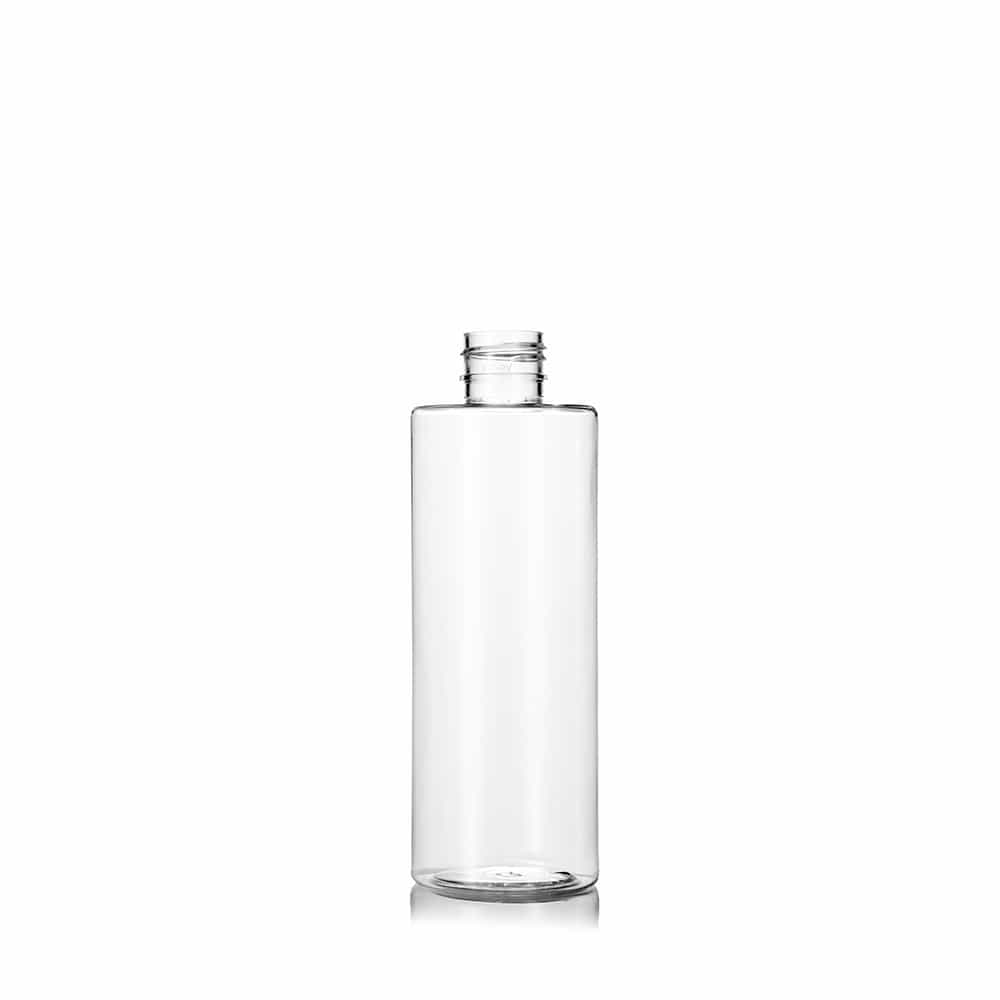
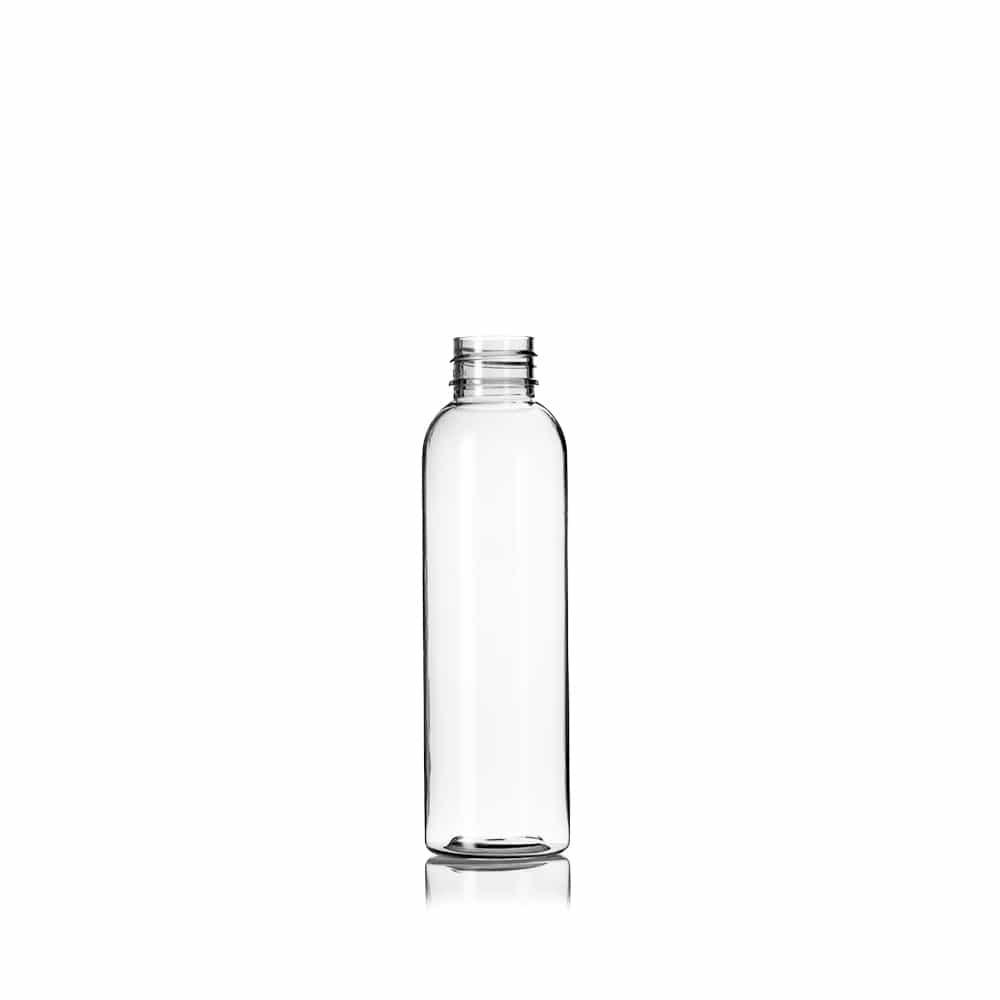
PET, or polyethylene terephthalate, is a strong, lightweight, and extremely clear plastic. It looks almost identical to glass but won't shatter when dropped on a bathroom floor.
PP, or polypropylene, is a tougher, more flexible polymer. It has a higher melting point and excellent chemical resistance, but it lacks the crystal-clear transparency of its counterpart.
The chemical structures of these two plastics dictate how they behave under heat, pressure, and exposure to different chemicals.
If you look at the bottom of your packaging, you will see their recycling codes. PET is marked with a 1, while PP carries a 5.
These numbers do more than just guide consumers at the bin. They tell a story about how the plastics are processed, how they behave on your production line, and how easy they are to source as recycled content.
 Three empty, crystal-clear PET plastic bottles with black caps on a white background
When PET Is the Clear Winner
If your product relies on its visual appearance to sell, PET is almost always the right choice.
Think about a bright pink facial toner or a shimmering body wash. You spent months perfecting the color and texture of that formula. If you put it in a PP bottle, the natural haziness of the plastic will dull the color, making it look muddy and unappealing to shoppers.
PET offers unmatched clarity that lets your formula shine. It acts as a window, showing off the product inside with zero distortion.
But aesthetics are only half the story. PET is also a superior gas barrier.
Oxygen is the enemy of many active cosmetic ingredients, natural oils, and vitamins. When oxygen penetrates a bottle, it causes the ingredients to oxidize, spoil, and lose their potency.
The Association of Plastic Recyclers says "PET is the most widely recycled plastic in the world" and notes its excellent barrier properties in their technical resources at the Association of Plastic Recyclers.
If you are packaging products with delicate active ingredients, PET keeps the air out and the freshness in.
If you want to showcase your formula with glass-like clarity, check out our PET bottles to find the perfect match.
Additionally, sourcing post-consumer recycled content is much easier with this material. Because consumers recycle PET at higher rates, high-quality recycled PET, or rPET, is widely available.
This allows you to meet your sustainability goals without sacrificing the strength or appearance of your packaging.
 Two PP plastic squeeze bottles, one translucent and one pastel blue, with flip-top caps
Why PP Wins the Heat and Squeeze Test
While PET dominates in clarity, PP is the undisputed champion of heat tolerance and flexibility.
Let's talk about the temperature threshold. Standard PET has a glass transition temperature of around 70°C. If your filling process requires temperatures higher than this, PET will fail.
PP, on the other hand, has a melting point of approximately 160°C. This high thermal resistance makes it ideal for hot-fill applications.
Packaging Digest says "Polypropylene remains a critical material for hot-fill and high-temperature packaging applications" in their analysis of polymer performance at Packaging Digest.
If you are packaging a hot-pour hair balm, a thick body butter, or a product that requires pasteurization, PP is your only viable plastic option.
Beyond heat, PP offers superior flexibility.
Think about how a customer interacts with a squeeze bottle of thick conditioner. They need to press the sides of the bottle to get the product out.
If that bottle is made of PET, the rigid plastic will resist the squeeze. If they press hard enough, the plastic will crease, leaving permanent, ugly white fold marks on the bottle.
PP is highly ductile. It bends easily under hand pressure and springs back to its original shape without creasing.
This flexibility also makes PP highly resistant to cracking. If a customer drops a full PP bottle in the shower, it will bounce. A rigid PET bottle is much more likely to crack or split under the same impact.
To learn more about how different plastics perform under real-world conditions, read our guide on PET vs HDPE to compare your options.
 Side-by-side comparison of a clear PET bottle and a semi-translucent PP bottle
The Impact on Your Filling Line and Production
Your packaging choice does not just affect the end consumer. It has a massive impact on your contract manufacturer and your overall production costs.
Let's start with top-load strength. When your finished products are packed into cases and stacked on pallets, the bottles at the bottom of the stack carry a lot of weight.
PET has high tensile strength and excellent stiffness. It can support heavy loads without buckling.
PP is softer. If your shipping boxes are not reinforced, or if your pallets are stacked too high, PP bottles can compress under the weight. This compression can cause the caps to pop off or the bottles to leak, ruining entire shipments.
Then there is the issue of capping torque.
Capping machines use mechanical force to twist closures onto bottles. If the torque is set too high on a PP bottle, the soft neck of the bottle can deform, preventing a proper thread seal.
If the torque is too high on a PET bottle, the rigid neck can crack.
To prevent leaks and line stoppages, check out our selection of all closures to find a cap that matches your bottle material.
You also need to consider how the bottle material interacts with your labeling equipment.
PET bottles have a very smooth, glossy surface that accepts pressure-sensitive labels easily. PP bottles can sometimes have a lower surface energy, meaning certain adhesives will not stick properly, causing your labels to flag or peel at the edges.
Always talk to your label supplier about the specific plastic you are using to ensure they provide the correct adhesive.
Sustainability and the PCR Factor
In today's market, you cannot choose a packaging material without considering its environmental impact. Consumers demand sustainable options, and state regulators are forcing the issue.
For example, California's Senate Bill 54 mandates strict recycling and plastic reduction targets for brands selling in the state.
If you want to make sure your brand is compliant with these evolving regulations, use our SB 54 checker to evaluate your packaging.
When it comes to recycling, PET and PP are not created equal.
NAPCOR reports PET has a 29% recycling rate in the United States, making it one of the most successfully recycled plastics on the market, as detailed by NAPCOR.
Because so much PET is recovered and recycled, there is a robust supply of high-quality post-consumer recycled (PCR) PET.
PP recycling rates are much lower. The Association of Plastic Recyclers has been working to improve PP recovery, but the infrastructure is still catching up.
This lower recycling rate means that PCR PP is harder to source and often comes with aesthetic trade-offs.
While PCR PET can achieve near-virgin clarity, PCR PP often has a slight grey or yellow tint and can sometimes carry a faint plastic odor.
If you are packaging a fragrance-free face cream, that odor can be a dealbreaker.
At Propacks, we specialize in helping brands transition to recycled materials without breaking the bank. We offer 35% and 50% PCR options at prices comparable to virgin plastic, helping you meet your sustainability goals without sacrificing your margins.
To understand how recycled plastics compare to traditional materials, read our deep dive on PCR vs virgin plastic for a full breakdown.
How to Choose the Right Material for Your Formula
To make the final decision easier, let's look at how PET and PP perform across specific product categories.
Personal Care and Cosmetics
For liquid products like facial toners, micellar waters, and light serums, PET is the clear winner.
It provides the high-end, glass-like look that consumers expect from skincare.
If you are launching a new skincare line, browse our collection of toner bottles to find a sleek, clear option.
For thicker products like lotions, hair conditioners, and body scrubs, PP is usually the better choice.
The flexibility of PP allows users to easily squeeze the bottle to dispense the product, and its superior chemical resistance protects the bottle from the synthetic oils and fragrances often found in hair care.
For squeezable formulas, check out our range of lotion bottles designed for easy dispensing.
Essential Oils and Actives
Pure essential oils are highly corrosive to certain plastics. They can attack the polymer chains, causing the plastic to soften, craze, or even crack over time.
While PET has decent resistance to diluted essential oils, pure oils can cause PET to fail.
PP has excellent chemical resistance to a wide range of chemicals, but it can still be permeated by certain volatile oils.
If you are packaging products with high concentrations of active ingredients, compatibility testing is absolutely essential.
If you are packaging active botanicals, look at our essential oil bottles to find a compatible packaging solution.
Frequently asked questions
What is the difference between PET and PP plastic bottles?+
PET is a rigid, crystal-clear plastic with excellent oxygen barrier properties, making it ideal for showcase packaging and oxygen-sensitive formulas. PP is a more flexible, semi-translucent plastic with high heat resistance and chemical durability, making it better for squeezable bottles and hot-fill applications.
Is PET or PP better for hot fill applications?+
PP is significantly better for hot-fill applications. It can withstand temperatures up to 120°C without deforming, whereas standard PET begins to soften and warp at around 60°C to 70°C.
Which plastic bottle is clearer, PET or PP?+
PET is much clearer than PP. PET offers glass-like clarity with zero distortion, while PP is naturally hazy and translucent, though clarified versions exist that still do not match the optical clarity of PET.
What are the recycling rates for PET vs PP?+
PET has a much higher recycling rate than PP. In the United States, PET bottles are recycled at a rate of approximately 29%, whereas PP recycling rates remain in the low single digits due to sorting and processing limitations.
Is PP or PET better for cosmetics packaging?+
It depends on the formula. PET is better for clear liquids, toners, and oils that require high aesthetic appeal and oxygen protection. PP is better for thick creams, shampoos, and conditioners that require a squeezable bottle or hot-filling.
What is the heat tolerance of PET bottles?+
Standard PET bottles have a low heat tolerance, with a glass transition temperature of 60°C to 70°C. Exceeding this temperature during filling or shipping will cause the plastic to warp, shrink, and collapse.

Written by
Queenie FongQueenie Fong is the founder of Propack Solutions, a woman-owned sustainable packaging company based in Ontario, CA. With nearly a decade of experience in the packaging industry, she specializes in post-consumer recycled (PCR) materials, helping brands source rPET, PCR HDPE, and PCR PP packaging that meets regulatory requirements and sustainability goals.