PCR Bottles vs Virgin Plastic: What Is the Actual Difference and Which Should You Buy?


The question used to be simple: buy virgin plastic because it is cheaper, clearer, and easier to source. That answer worked for decades. It does not work anymore.
State regulations are mandating recycled content in plastic packaging. Retailers are asking for sustainability documentation. Consumers are checking. The question is no longer "should we consider PCR?" It is "how do we switch without breaking our supply chain, our margins, or our product quality?"
Here is a direct, honest comparison of PCR and virgin plastic bottles on every dimension that matters when you are placing an actual order.
What Is Virgin Plastic?
Virgin plastic is made from raw petrochemical feedstock, primarily crude oil or natural gas. No recycled content. The clear PET water bottle and the opaque HDPE shampoo bottle that have been industry defaults for decades are almost always virgin plastic.
Virgin dominates because it is consistent. Starting from a chemically pure feedstock, manufacturers produce bottles with high clarity, tight dimensional tolerances, and reliable mechanical properties batch after batch. The process is optimized, the supply chain is mature, and every filling line in the country is set up to handle it.
The problem is regulatory. Virgin plastic adds net-new plastic to the world. In a policy environment that increasingly mandates recycled content, a 100% virgin supply chain is a compliance liability. California SB 54, EU packaging regulations, and similar legislation in other states all point the same direction: less virgin, more recycled.
What Is PCR Plastic?
PCR stands for post-consumer resin. It is plastic that consumers have already used, recycled through collection programs, and reprocessed into new resin. The most common PCR material for bottles is rPET (recycled PET), sourced primarily from collected beverage bottles and food containers.
The process: collected plastic is sorted by resin type, cleaned, decontaminated, shredded into flake, and reprocessed into pellets. Those pellets go into the same blow molding equipment used for virgin plastic. The resulting bottles perform comparably to virgin across most applications.
PCR is the only packaging material attribute with third-party verification pathways (GRS certification), regulatory recognition (SB 54 compliance), and measurable environmental impact (reduced virgin feedstock demand, lower carbon footprint per kilogram). For brands that need to back up sustainability claims with documentation, PCR is the strongest option available.
Durability: Is PCR Weaker?
No. Not at the percentages most brands are using.
Bottles made from rPET at 25% to 50% PCR content pass the same drop tests, compression tests, and transport durability requirements as virgin plastic bottles. The structural properties of recycled resin at these percentages are well characterized and manageable by any competent manufacturer.
Differences start to appear at very high PCR percentages (85% to 100%) or in specialized applications: extreme temperature cycling, aggressive chemical contents, or pharmaceutical-grade requirements. For beauty, personal care, cleaning products, and general consumer goods, PCR in the 25% to 50% range presents zero meaningful durability tradeoff.
If a supplier tells you PCR bottles are "not as strong," ask them what percentage they tested and what formulation they used. A poorly formulated PCR bottle from a cheap supplier will underperform. A well-engineered one from a supplier who has invested in formulation development will match virgin on every functional test.
Clarity and Appearance: Can You Tell the Difference?
This is where virgin plastic has a legitimate advantage, and it is smaller than most people think.
Virgin PET produces optically clear bottles with neutral color. No tint, no variation, no haze. If your product is a clear liquid and visual presentation through the bottle wall is critical to your brand, virgin PET gives you the most consistent baseline.
PCR resin can carry trace contamination, slight color variation, or a faint grey tint at higher recycled content percentages. This was a significant issue five years ago. It is a minor one now.
At 25% to 35% PCR, most brands see no visible difference in finished bottles compared to virgin. At 50% PCR, there may be a very slight warmth or off-neutral tone visible in direct side-by-side comparison with virgin, but not noticeable on a shelf or in a customer's hand. At 100% PCR, you may see a faint grey cast in clear bottles.
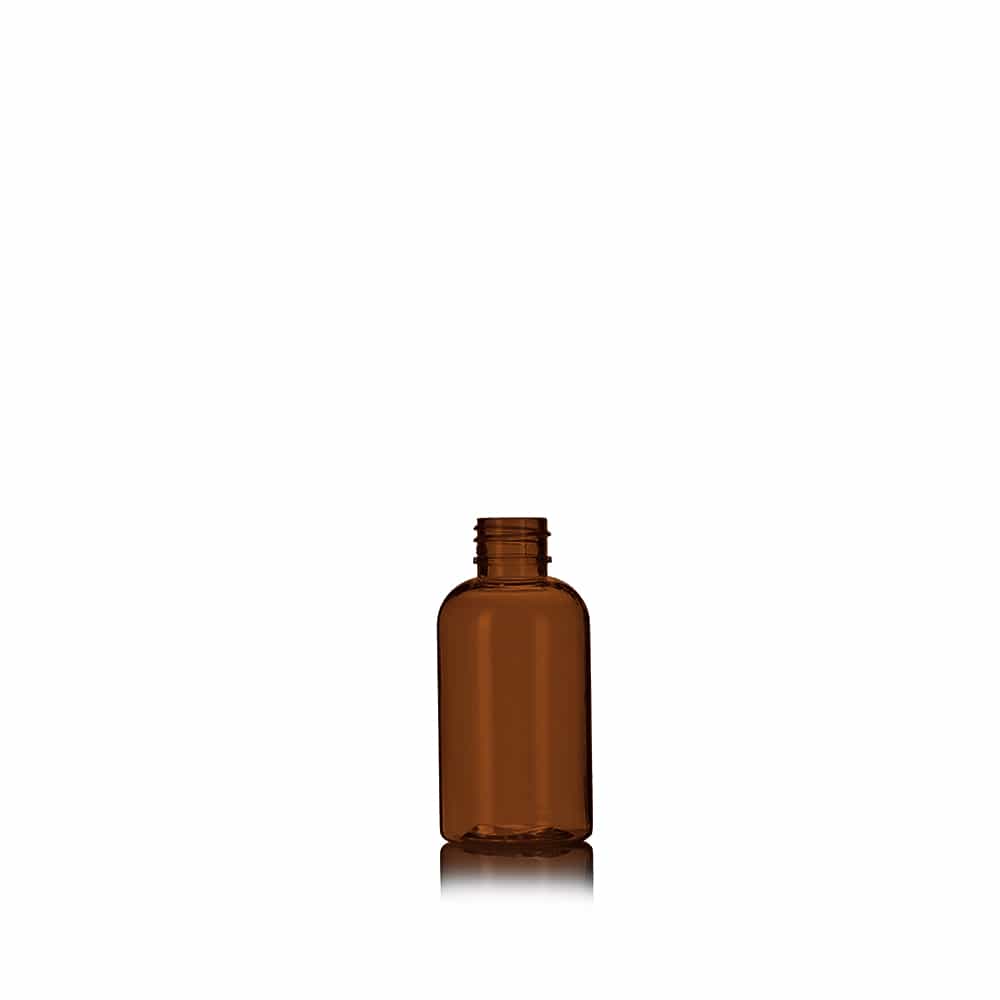
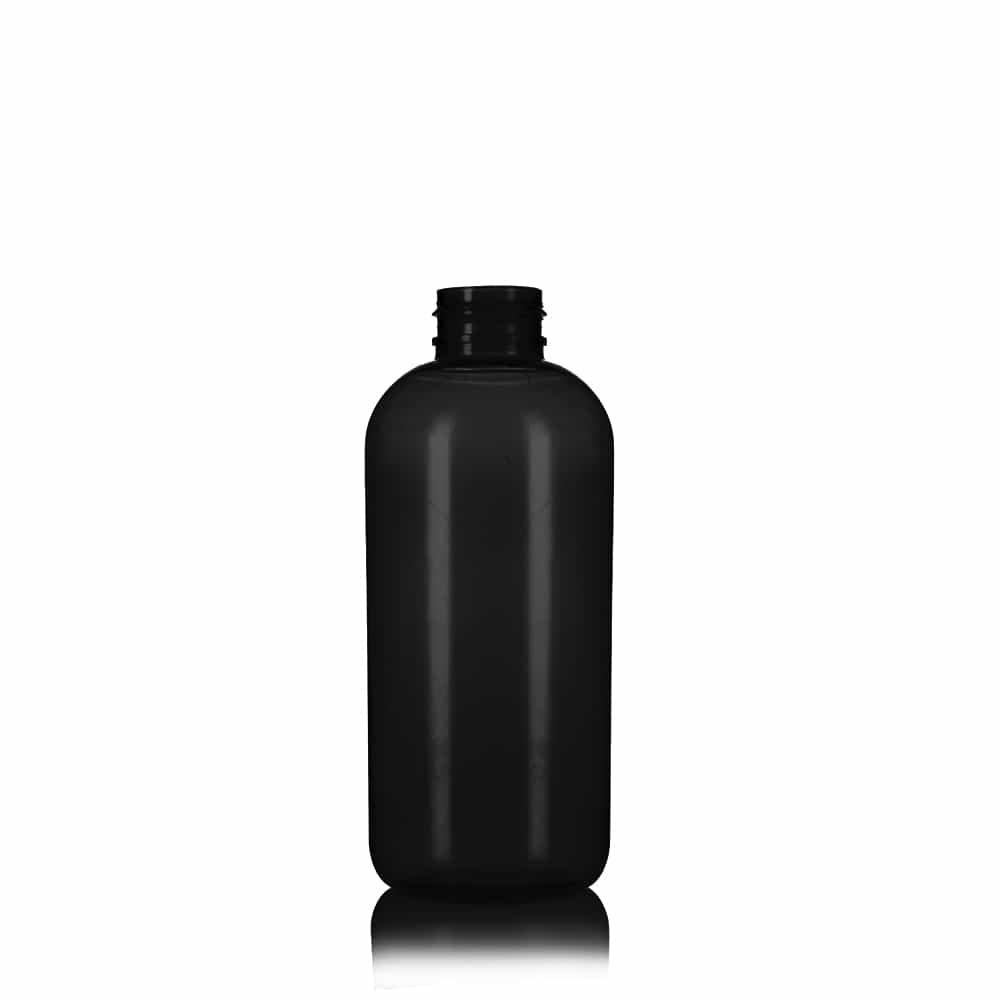
The practical solution: if your bottles are colored (amber, cobalt, frosted, white, black), the PCR percentage has zero impact on appearance. The color masks any trace variation. If your bottles are clear and your product is a clear liquid, sample at your target PCR percentage before committing.
The real story: some suppliers have solved the clarity problem through proprietary formulation work. Their PCR bottles are visually indistinguishable from virgin at 35% and 50% recycled content. This is not magic. It is engineering. The suppliers who charge a "sustainability premium" often have not done this work. The ones who match virgin on appearance and price have.
 Side by side comparison of a 50% PCR bottle and a virgin PET bottle showing minimal visual difference in clarity
Cost: How Much More Does PCR Actually Cost?
PCR resin costs more than virgin resin. The premium varies by market conditions and grade:
- rPET: typically 10% to 40% above virgin PET
- rHDPE: typically 5% to 25% above virgin HDPE
- rPP: typically 15% to 50% above virgin PP (newer market, tighter supply)
These are raw material premiums. They do not automatically translate to the same percentage increase in finished bottle price, because resin is only one component of the cost (manufacturing, energy, labor, logistics, and margin are the rest).
What this means for finished bottle pricing: at some suppliers, PCR bottles cost noticeably more than virgin equivalents. At others, the finished bottle price is the same. The difference is how the supplier manages their resin sourcing, their formulation efficiency, and where they choose to absorb or pass through costs.
If a supplier quotes you 30% more for a PCR bottle than a virgin bottle in the same shape and size, the resin premium is not 30%. Their margin on PCR is higher than their margin on virgin. Ask them to break down the price. Or find a supplier who has done the work to deliver PCR at virgin-equivalent pricing.
Regulatory Compliance: This Is Not Optional
California SB 54 sets mandatory recycled content minimums for plastic packaging sold in the state. The requirements escalate over time. Brands selling products in California in plastic packaging must comply.
This is not a soft target or a voluntary pledge. It is law. Non-compliance has consequences. And the deadlines are not far enough away to ignore.
Brands that are already buying PCR bottles are compliant. Brands that are still buying 100% virgin are running on borrowed time. When the deadlines hit, they will face a market where every brand in California is suddenly competing for PCR supply, prices spike, and lead times extend.
Other states are drafting similar legislation. The EU already has mandatory recycled content targets. The regulatory direction globally is unambiguous: more recycled content, less virgin plastic. Switching now is cheaper than switching later.
 Decision flowchart for choosing between PCR and virgin plastic bottles based on regulatory requirements, clarity needs, and cost priorities
How to Decide: A Practical Framework
If you sell in California: switch to PCR now. Not eventually, now. The compliance deadline is approaching and securing supply ahead of demand spikes saves money.
If shelf appearance requires crystal clarity: sample PCR bottles at 35% and 50% before deciding. You will likely find the clarity acceptable. If not, use colored bottles where PCR is invisible.
If cost is your primary concern: find a supplier offering PCR at virgin-equivalent pricing. They exist. The "sustainability premium" is not universal.
If you are a startup with no regulatory pressure: start with PCR anyway. The per-unit cost difference from a good supplier is zero. You get a sustainability story built into your COGS at no extra cost. When regulations reach your state, you are already compliant.
If you are scaling past 5,000 units per order: negotiate PCR pricing with your supplier. Volume commitments unlock better resin pricing, which translates directly to better bottle pricing. This is where PCR becomes unambiguously cheaper than buying virgin and worrying about compliance later.
The bottom line: PCR bottles in 2026 are not the compromise they were in 2020. The durability matches. The clarity is close enough (or identical, depending on your supplier). The price can match. And the regulatory pressure makes virgin-only supply chains a liability. The brands still buying 100% virgin plastic are not saving money. They are deferring cost.
Frequently asked questions
Are PCR bottles as strong as virgin plastic bottles?+
Yes, at the percentages most brands use (25% to 50% PCR). Bottles at these levels pass the same drop, compression, and stacking tests as virgin equivalents. Meaningful durability differences only appear at 85% to 100% PCR in specialized applications.
Can you see the difference between PCR and virgin bottles?+
At 25% to 35% PCR, most people cannot tell the difference in finished bottles. At 50%, there may be a very slight color shift visible in direct side-by-side comparison. At 100%, clear bottles may show a faint grey cast. Colored, frosted, or opaque bottles show no visible difference at any PCR percentage.
Is PCR packaging required by law?+
In California, yes. SB 54 mandates escalating recycled content percentages in plastic packaging sold in the state. Other states and the EU have similar requirements in various stages of implementation. The trend is global and the direction is clear.
How much more do PCR bottles cost?+
PCR resin costs 10% to 40% more than virgin resin depending on grade and market conditions. However, finished bottle pricing varies by supplier. Some suppliers pass the full premium plus margin. Others have engineered price parity through formulation and sourcing optimization. The finished bottle price difference can be zero with the right supplier.
What PCR percentage should I specify?+
35% meets current California SB 54 requirements at the lowest cost. 50% positions you ahead of future regulatory thresholds. Start at 35% unless your brand positioning or retail partner requirements call for higher percentages.
How do I verify that my bottles actually contain PCR?+
Request GRS (Global Recycled Standard) certification or equivalent chain-of-custody documentation from your supplier. This third-party verification confirms the recycled content percentage through the supply chain. Without documentation, PCR claims are unverifiable.

Written by
Queenie FongQueenie Fong is the founder of Propack Solutions, a woman-owned sustainable packaging company based in Ontario, CA. With nearly a decade of experience in the packaging industry, she specializes in post-consumer recycled (PCR) materials, helping brands source rPET, PCR HDPE, and PCR PP packaging that meets regulatory requirements and sustainability goals.