Walmart WFS Packaging Requirements for Bottles: What Sellers Actually Need to Know (2026)


What WFS Actually Requires for Bottled Products
If you sell liquid products on Walmart Marketplace and want to use Walmart Fulfillment Services (WFS), you need to get your packaging right. Walmart will reject non-compliant shipments, charge you fees, or return inventory at your expense.
This guide covers every packaging requirement that applies specifically to bottles, liquids, cosmetics, personal care, and wellness products. We wrote a similar guide for Amazon FBA earlier. This is the Walmart version.
Who This Guide Is For
Small to mid-size brands shipping bottled products through WFS. If you sell shampoo, lotion, serum, cleanser, hand soap, supplements, or anything liquid in a bottle, this applies to you. Especially if you are an indie brand entering Walmart Marketplace for the first time.
Bottles Must Be Sealed, Period
Every item entering a WFS fulfillment center must be in a sealed, tamper-proof container that is ready for sale. For bottles, this means:
- The bottle must have a secure closure (screw cap, pump, sprayer, or flip top)
- The closure must be tight enough that the product does not leak during transit
- If you are shipping a liquid, Walmart expects the bottle to survive handling without spilling
This sounds obvious, but rejection for leaking product is one of the most common WFS issues for beauty and personal care brands. A screw cap that is finger-tight is not sufficient. You either need a heat induction seal (HIS) liner inside the cap, a pressure-sensitive (PS) liner, or enough thread engagement that the cap physically cannot come loose.
If your product is a lotion, serum, or liquid with any viscosity, test this: turn the sealed bottle upside down and leave it for 24 hours. If anything leaks, your closure setup is wrong.
Understanding Seal Types for WFS
Three seal options exist for WFS-compliant bottle packaging:
Plain (no liner): The cap threads directly onto the bottle with no additional seal. This works for dry goods or non-liquid products. For liquids, this is risky because vibration during shipping can loosen the closure.
Heat Induction Seal (HIS): A foil liner is placed inside the cap. When the cap is applied and passed through an induction sealer, the foil bonds to the bottle rim, creating a tamper-evident seal. The customer peels the foil to access the product. This is the gold standard for liquid products entering WFS.
Pressure-Sensitive (PS) Liner: A foam-backed liner that creates a seal through compression when the cap is tightened. No heat sealer required. Simpler to implement than HIS but less tamper-evident.
For WFS liquid products, we recommend HIS or PS liners. Plain closures work for products that are not liquid (powders, tablets in bottles) but are not ideal for anything that flows.
 Bottle cap with foil induction seal liner for tamper-evident packaging
The Drop Test
Walmart does not publish a formal drop test specification for WFS the way Amazon does (Amazon requires a 3-foot drop onto each face). But WFS fulfillment centers handle your product the same way any warehouse does: boxes get stacked, dropped from conveyor heights, and jostled during transit.
Build your packaging to survive a 3-foot drop onto concrete without leaking or cracking. That means:
- Your bottle wall thickness should be appropriate for the fill weight
- Your closure must stay sealed on impact
- PET bottles handle drops better than glass or thin HDPE because PET has higher impact resistance at common wall thicknesses
- If your product is over 8 oz, double-box or add void fill around each bottle
Test this yourself before your first WFS shipment. Fill a bottle with your actual product, seal it, put it in your shipping configuration, and drop it. If anything cracks or leaks, fix it before Walmart does it for you.
Master Case Requirements
Your bottles ship to WFS inside master cases (outer boxes). Walmart specifies:
- Regular slotted carton (RSC) only
- B flute corrugated
- ECT-32 (edge crush test) or 200 lb/sq inch burst strength minimum
- Maximum case weight: 50 lbs (unless the single unit itself exceeds 50 lbs)
- Do not bundle cases together with tape, straps, or elastic
- Remove any old labels or shipping marks from reused boxes
For a case of 24 eight-ounce bottles, you are looking at roughly 13-15 lbs including the case weight. Well within the 50 lb limit. Make sure bottles are packed tightly with dividers or void fill so they cannot shift and collide during transit.
 Plastic bottles packed in a corrugated master case with air pillow void fill
Labeling
Every individual bottle must have a UPC barcode on the outermost part of the packaging. If your bottle has a label with a UPC, that counts. If the bottle ships inside a retail box, the UPC goes on the box.
Your master cases need a GTIN-14 label (the 14-digit version of your barcode that identifies the case quantity).
Additional labeling rules:
- No price tags or retailer-specific labels on the product
- Country of origin must be visible on the product
- Expiration dates (if applicable) must be in MM-DD-YYYY format
- Hazard warnings must be visible on any poly bags
- Cases over 50 lbs need "Team Lift" labels on top and sides
- Cases over 100 lbs need "Mech. Lift" labels
When to Use Poly Bags
If your bottle ships without a retail box (just the bottle itself), Walmart may require a poly bag in certain scenarios:
- Multi-packs or kits: if you sell a bottle and cap set as one unit, poly bag it together
- Products that could be confused as separate items without outer packaging
- Items where the label could be damaged during handling
Poly bag requirements:
- Minimum 1.5 mm thickness
- Completely sealed
- UPC barcode must be scannable through the bag or printed on the outside
- Suffocation warning must be visible
Most single bottles with their own labels do not need poly bags. But if your product is a bundle (bottle + travel size + sample), bag it.
Pallet Requirements
If you are shipping more than a few cases, you will palletize:
- 40 x 48 inch pallets only (GMA Standard Grade A, solid wood, 4-way access)
- Maximum pallet weight: 2,100 lbs
- Maximum pallet height: 72 inches
- Stretch wrap required
- Pallet label with your shipment ID on each of the four sides
For double-stacked pallets, maximum height is 108 inches including both pallets. Use corner boards for stability and stretch wrap both layers.
 Stretch-wrapped pallet of shipping boxes on a warehouse loading dock
Accepted and Banned Packing Materials
What you CAN use inside your master cases:
- Foam inserts
- Air pillows
- Bubble wrap
- Full sheets of paper
What you CANNOT use:
- Styrofoam peanuts
- Biodegradable packing peanuts
- Cornstarch packing peanuts
- Crinkle wrap
- Shredded paper
The banned list exists because loose fill materials clog WFS fulfillment center equipment. Stick with air pillows or foam. For bottles, molded pulp dividers or corrugated inserts work well to keep product from shifting.
Walmart's Sustainability Requirements (and Why They Matter for Your Bottles)
This is where it gets interesting if you sell bottled products. Walmart has set sustainability goals for all packaging on their platform:
- 20% post-consumer recycled (PCR) content by 2025
- 100% recyclable, reusable, or compostable packaging by 2025
- Eliminate all PVC and polystyrene from packaging
- 15% reduction in virgin plastic use vs. 2020 baseline
- How2Recycle label on all U.S. food and consumable private brand packaging
As of 2023, Walmart was at 9% PCR content against their 20% goal. They are behind and pushing harder. For third-party sellers, this is not yet mandatory. But Walmart is increasingly prioritizing suppliers who align with these goals. Their Supplier Quality Excellence Program (SQEP) already includes packaging compliance as a scored metric.
If you are choosing between virgin plastic bottles and PCR bottles at the same price, choosing PCR positions you better with Walmart's direction. Their preferred packaging materials for bottles are PET with maximum PCR and HDPE with maximum PCR.
Walmart also wants labels that match the primary bottle material (PET label on PET bottle, PP label on PP bottle) to improve recyclability. They recommend against mixed materials like a PP label on an HDPE bottle.
Materials to Avoid in Walmart Packaging
According to Walmart's sustainable packaging playbook, avoid these in your bottle packaging:
- PVC and PVDC (any component)
- Polystyrene and expanded polystyrene
- PETG for rigid plastic containers
- Metallized films
- Colored PET (clear and natural PET are preferred for recyclability)
- Oxo-degradable additives
- Undetectable carbon black pigment (recycling sorting equipment cannot identify it)
If your current bottles use any of these materials, consider switching before scaling on Walmart Marketplace.
What Bottles Work Best for WFS
Based on the requirements above, here is what we recommend for indie brands shipping liquid products through WFS:
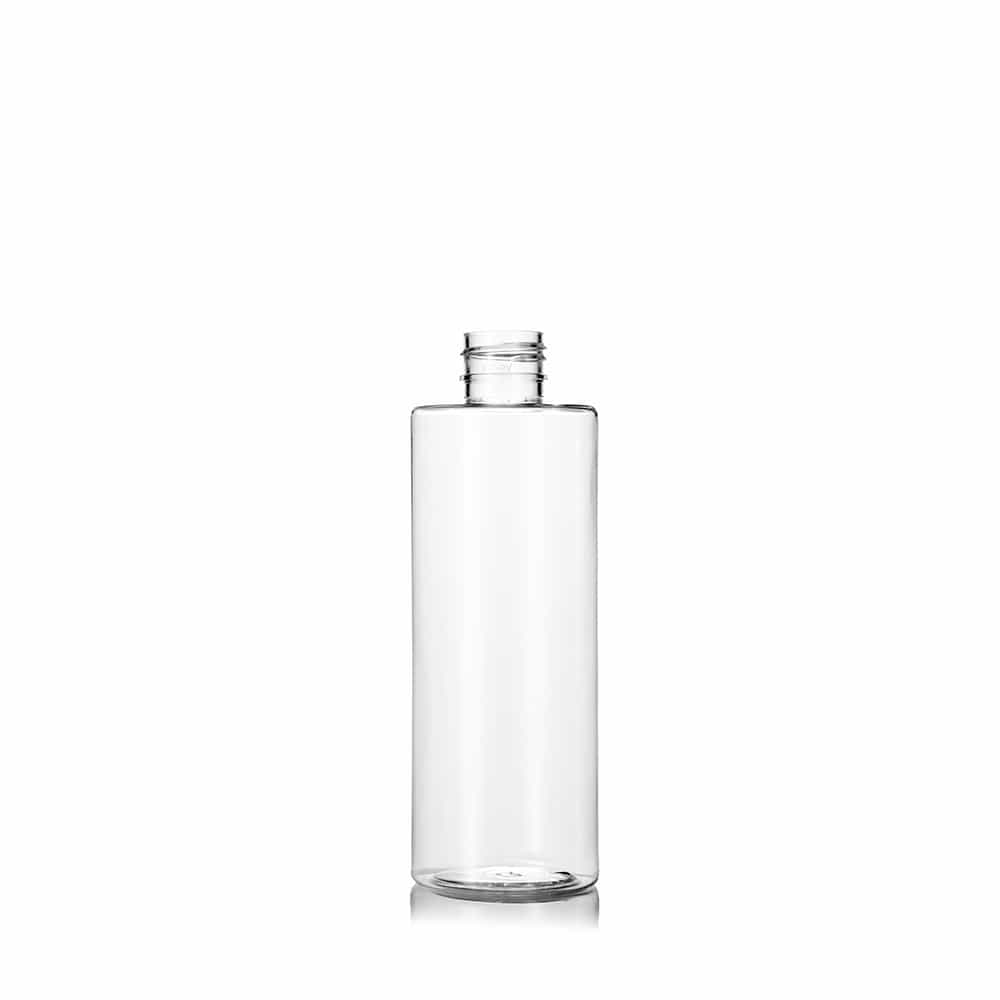
For serums, tinctures, and small-format products (1 to 4 oz): Choose a PET cosmo round or cylinder round bottle with a 20-410 neck finish. Pair with a disc top cap or treatment pump with a PS or HIS liner. PET is durable, recyclable (resin code #1), and available in PCR formulations. A 1 oz Clear PET Cylinder Round Bottle with a White PP Disc Top Cap with HIS is a WFS-compliant combination.
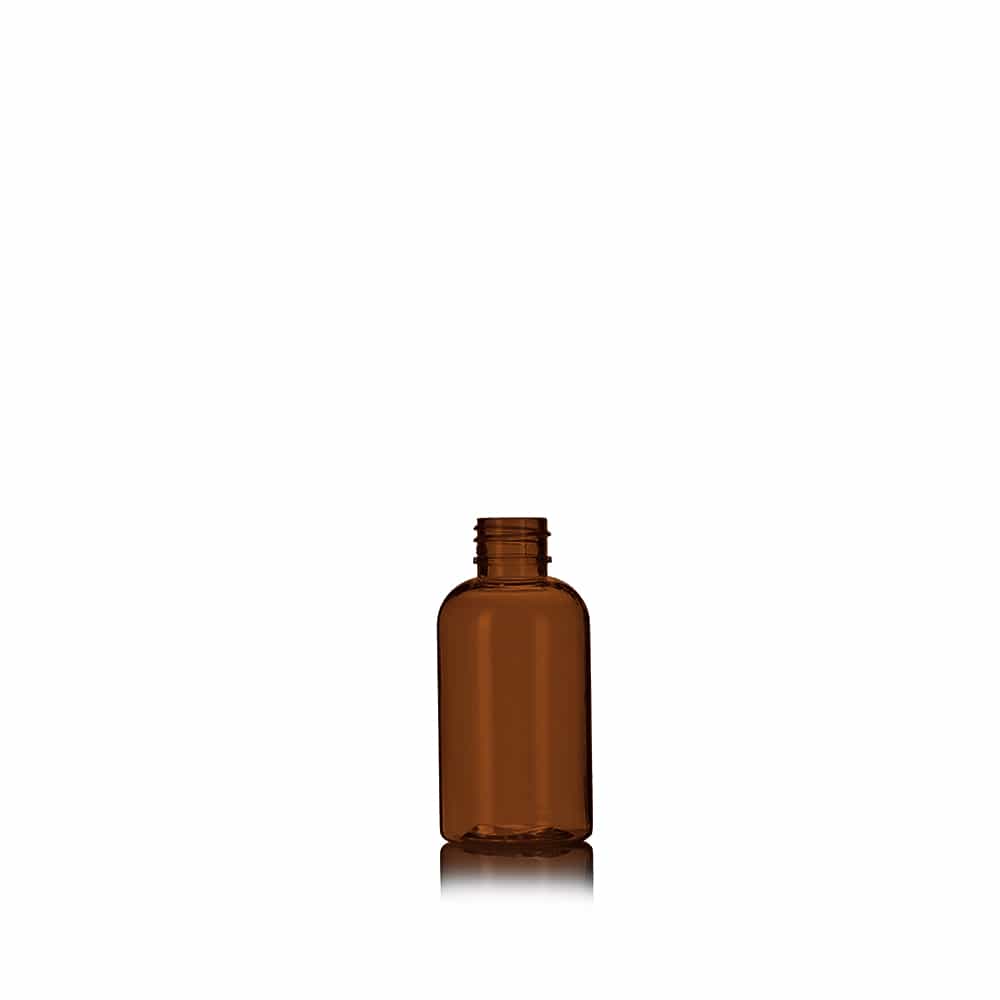
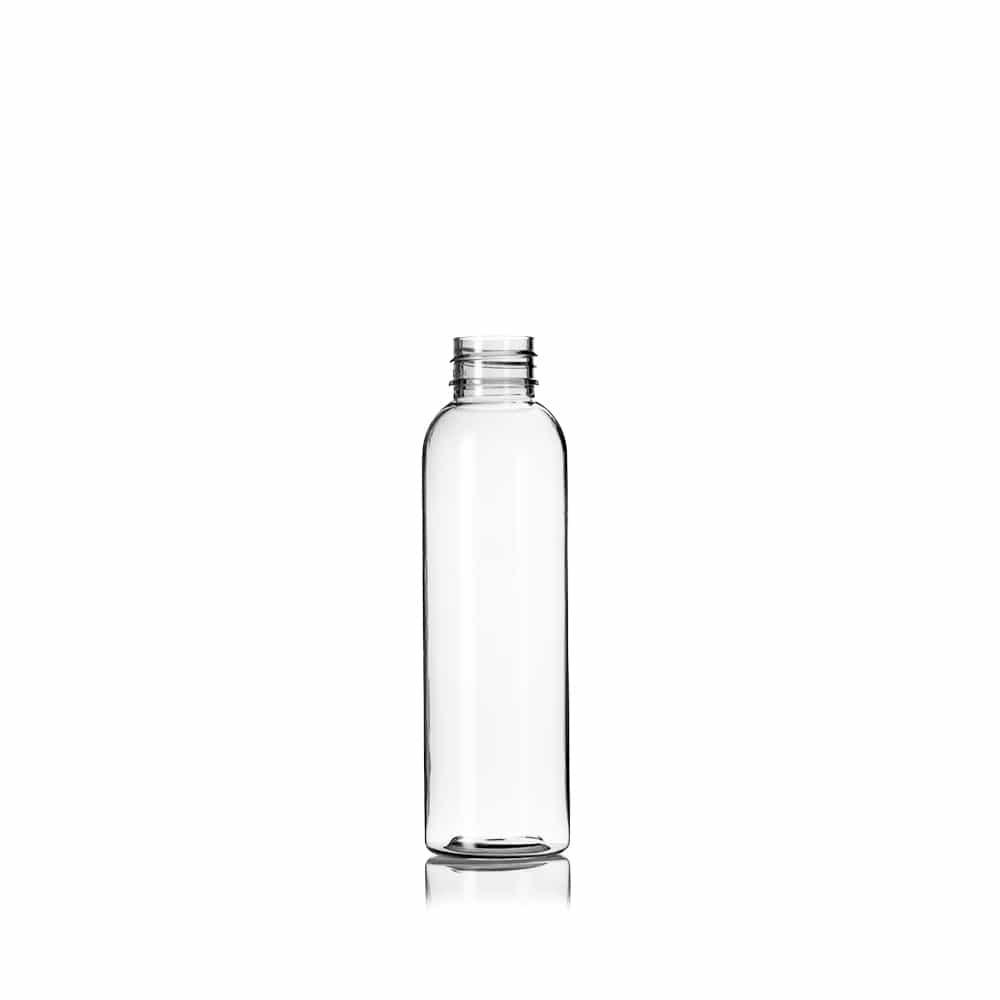
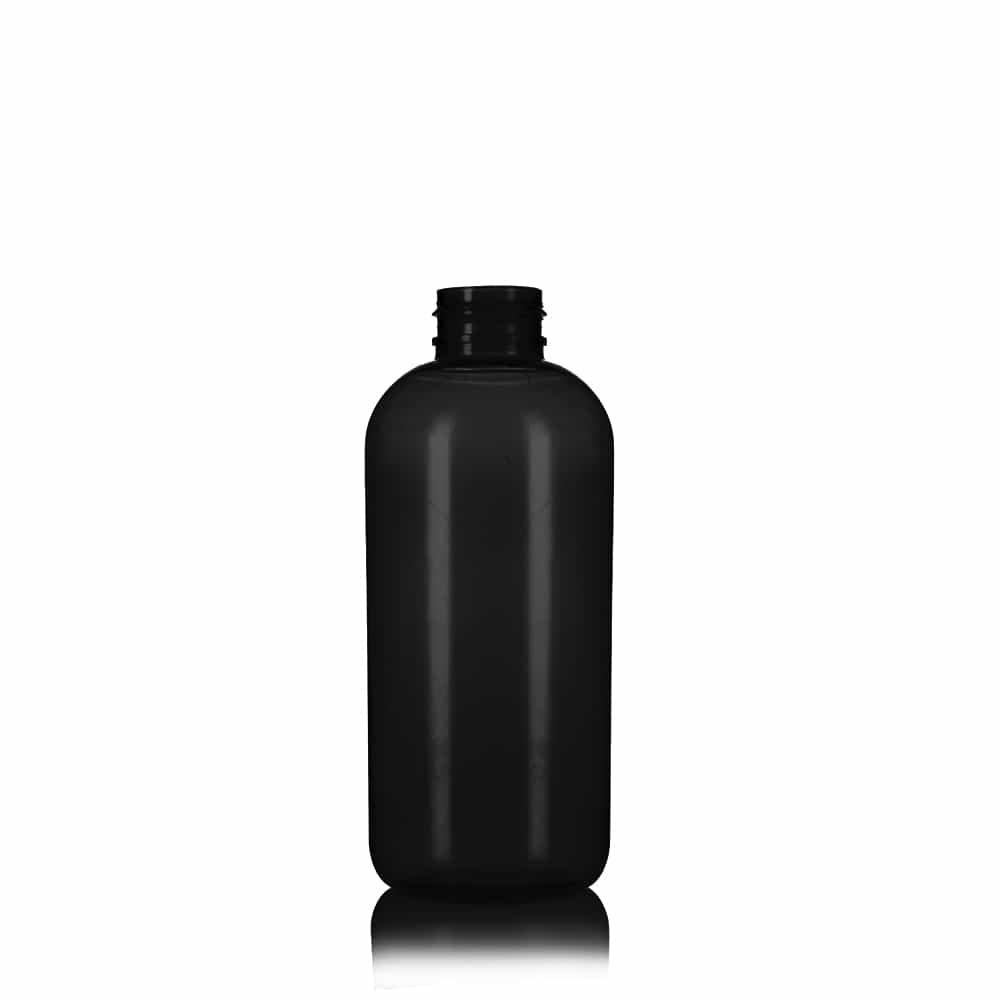
For lotions, shampoo, and mid-size products (6 to 12 oz): A PET boston round or bullet bottle with a 24-410 neck finish works well. Pair with a lotion pump or disc top cap. The 8 oz Black PET Cylinder Round Bottle with a compatible 24-410 pump is a common setup for haircare and skincare brands on Walmart.
For hand soap, body wash, and large-format products (16 to 32 oz): PET or HDPE bottles with 28-410 neck finishes. Trigger sprayers or lotion pumps. These larger bottles need extra attention to void fill inside the master case because they are heavier and more prone to shifting.
For foaming products: A foam bottle with a 42-410 neck finish and a foaming pump. The 8 oz White PET Foam Bottle is designed specifically for foaming formulations.
All of these bottles are available in 35% or 50% PCR content, which puts you ahead of Walmart's 20% PCR goal. PCR PET bottles cost the same as virgin PET at Propacks, so there is no price tradeoff for choosing the sustainable option.
 PCR PET bottles in different sizes and colors arranged for WFS fulfillment
WFS Fees You Should Know
WFS fulfillment fees are based on weight, not dimensions:
- Up to 1 lb: $3.45
- 2 lb: $4.95
- 3 lb: $5.45
- 4 to 20 lb: $5.75 + $0.40 per lb over 4 lb
- 21 to 30 lb: $15.55 + $0.40 per lb over 21 lb
Storage fees:
- January through September: $0.75 per cubic foot per month
- October through December (items stored over 30 days): additional $1.50 per cubic foot per month
- Items stored over 365 days: up to $7.50 per cubic foot per month
For bottles, the fulfillment fees are typically reasonable. A single 8 oz bottle with packaging will weigh under 1 lb, so you are looking at the $3.45 base rate. The risk is storage fees during Q4 if your inventory sits. Ship what you can sell in 60 to 90 days.
A Simple Checklist for WFS-Compliant Bottle Packaging
Before you send your first shipment:
- Bottle has a secure closure with HIS or PS liner for liquid products
- Bottle survives a 3-foot drop test without leaking
- UPC barcode is scannable on the outermost packaging
- Country of origin is visible
- No price tags or retailer-specific labels on the product
- Expiration date (if applicable) is in MM-DD-YYYY format
- Master case is RSC, ECT-32, under 50 lbs
- GTIN-14 label on the master case
- Void fill is air pillows, foam, or bubble wrap (no peanuts, no crinkle)
- Bottles are packed with dividers so they cannot shift and collide
- If palletizing: 40 x 48 inch GMA pallets, max 72 inches height, stretch wrapped
- PCR content is 20% or higher to align with Walmart sustainability goals
- No PVC, polystyrene, colored PET, or PETG in any packaging component

Written by
Queenie FongQueenie Fong is the founder of Propack Solutions, a woman-owned sustainable packaging company based in Ontario, CA. With nearly a decade of experience in the packaging industry, she specializes in post-consumer recycled (PCR) materials, helping brands source rPET, PCR HDPE, and PCR PP packaging that meets regulatory requirements and sustainability goals.