How to Choose a Packaging Supplier for Your First Product Line


Your formula is locked. Your label is designed. You have a Shopify store with zero orders and a lot of optimism. Now you need bottles, and this is where it gets confusing fast.
You Google "packaging supplier" and get a manufacturer in Shenzhen quoting $0.08 per bottle at 10,000 units, a distributor in New York selling cases of 144 at $0.35 each, and an Amazon listing for a 12 pack at $1.20 per bottle. Three completely different buying experiences, three different price structures, and no obvious way to compare them.
This guide breaks down the five types of packaging suppliers, what each one actually costs, and a framework for deciding which one fits where you are right now.
The Five Types of Packaging Suppliers
Not all suppliers operate the same way. Understanding which category you are buying from changes everything about your experience, your costs, and your timeline.
1. Direct Manufacturers (Domestic)
These companies make bottles in house. They own the molds, run the production lines, and sell finished goods. Examples include Amcor (which acquired Berry Global in 2025), Graham Packaging, and Alpla.
What to expect:
- MOQ: 10,000 to 100,000 units per SKU
- Lead time: 8 to 16 weeks for new orders
- Price per unit: lowest at scale ($0.08 to $0.20 for a standard bottle)
- Customization: full custom molds available ($10,000 to $50,000 tooling for blow molds; injection blow molds run higher)
Who this works for: Brands doing 50,000+ units per year who need custom shapes or proprietary molds. If you are ordering under 5,000 units, manufacturers will either turn you away or charge you a premium that wipes out the unit price advantage.
The catch: Most manufacturers do not sell directly to indie brands. They work through distributors or require a procurement contact to even get a quote.
2. Direct Manufacturers (Overseas)
Alibaba, Made-in-China, Global Sources. You find a factory, negotiate pricing, arrange shipping, and handle customs.
What to expect:
- MOQ: 5,000 to 50,000 units (some factories will do 3,000)
- Lead time: 4 to 8 weeks production plus 3 to 5 weeks ocean freight to US West Coast
- Price per unit: $0.05 to $0.15 for standard bottles
- Customization: very flexible at volume
Who this works for: Brands with established demand who can wait 10 to 14 weeks and manage quality control remotely.
The catch: Quality variance is the real cost. Third party inspection firms like AsiaInspection report that roughly 1 in 4 audits of consumer goods from Chinese factories uncover critical or major defects. The unit price is lower, but reorders from defects, color inconsistency, and neck finish mismatches can eat the margin.
You also lose flexibility. If your formula changes and you need a different closure, you are stuck with 10,000 bottles designed for the old one.
3. Specialty Distributors (US Based)
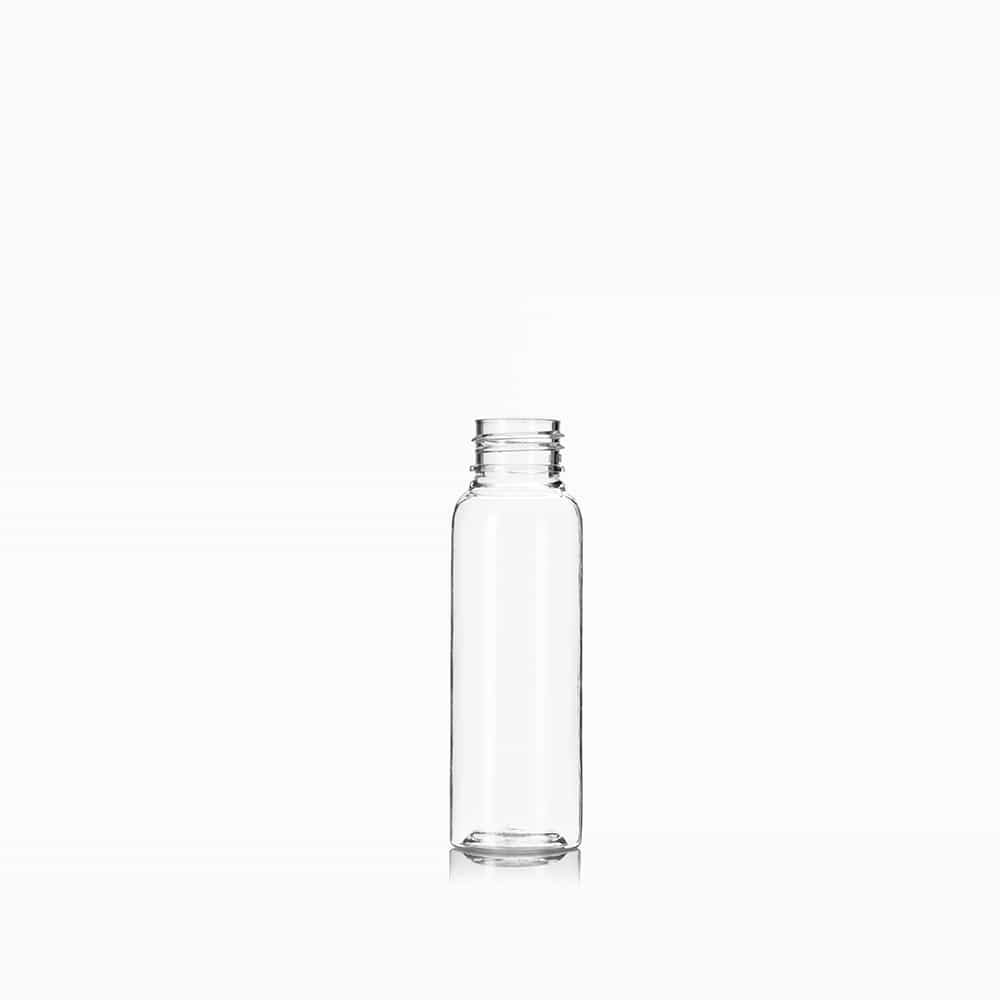
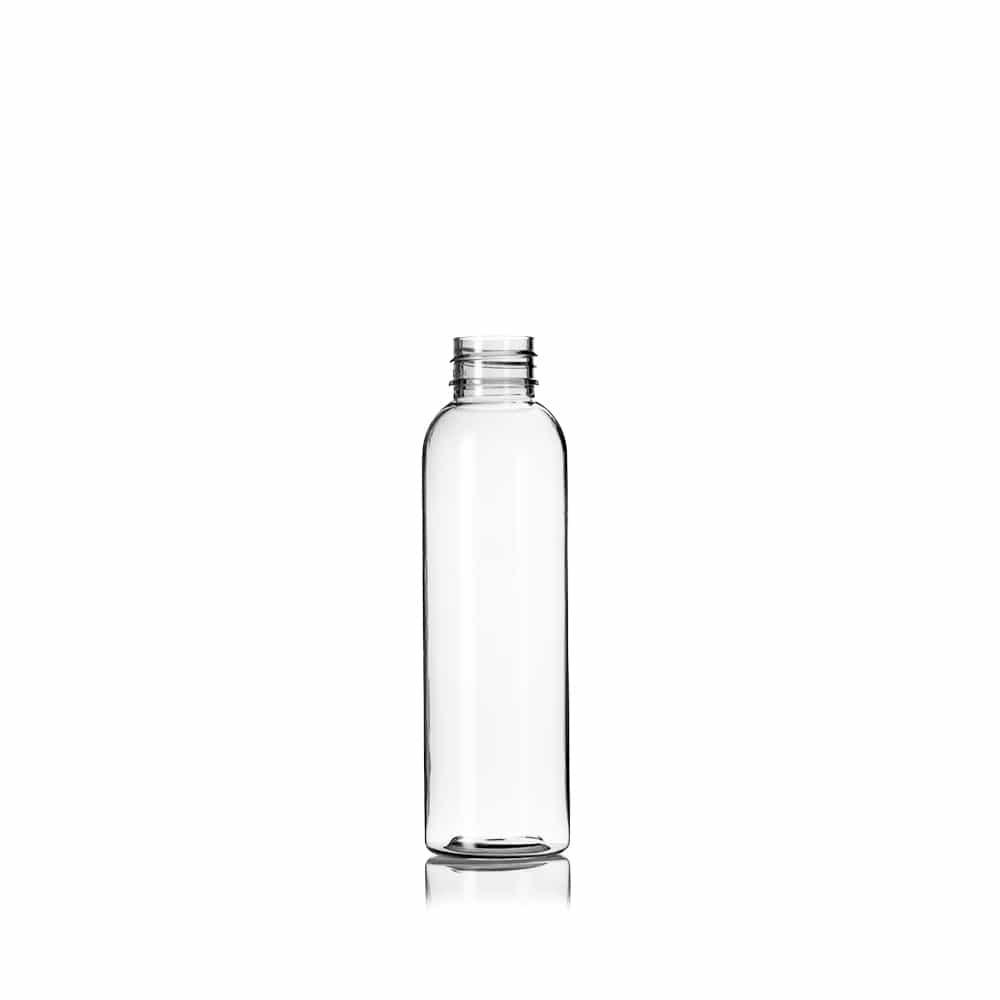
These companies buy from manufacturers in bulk and resell in smaller quantities. They carry stock inventory, so you can order what you need without waiting for a production run.
The major players each have a different sweet spot:
- SKS Bottle, one of the largest catalogs in the industry, around for decades. The tradeoff is that their website feels like it was designed in 2005 and their product naming conventions take some decoding. If you already know your specs, SKS works. If you are figuring things out for the first time, the experience can be frustrating.
- Berlin Packaging, operates at a larger scale and offers design services, but their MOQ and pricing structure favors bigger buyers. Better for brands past the startup phase.
- Container & Packaging Supply, diverse catalog with a recently overhauled website (still working out some bugs). PCR options are limited if sustainability is part of your brand story.
- Propacks, smaller, built specifically around no MOQ ordering and PCR materials. Full catalog online with transparent pricing.
What to expect across the category:
- MOQ: ranges from no minimum to 500+ units depending on the company
- Lead time: 1 to 5 business days for stock items
- Price per unit: $0.15 to $0.50 for standard bottles
- Customization: limited to stock shapes and colors (some offer custom labels and decoration)
Who this works for: Brands launching their first product, testing a new SKU, or running small batch production.
The catch: Not all distributors are equal. Some require case quantities (typically 24 to 144 units depending on the product). Some charge restocking fees. Some will not let you mix and match closures. Some have massive catalogs but no way to filter by neck finish or material. Ask specifically about MOQ, case packs, and return policies before ordering.
4. Amazon and Marketplace Sellers
Yes, people buy packaging on Amazon. It works in a pinch, but you are paying a premium for convenience and you have no idea who made the bottles.
What to expect:
- MOQ: 1 unit (buy as many as you want)
- Lead time: 1 to 3 days with Prime
- Price per unit: $0.40 to $1.50+ (often 3x to 5x distributor pricing)
- Customization: none
Who this works for: Prototyping, photography, one-off samples.
The catch: No consistency between orders. The listing might say "PET" but the supplier can change at any time. You cannot build a product line on Amazon packaging because you have no guarantee the same bottle will be available next month. There is also no way to verify material claims, PCR content, or regulatory compliance.
5. Full Service Packaging Partners
Companies like Arka, Noissue, and Hero Packaging handle design, sourcing, and production as a managed service. You tell them what you need, they handle the rest.
What to expect:
- MOQ: 250 to 1,000 units (some start at 100)
- Lead time: 2 to 4 weeks
- Price per unit: $1.00 to $5.00+ (includes design, sourcing, and project management)
- Customization: yes, but within their partner factory capabilities
Who this works for: Brands that want a turnkey experience and can absorb the higher per unit cost.
The catch: You are paying for project management. The actual bottles and closures come from the same manufacturers and distributors everyone else uses. The markup reflects the convenience, not the product quality. Once you understand your packaging specs, you can source directly for 50 to 70% less.
The Comparison Table
| Factor | Domestic Manufacturer | Overseas Factory | US Distributor | Amazon | Full Service |
|---|---|---|---|---|---|
| MOQ | 10,000+ | 5,000+ | 0 to 500 | 1 | 250 to 1,000 |
| Lead time | 8 to 16 weeks | 10 to 14 weeks | 1 to 5 days | 1 to 3 days | 2 to 4 weeks |
| Price per unit | $0.08 to $0.20 | $0.05 to $0.15 | $0.15 to $0.50 | $0.40 to $1.50 | $1.00 to $5.00 |
| Custom molds | Yes | Yes | Usually no | No | Sometimes |
| Quality control | On site | Remote | Supplier managed | Unknown | Supplier managed |
| Material traceability | Full | Variable | Depends on supplier | None | Depends on supplier |
| Best for | 50K+ units/year | Established brands | Launches and small batch | Prototyping | Hands off founders |
What Actually Matters When You Are Comparing Suppliers
The comparison table gives you the structure. But the decision comes down to a few specific things that most guides do not mention.
Neck finish compatibility
This is the number one reason first orders go wrong. Your bottle and closure must use the same neck finish specification (like 24-410 or 28-410). If you buy bottles from one supplier and closures from another, confirm the neck finish matches exactly. A 24-410 cap will not fit a 24-400 bottle, even though the numbers look almost the same.
Pricing structure transparency
Some suppliers show prices on their website. Most do not. If you have to request a quote, ask for the full breakdown: unit price, case quantity, shipping weight per case, and any setup or tooling fees. Watch for minimum dollar amounts disguised as "no MOQ." A company might sell you 50 bottles at $2 each while the case of 144 is $0.35 each.
If per unit cost math is new to you, start there first.
Lead times for reorders, not just first orders
Every supplier will tell you their lead time for the first order. What matters more is the reorder lead time. Some distributors keep inventory in US warehouses and ship within days. Some source from overseas and take 6 to 8 weeks on reorders. If you sell out of product and need bottles in two weeks, the reorder lead time determines whether you lose sales.
Check our lead times breakdown for specific timelines by order type.
Closure and bottle pairing
Do not buy bottles and closures separately unless you have confirmed compatibility. A pump with the wrong dip tube length will either not reach the product or scrape the bottom and break. A disc top from one supplier might wobble on a bottle from another because the thread pitch is slightly different.
The simplest way to avoid this: buy bottles and closures from the same supplier.
Material and sustainability claims
If you are marketing your brand as sustainable, your packaging needs to back that up. Ask for documentation: GRS certificates for PCR content, FDA compliance letters for food contact, SDS sheets for chemical compatibility. Any supplier worth working with can provide these within a day.
"Eco friendly" on a product listing is not a certification. It is marketing. If your packaging claim matters, verify the recycled content.
Sample before you commit
Order samples from your top two or three suppliers before placing a production order. Test the closure fit, check the color consistency, fill the bottle with your actual product and let it sit for 72 hours. Look for leaking, stress cracking, or discoloration.
A $30 sample order can save you from a $3,000 mistake.
The Decision Framework
Stop comparing ten suppliers. Start by answering three questions.
How many units do you need for the next 6 months?
- Under 500: US distributor with no MOQ
- 500 to 5,000: US distributor with case pricing
- 5,000 to 20,000: US distributor or domestic manufacturer
- 20,000+: direct manufacturer (domestic or overseas)
How custom does your packaging need to be?
- Stock shape with your label: any distributor
- Custom color on a stock shape: specialty distributor or manufacturer
- Custom mold (unique shape): direct manufacturer only, $10K+ tooling
How fast do you need to reorder?
- Same week: US distributor with warehouse inventory
- 2 to 4 weeks: domestic manufacturer or full service
- 8+ weeks acceptable: overseas factory
If you answered "under 500 units, stock shape, same week reorders" then you are looking at a US distributor, not a factory in China. If you answered "50,000 units, custom mold, 12 week lead time is fine" then a direct manufacturer makes sense.
Most indie beauty brands in their first year fall into the first category. That changes as you scale, and when it does, you can switch suppliers without the drama most people assume.
Why the Supply Chain Feels So Fragmented
The five supplier types above cover everyone from first time founders to mid size brands. But the biggest companies skip all of them entirely.
At the scale of Estée Lauder or P&G, it is cheaper to buy raw resin pellets and blow mold bottles in house on their own production lines. They are not choosing a packaging supplier. They are the packaging supplier. Custom molds, proprietary formulations, vertically integrated from pellet to shelf.
That is not something you need to think about until you are doing millions of units a year. But it explains why the packaging world can feel so confusing from the outside. The supply chain has layers, and where you plug in depends entirely on your volume right now, not where you want to be eventually.

Written by
Queenie FongQueenie Fong is the founder of Propack Solutions, a woman-owned sustainable packaging company based in Ontario, CA. With nearly a decade of experience in the packaging industry, she specializes in post-consumer recycled (PCR) materials, helping brands source rPET, PCR HDPE, and PCR PP packaging that meets regulatory requirements and sustainability goals.