PET vs. PP Bottles: A Founder's Guide


Choosing the right bottle for your product feels like a final exam. You’ve perfected the formula, but the packaging choice will define how customers see, use, and feel about what’s inside. Pick the wrong plastic, and you could be dealing with melted bottles from a hot delivery truck, a beautiful formula hidden behind cloudy plastic, or packaging that your eco-conscious customers can’t even recycle. Imagine spending a year developing a gorgeous, all-natural face cream, only to have a customer in Arizona open their package in July to find a warped, shrunken bottle. The product inside might be fine, but the customer's trust is broken. After helping thousands of brands launch, we’ve seen it all. This decision affects your brand's reputation, your product's integrity, and your ability to sell sustainability as a core value. Let's walk through two of the most common materials, PET and PP, and break down why so many of the most successful beauty and personal care brands we work with build their entire line on PET.
The Clear Winner for Product Appeal: PET
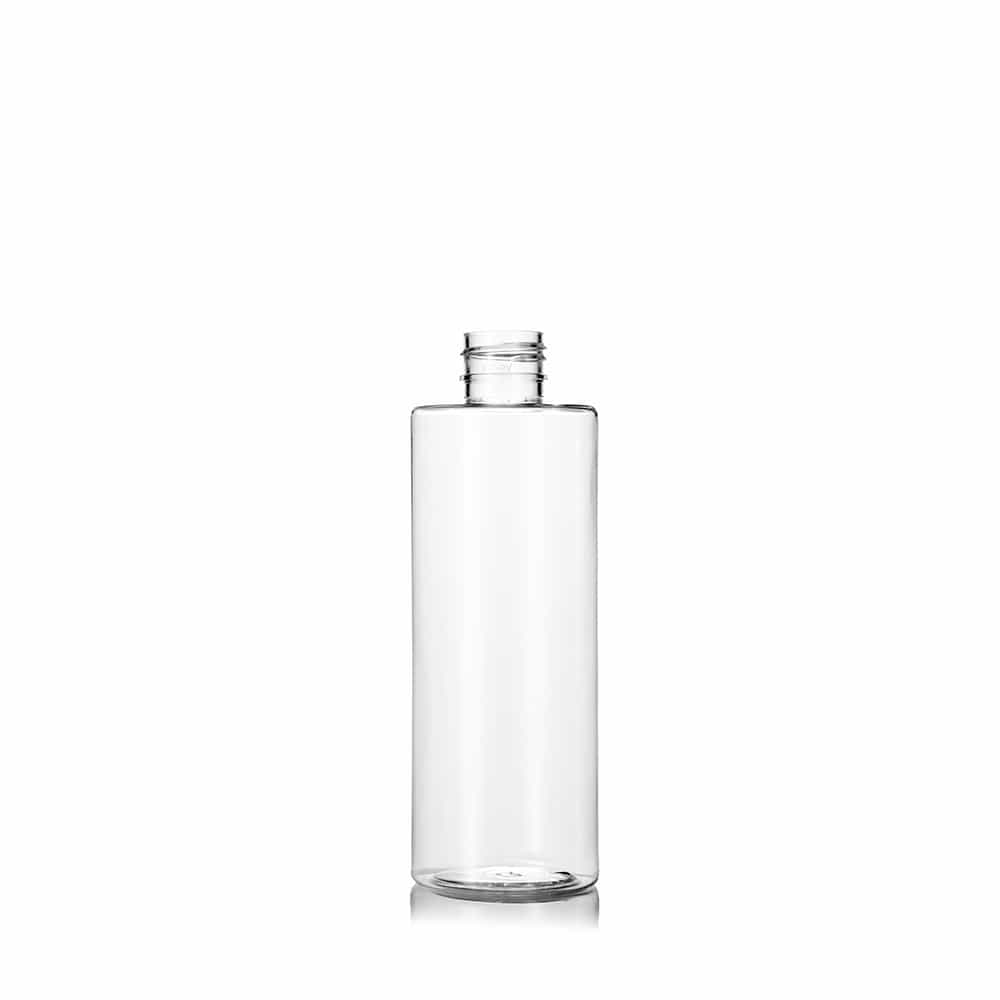
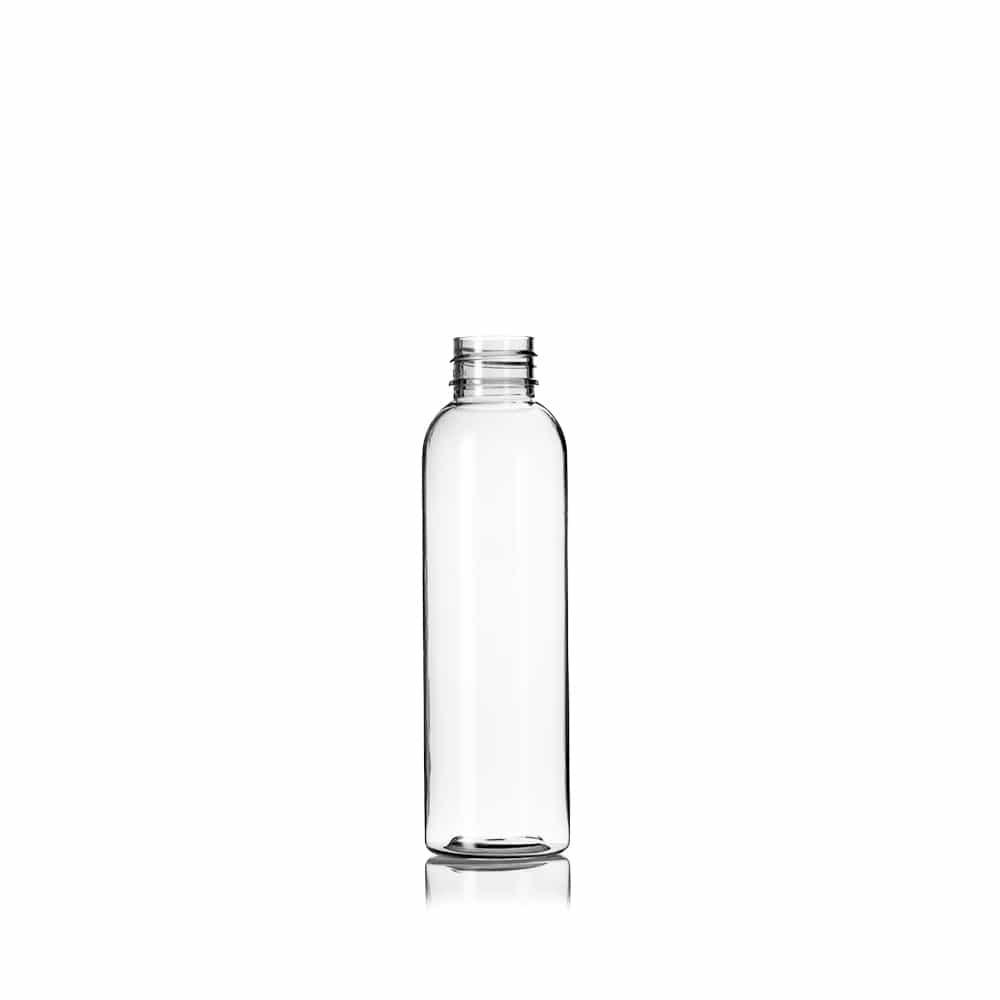
When you want your product to be the hero, you need packaging that gets out of the way. That’s what PET (polyethylene terephthalate) does so well. It offers glass-like, crystal-clear transparency that shows off the true color and texture of your formula. For a vibrant body wash, a shimmering serum, or a colorful toner, clarity isn't just a feature; it’s a sales tool. People want to see what they’re buying, and PET plastic lets them do just that. You'll know it by the #1 recycling code. It's been one of the most recognizable and widely used plastics since the 1970s for a reason.
Picture a customer browsing the aisle at a retailer. They see two facial serums side-by-side. One is in an opaque bottle, hiding the contents. The other is in a crystal-clear PET bottle, showcasing a beautiful, golden-hued liquid with suspended botanicals. The choice is instinctive. The customer reaches for the product they can see and connect with. For formulas with unique visual characteristics—like a bi-phase makeup remover or a gel cleanser with exfoliating beads—PET isn't just an option; it's a necessity to communicate quality and efficacy before the bottle is even opened.
Beyond its good looks, PET is also incredibly lightweight and shatter-resistant. This directly cuts down your shipping costs and nearly eliminates the risk of breakage during transit or in a customer’s slippery shower—a huge advantage over glass. For a direct-to-consumer brand, every ounce saved on packaging weight translates to lower shipping fees, which can be the difference between profitability and breaking even on a sale. The near-elimination of breakage also means fewer customer service tickets, fewer costly replacement shipments, and a much better unboxing experience. For brands moving from samples to their first real production run, these practical benefits add up quickly. If your product’s visual appeal is a key part of your brand, our collection of PET bottles is the best place to start looking.
 A close-up of a clear PET plastic bottle showing its transparency.
PET Bottle Heat Tolerance: Will It Survive a Hot Car?
One of the most common questions I get from founders is about heat. Will a bottle left in a hot car or sitting on a sunny porch warp, melt, or leach chemicals into the product? It's a fear I hear all the time, and it's a valid one that can destroy customer trust. Consider the entire journey of your package: it may sit in a non-climate-controlled warehouse, travel for days in the back of a delivery truck that can easily reach 130°F in the summer, and finally land on a sun-drenched porch in Texas. With PET, you can relax. Standard PET bottles are remarkably stable in these everyday high-temperature situations. Research from NAPCOR, the trade association for the PET industry, shows it would take almost six months of continuous exposure to 140°F (60°C) for trace elements to exceed EPA limits for drinking water. Your package will be just fine in a hot delivery van or a customer's car.
Now, it's good to distinguish this from hot-fill applications. Hot-filling is a manufacturing process where a product is heated to a high temperature (often 180-195°F or 82-90°C) and poured into the container while still hot to sterilize it. Standard PET isn't built for that and will deform. This is because the extreme heat of the hot-fill process exceeds PET's glass transition temperature—the point where the polymer structure changes from a hard, rigid state to a softer, more rubbery one, causing the bottle to lose its shape. You'd need specialized PET or other materials like PP for that process. But for the vast majority of personal care, cosmetic, and room-temperature food products, PET's thermal stability is more than enough. Its actual melting peak temperature is between 225°C and 255°C (437°F and 491°F), far beyond any real-world shipping or storage condition you'll ever encounter. For your finished lotion, shampoo, or face mist, PET is a reliable safeguard for your product's integrity all the way to your customer's hands.
 A PET bottle with lotion sitting safely in a sunny spot.
The Gold Standard for Safety and Purity
Your customers are smart. They scan ingredient lists and they're starting to scrutinize packaging materials, too. Building your brand on trust means choosing packaging that is unquestionably safe. PET has a long and proven track record here. As NAPCOR puts it, "The PET container has been safely used for many years and has undergone rigorous testing under US Food and Drug Administration (FDA) guidelines to ensure it is safe for food and beverage storage and reuse."
This FDA approval for food contact is why it's the go-to for everything from water bottles to peanut butter jars. That same safety profile extends perfectly to beauty bottles and personal care bottles. This isn't just about what's not in the plastic; it's also about how it interacts with what's inside. PET offers excellent chemical resistance to the oils, alcohols, and mild acids common in cosmetic formulations, ensuring the bottle won't degrade and the formula remains stable and effective over its shelf life. And here’s a big one: PET does not contain intentionally added Bisphenol A (BPA) or per- and polyfluoroalkyl substances (PFAS). Imagine a customer on your product page, ready to buy. They see your clean ingredient list, but then they wonder about the bottle. Being able to state “Packaged in BPA-free, FDA-compliant PET plastic” right in your product description removes that final barrier to purchase. It’s a powerful claim that really connects with health-conscious buyers. When your formula is clean, your packaging needs to be too.
 PET bottles for cosmetics arranged with natural ingredients.
Recyclability, PCR, and Future-Proofing Your Brand
Sustainability isn't a buzzword anymore; it's a baseline expectation. Customers look for it, and new legislation like California's SB 54 is starting to enforce it. This is where PET really pulls ahead. It has a higher recycling rate than any other type of plastic and is accepted in pretty much every curbside recycling program in the United States. When you choose PET, you’re giving your customers an end-of-life solution they can actually use. Think about your customer after they've used the last drop of your product. With PET, there's no confusion. They see the #1 symbol, know it goes in the blue bin, and feel good about their purchase. With other, less common plastics, it can lead to 'wish-cycling'—tossing it in the bin and hoping for the best—which often just sends it to a landfill. PET offers true recycling clarity.
But a true circular economy goes beyond just being recyclable; it means using recycled material. This brings us to PCR PET, or Post-Consumer Recycled PET. By choosing bottles with recycled content, you’re helping create a market for recycled plastic, reducing the demand for new petroleum, and lowering your carbon footprint. The journey of a PCR bottle is a powerful story to tell your customers: an old water bottle is collected, shredded into flakes, washed, and purified into raw material that becomes your new, beautiful serum bottle. This closed-loop process is what a circular economy looks like in action. We’ve invested a lot of time and effort in sourcing high-quality PCR, which is why we offer both 35% and 50% PCR PET lines with no MOQ. We've also solved one of the biggest headaches for brands: the old myth that PCR plastic has to look gray or inconsistent. Our PCR bottles maintain fantastic clarity, so you don't have to sacrifice aesthetics for sustainability. This allows you to put 'Made with 50% Recycled Plastic' on your label—a tangible, measurable claim that builds immense brand equity. You can get into the nitty-gritty in our rPET explained guide.
Using a widely recycled material with high PCR content is one of the smartest things you can do to get ahead of upcoming regulations. You can check your obligations with our SB 54 checker.
What About PP? A Quick Look
So where does Polypropylene (PP) fit into all this? While PET is the star for clear bottles, PP is a versatile workhorse, especially for closures. It’s a tougher, more rigid plastic that is often naturally translucent or opaque—it's not crystal clear like PET. You encounter PP every day: it's the tough plastic in your car's dashboard, the durable container for your Greek yogurt, and the flexible hinge on a Tic Tac box. Its defining characteristic is its incredible resistance to fatigue. PP also has a higher heat tolerance, which is why it's often used for hot-fill food containers like yogurt cups and syrup bottles.
In personal care packaging, you’ll most often find PP in caps, lids, and pumps. Its durability and great fatigue resistance make it perfect for a flip-top cap that gets opened and closed hundreds of times. A hinge made from PET would become brittle and snap after a few dozen uses. A PP hinge, however, can be flexed thousands of times without breaking, ensuring the closure works perfectly for the entire life of the product. This synergy—a clear PET bottle with a durable PP cap—is a classic example of using the right material for the right job. While we don't currently stock PP bottles, we carry a wide range of PP closures designed to pair perfectly with our PET bottles. Figuring out how different materials work together is important, which we cover in our guide to PP vs PET vs HDPE closures.
Making the Right Choice for Your Product
For most indie beauty and personal care brands I talk to, the choice is pretty straightforward. As a founder, the decision tree is clear. Do you have a visually stunning formula you want to showcase? Go with PET. Is customer trust in safety and purity paramount? PET's FDA-approved, BPA-free status is your answer. Is a simple, effective sustainability story a core part of your brand identity? PET's #1 recycling status and the availability of high-clarity PCR make it the obvious choice. It hits that sweet spot of great looks, solid performance, and real environmental responsibility.
At Propacks, we’ve built our business around making this choice easier for founders like you. We’ve seen too many great brands get stuck at the packaging stage, facing 10,000-unit minimums for the bottle they want, or being forced to choose between sustainability and aesthetics. That’s the problem we set out to solve. We got rid of minimum order quantities so you can start small and grow without a massive upfront check. We sourced high-clarity PCR PET and priced it competitively with virgin plastic, so you don't have to pay a penalty for doing the right thing. By making high-clarity PCR PET accessible and affordable, we remove the barriers to building a sustainable brand from day one. And we stock a huge inventory of all bottles and compatible closures right here in California, so you can get what you need fast. The right packaging is out there. You don’t have to compromise your vision or your values to get it.
Frequently asked questions
What is the main difference between PET and PP plastic bottles?+
PET (polyethylene terephthalate) is known for its incredible clarity, which makes it look almost like glass. It's also lightweight, shatter-resistant, and very easy to recycle. On the other hand, PP (polypropylene) is generally tougher, has a higher heat tolerance, and is usually translucent or opaque, not see-through. Think of PP for things like caps and hot-fill food tubs.
Which plastic is clearer, PET or PP?+
PET is much, much clearer. It offers a crystal-clear transparency that's perfect for showing off the color and texture of products like serums, toners, and body oils. PP is naturally milky or cloudy.
Is PET suitable for hot products?+
Standard PET bottles aren't meant for the manufacturing process called hot-filling, where products are packaged at very high temperatures (over 160°F or 70°C). But for a finished product, PET is perfectly safe and stable even if it gets left in a hot car or in direct sunlight. The bottle will be fine.
What does PCR PET mean?+
PCR PET stands for Post-Consumer Recycled Polyethylene Terephthalate. In simple terms, it's PET plastic that has already been used by someone, collected through a recycling program, and then cleaned and remade into new plastic pellets. We then use those pellets to make new bottles, which cuts down on waste and the need for new, virgin plastic.
Is PET plastic safe for cosmetic and personal care products?+
Yes, PET is considered extremely safe. The FDA has approved it for direct contact with food and drinks, and it doesn't contain BPA or intentionally added PFAS. It has great chemical resistance, making it a reliable and non-reactive choice for a huge range of cosmetic and personal care formulas.
Why are so many water and soda bottles made from PET?+
PET is the world standard for beverage bottles for a few key reasons: it's light, it won't shatter, it's clear, and it creates a strong barrier against carbon dioxide, which is what keeps fizzy drinks from going flat. On top of all that, it's the most recycled plastic on the planet, making it the obvious choice for big beverage companies.
Does using PCR PET compromise the quality of the bottle?+
Not if you get it from a good source. While some lower-grade PCR can have a slight gray or yellow tint, modern sorting and cleaning technologies have made it possible to produce PCR PET with amazing clarity. At Propacks, we specifically source our 35% and 50% PCR PET to maintain high aesthetic standards, so you can be sustainable without your packaging looking cheap.

Written by
Queenie FongQueenie Fong is the founder of Propack Solutions, a woman-owned sustainable packaging company based in Ontario, CA. With nearly a decade of experience in the packaging industry, she specializes in post-consumer recycled (PCR) materials, helping brands source rPET, PCR HDPE, and PCR PP packaging that meets regulatory requirements and sustainability goals.