How to Choose the Right PCR Percentage for Your Packaging


Selecting a post consumer recycled (PCR) content percentage for your packaging is a business decision with direct consequences for compliance, marketing, and material performance. The correct choice for your brand depends on these factors. There is no single best answer, but there is an optimal choice for your specific product and market. This guide provides a framework for making that decision.
For many brands, legislation drives the decision. For others, it is about aligning packaging with a specific brand identity. Understanding the tradeoffs between common percentages like 25%, 35%, 50%, and 100% PCR is the first step to selecting packaging that functions for your budget, your customers, and your regulatory obligations.
Compliance Is the Starting Point
For any brand selling products in or into California, packaging regulations are not optional. The state’s Plastic Pollution Prevention and Packaging Producer Responsibility Act, known as SB 54, sets mandatory timelines for including recycled content in plastic packaging.
This legislation is the most significant driver for PCR adoption in the United States. Its key milestones for plastic beverage containers are a useful benchmark for all industries:
- 25% minimum PCR content by 2025
- 50% minimum PCR content by 2030
While these specific dates apply to beverage containers, the law establishes a clear direction for all plastic packaging. Brands in every category, from cosmetics to household cleaners, should view these targets as the baseline for future compliance. Choosing a PCR percentage below 25% is an increasing regulatory risk. Opting for 35% or 50% PCR content today positions your brand ahead of these requirements and reduces the need for packaging changes in the near future.
Brand Positioning and Marketing Claims
Beyond compliance, your chosen PCR percentage is a specific, factual claim you can make to customers. Different levels of PCR content support different marketing positions.
Good: Meeting the Standard (25% to 35% PCR)
Adopting packaging with 25% to 35% PCR content is a practical first step. It ensures you meet current and near future regulatory requirements. For many products, especially those in clear PET bottles, this range offers a good balance. The visual impact on the packaging is minimal, while the environmental benefit is quantifiable and can be used in marketing copy.
Better: Exceeding the Standard (50% PCR)
A 50% PCR bottle allows for a stronger marketing claim. This level aligns with California’s 2030 goals, positioning your brand ahead of the regulatory curve. It is a clear, defensible claim that can appeal to environmentally focused consumers. Brands built on a core identity of sustainability should target 50% PCR as their standard to substantiate their positioning.
The Case for 100% PCR
Using a 100% PCR bottle provides the basis for the strongest possible marketing claim about circular materials. It also comes with the most significant tradeoffs. The availability of 100% PCR resin can be less consistent, the cost can be higher, and the material properties require careful testing. For brands where this claim is central to their identity, 100% PCR is the target. For most other brands, a 50% PCR bottle provides a more balanced combination of marketing impact, performance, and supply chain stability.
Material Performance and Aesthetics Matter
PCR resin is not identical to virgin plastic. The recycling process can introduce subtle variations that affect the final appearance and performance of your packaging. Understanding these differences is key to choosing the right percentage for your product.
Color and Clarity
The most noticeable effect of PCR content is on clarity. High percentages of recycled content, especially in rPET (recycled PET), can introduce a slight grey or yellow tint to the material.
- At 35% PCR, this effect is often nearly undetectable in clear bottles.
- At 50% PCR, a faint haze or tint may be visible upon close inspection.
- At 100% PCR, the tint is more apparent.
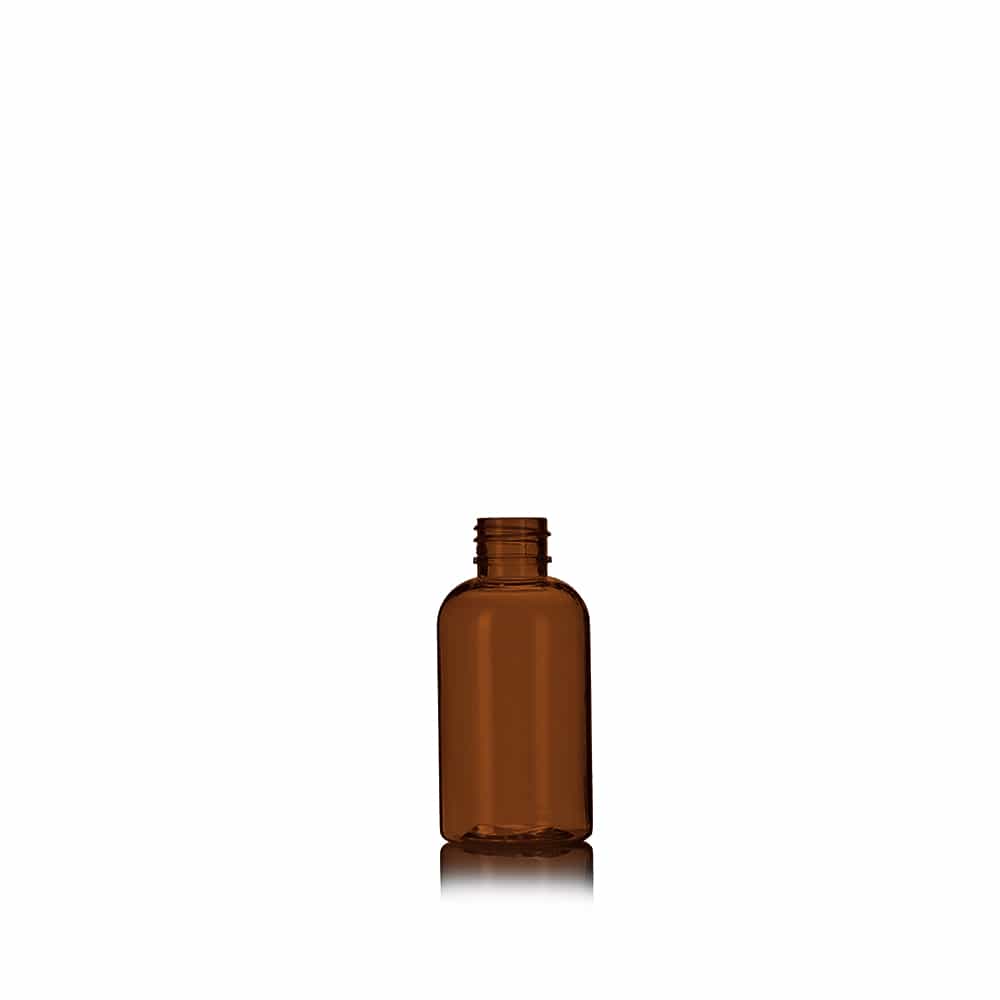
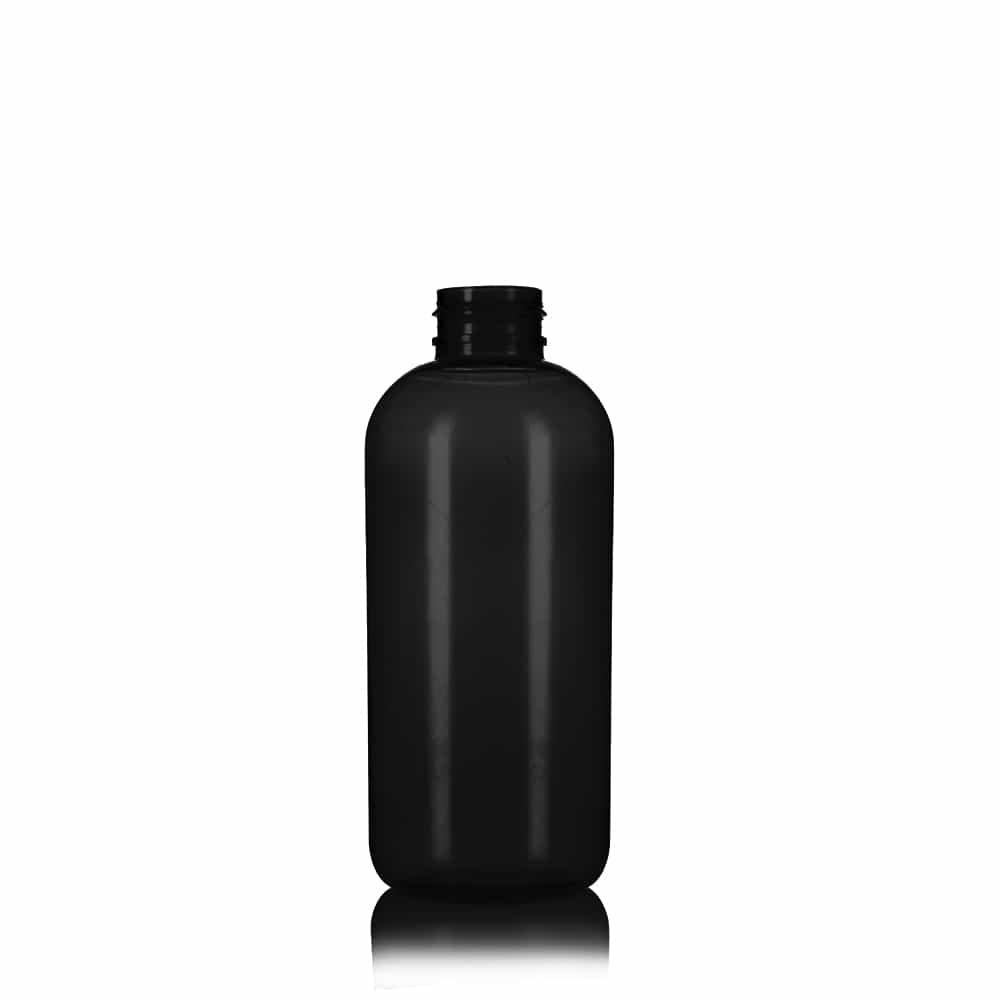
This is a characteristic of the material, not a defect. Some brands treat this visual cue as a signal of the bottle’s recycled nature. If your product’s color purity is essential, you have two options. First, choose a lower PCR percentage. Second, use colored packaging. Amber, blue, white, and black bottles effectively mask any tint from PCR content, allowing you to use high percentages like 50% without aesthetic changes.
Structural Integrity
Modern recycling and manufacturing processes produce high quality PCR resins. For most applications in beauty, personal care, and home goods, bottles with up to 50% PCR content exhibit structural performance that is functionally identical to virgin plastic. They are durable, chemically resistant, and safe for a wide range of products. At 100% PCR, some resins may have slightly different performance characteristics, occasionally requiring thicker bottle walls to achieve the same rigidity, which can affect cost and weight.
Cost and Supply Chain Considerations
A common misconception is that recycled plastic is always cheaper than virgin plastic. The market for recycled resin is subject to its own supply and demand dynamics. The costs of collecting, sorting, and reprocessing post consumer materials mean that PCR resin prices can sometimes be higher than virgin resin prices.
Generally, the price difference between 35% and 50% PCR is moderate. As demand grows due to regulations like SB 54, the supply chain for these materials is becoming more robust. Higher percentages, such as 100% PCR, often command a premium due to tighter specifications and more limited supply. When budgeting for packaging, it is important to view PCR content as a required cost for compliance and marketing, not as a cost saving measure.
A Practical Decision Framework
To choose the right PCR percentage, weigh these factors based on your business priorities.
- If your primary goal is compliance, select at least 35% PCR. This meets and exceeds the 2025 requirements under SB 54.
- If your brand positioning is central to sustainability, aim for 50% PCR. This provides a strong, defensible claim.
- If your product requires perfect water clarity, start with 35% PCR or consider using 50% PCR in a colored bottle.
- Always conduct compatibility testing. Before placing a large order, test your specific product formula with your chosen PCR bottle to ensure there are no issues with interaction or aesthetics.
Integrating PCR packaging is a strategic choice. By balancing these practical considerations, you can select a PCR percentage that strengthens your brand and satisfies regulations.
Frequently asked questions
What is the best PCR percentage for beauty products?+
For most beauty products, 35% or 50% PCR content is a practical choice. This range offers a functional balance of marketing claims, regulatory compliance, and material performance. For products where perfect clarity is essential, 35% PCR rPET is often suitable. For lotions or colored formulas, 50% PCR is achievable without any aesthetic impact.
Does a 50% PCR bottle look different from a virgin plastic bottle?+
It can, slightly. A 50% PCR rPET bottle may have a subtle grey or yellowish tint compared to a virgin PET bottle. This is a normal characteristic of the recycled material. In colored bottles like amber or white, this difference is not visible.
Is 100% PCR plastic always better?+
Not necessarily. While 100% PCR offers the strongest marketing claim, it can have drawbacks in terms of cost, consistent availability, and potential for minor color variations. For many brands, 50% PCR provides a more balanced and practical solution that still demonstrates a clear commitment to sustainability.
How does California SB 54 affect my choice of PCR percentage?+
California SB 54 mandates that plastic beverage containers sold in the state contain at least 25% PCR by 2025 and 50% by 2030. While these rules apply specifically to beverage containers, they signal the future direction for all plastic packaging. Choosing 35% or 50% PCR now ensures your brand is ahead of these regulatory trends.
Are higher PCR percentages more expensive?+
The cost of PCR resin fluctuates based on market demand and the price of virgin plastic. Higher PCR content does not always mean a higher cost, but premium grades or 100% PCR content can be more expensive than virgin material due to the costs of collection and reprocessing. It is best to view PCR as a component of your brand's value and compliance costs.

Written by
Queenie FongQueenie Fong is the founder of Propack Solutions, a woman-owned sustainable packaging company based in Ontario, CA. With nearly a decade of experience in the packaging industry, she specializes in post-consumer recycled (PCR) materials, helping brands source rPET, PCR HDPE, and PCR PP packaging that meets regulatory requirements and sustainability goals.