How to Start a Skincare Line: Costs, Packaging, and Launch Checklist


A skincare launch needs packaging that works with the product, not just the brand palette. Toner, serum, cream and foaming cleanser call for different dispensing decisions, even when they share one visual identity. Start with bottle size, material, color and closure; the guide then connects those choices to testing, manufacturing, costs and US cosmetic requirements.
Start With One Product People Can Understand
Most new skincare lines start too wide. A cleanser, toner, serum, moisturizer, mask, body oil, and lip product sounds like a brand. In practice, it creates seven formulas to source, seven packaging formats to test, seven labels to review, and seven inventory risks before the market has proved anything.
A first launch usually works better when it starts with one hero product and one or two supporting SKUs. That might be a barrier repair moisturizer, a body oil, a gentle cleanser, or a vitamin C serum. The product should be easy to explain in one sentence and specific enough that the customer knows whether it is for them.
The question is not only what the formula does. The question is whether the packaging, claims, price point, and channel all fit the same customer. A premium serum in a cheap bottle feels wrong. A refillable sustainability story with a fragile pump and no reorder plan also feels wrong.
If the goal is speed, private label skincare can be a practical starting point. A lab already has base formulas, manufacturing controls, and ingredient documentation. The tradeoff is less formula uniqueness. The Propacks guide to private label skincare goes deeper on that route.
If the goal is a proprietary formula, expect more time and more testing. Custom formulation gives you more control, but it also adds development rounds, stability work, compatibility testing, and higher minimums. That can be worth it later. It is often too much for a first proof of demand.
Choose Serum, Toner and Cleanser Sizes Separately
For a serum concept, compare compact 1 oz and 2 oz prototypes against intended application, pricing and stability evidence. These are candidate sizes, not a universal standard or a claim about how many doses a bottle contains. A treatment dispenser and a pour opening can lead to very different amounts being used from the same fill.
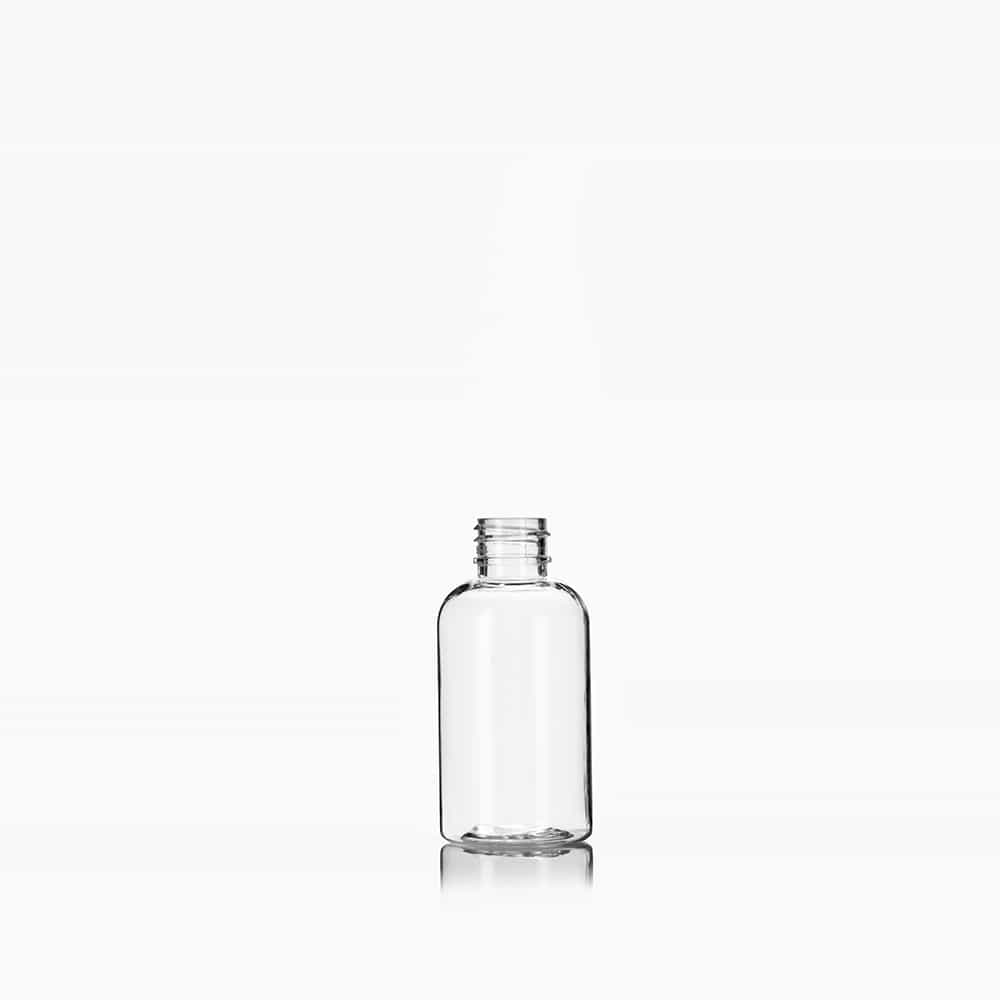
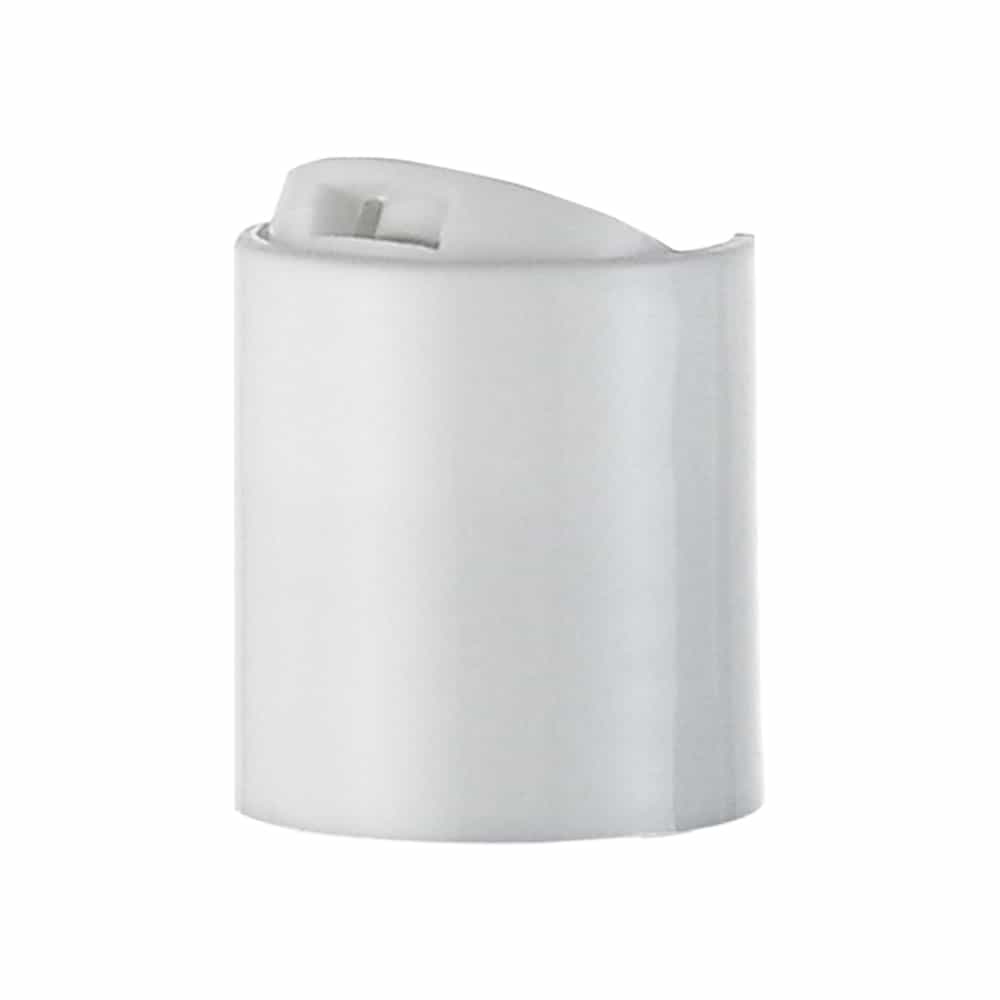
For toner, prioritize controlled dispensing and a comfortable grip. A small 2 oz bottle can support a compact or trial presentation, while a larger format may suit a different channel. The 2 oz disc-top example below is a toner candidate, not a substitute for a metered serum system.
Choose a facial-cleanser package around its actual consistency and dispensing mode. A foaming cleanser uses a different system from a thick gel or cream cleanser. Confirm net fill, headspace, label panel and finished-pack height with the filler before committing to artwork or carton dimensions.
 Illustrative skincare product planning with cleanser, serum and moisturizer textures and their packaging formats.
Choose Packaging Before the Formula Is Finished
Many founders treat packaging as the last step. That is backwards. The formula and the package have to work together, and the package can expose problems the formula spec sheet never mentioned.
A thin serum may work in a dropper bottle, treatment pump, or small bottle with a fine dispensing closure. A thick moisturizer may need a jar, tube, or pump designed for viscosity. A cleanser might need a disc top cap, foamer pump, treatment pump, or squeeze bottle depending on texture and usage.
Material matters too. PET is common for skincare because it is clear, lightweight, impact resistant, and works for many water based formulas. HDPE is more flexible and often used for squeezable bottles. PP appears in many closures, jars, and dispensing components. The Propacks guide on whether PET plastic is safe for skincare explains where PET fits and where testing still matters.
Closures are not universal. A 24-410 pump needs a 24-410 bottle. A 28-400 closure does not fit a 28-410 finish just because the first number matches. The Propacks guide to choosing the right bottle and closure for a beauty product covers this in more detail.
Packaging also affects the label. A curved bottle with a small label panel limits copy space. A product that needs warnings, directions, ingredient lists, and multilingual copy may need a larger label or carton. A brand that wants a clean front panel still needs somewhere to put the required information.
For sustainability claims, be careful with language. The FTC Green Guides summary explains that environmental marketing claims should be truthful, specific, and not misleading. Claims like recyclable, recycled content, biodegradable, and eco friendly need support.
Compare Dispensing Caps, Droppers and Airless Systems
A dispensing cap can work for an appropriately flowing toner or cleanser. A dropper or treatment pump can support a different application experience for a serum, but neither automatically provides an accurate dose. Evaluate drips, repeatable use and compatibility of every part in contact with the formula.
Airless describes a dispensing architecture, not a promise of sterility or zero oxygen exposure. Assess evacuation, priming and use with the specific viscosity; do not use the format as permission to omit a needed preservative system. Glass, droppers and airless packs discussed here are design alternatives, not claims that Propacks stocks those systems.
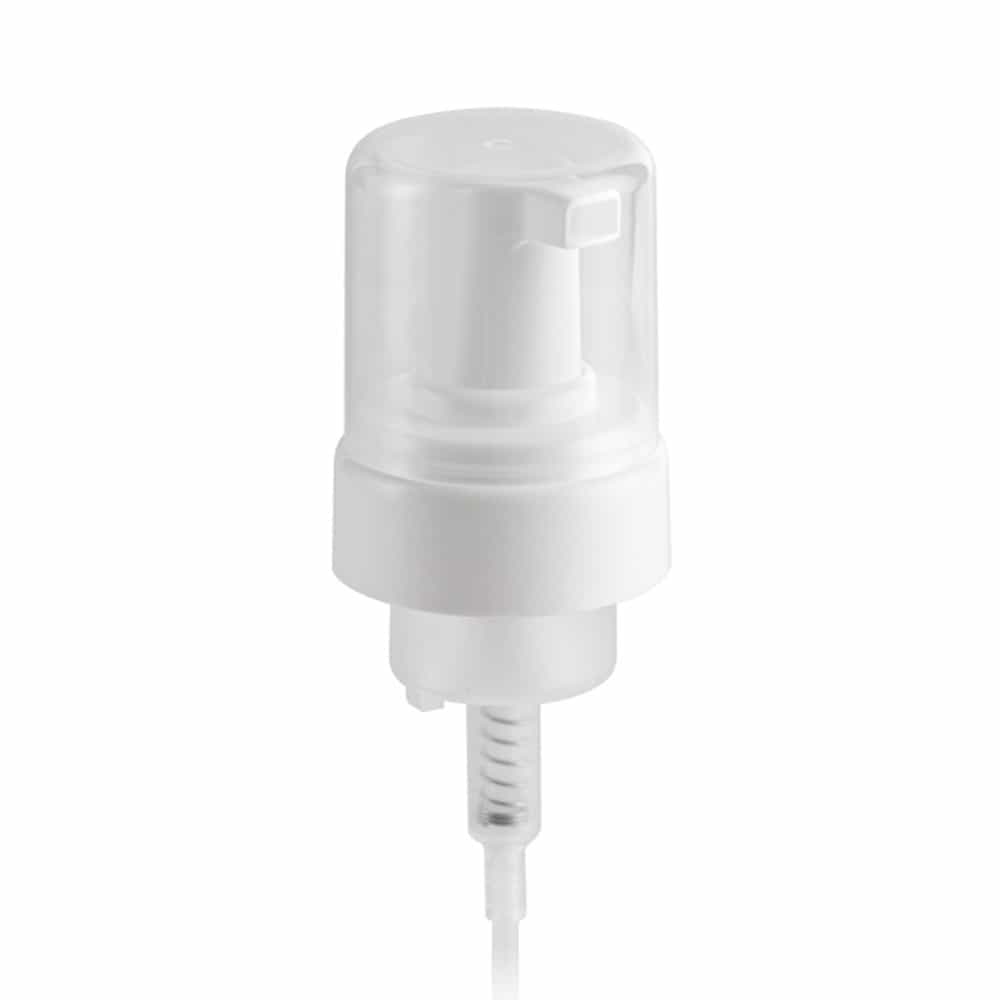
For foam delivery, select a purpose-formulated low-viscosity cleanser and a matched foam bottle and pump. Do not dilute an existing finished cleanser ad hoc, because the change also affects preservation, stability and labeling. Test foam quality and repeated actuation alongside leakage and transport performance.
Choose Color and Label Space Around the Formula
Clear packaging shows the fill; amber, white and black can support different visual presentations. If the formula has light-related stability requirements, obtain relevant package information and test the chosen material and color. A dark-looking bottle alone is not a verified UV barrier.
Select the shape with the label panel in mind. Tapers, shoulders and small curved surfaces can reduce usable artwork space, especially when directions, ingredient declarations and required warnings must fit. Obtain the actual dieline or panel dimensions rather than treating total bottle height as the label height.
Test a printed sample for contrast, scuffing, adhesion and barcode scanning on the real container. Oils and wet handling can affect label performance differently. A clean-looking label design still needs enough space for the product information required for its intended market.
Two Skincare Packaging Combinations to Sample
For a toner or other appropriately flowing skincare liquid, compare the 2 oz clear PET Boston Round bottle, 20-410 with the white PP smooth disc-top cap, 20-410. This is a compact dispensing-cap format, not a metered serum pump. Check controlled pouring, drips and leakage with the final formula, and assess light stability rather than treating clear packaging as suitable for every active ingredient.
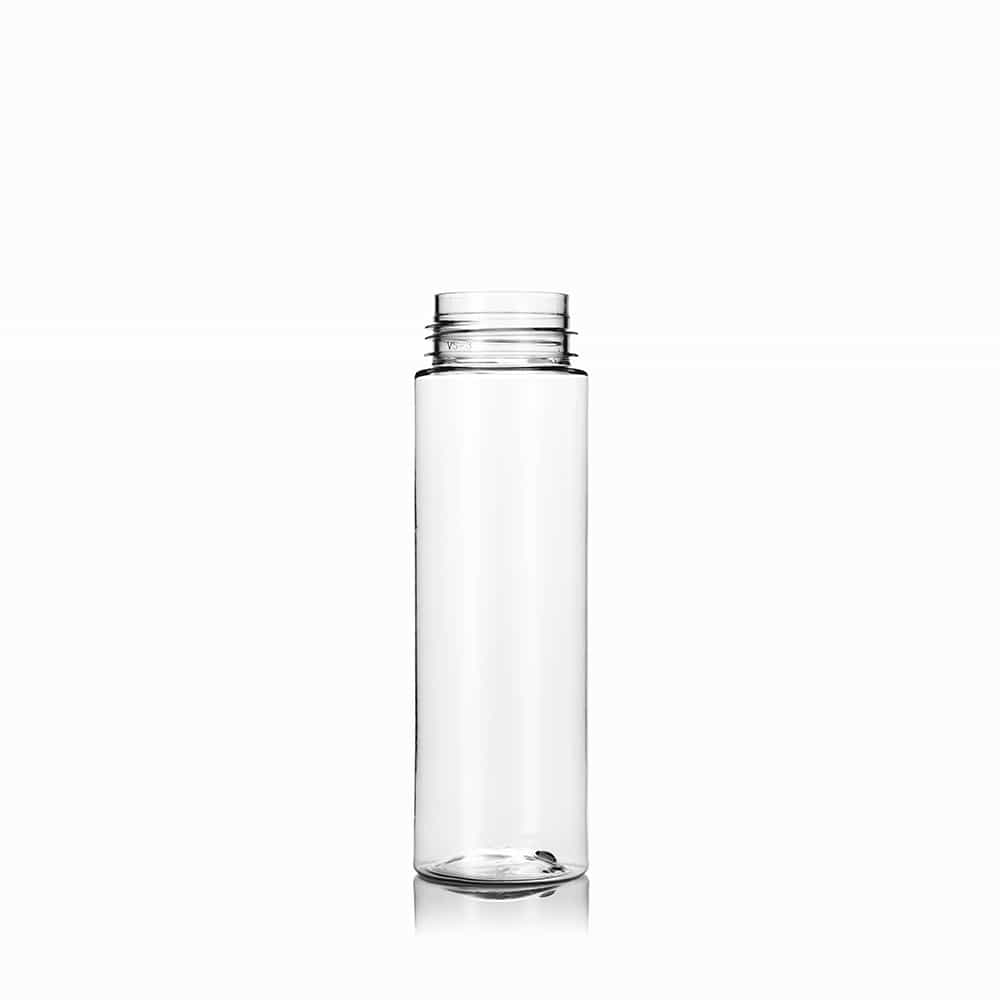
For a foaming facial cleanser, compare the 6.5 oz clear PET foam bottle, 42-410 with the white PP foaming pump, 42-410, with a 4-inch dip tube. The pump is listed for 6.5 oz foam bottles. It needs a formulation developed for foaming delivery; do not dilute a finished thick cleanser ad hoc to make it work.
Both bottle examples use the listed 35% PCR PET variants; the separate white PP closures are not described as PCR. Confirm availability, dip-tube fit where applicable, repeated dispensing, transport leakage and complete formula compatibility before approving either assembly.
 Illustrative skincare packaging cost comparison with cleanser, serum and moisturizer formats, closures and cartons.
Test Samples Like They Are Part of Product Development
Samples are not only for checking whether the bottle looks cute. They are part of product development. The package should be tested with the actual formula, actual closure, actual label area, and actual use case.
At minimum, test fill volume, dispensing, leakage, torque, drop resistance, label fit, and how the product looks after sitting in the package. If the product contains oils, acids, alcohol, fragrance, essential oils, or surfactants, compatibility testing becomes more important. A package can look perfect on day one and fail after weeks of contact.
Order samples before committing to a full packaging order. The Propacks guide to requesting and testing packaging samples explains what to check when the samples arrive.
A good sample process includes your manufacturer. Send the packaging sample to the lab or filler early. Ask whether their filling line can handle the container, cap, pump, label orientation, and case pack. A component that works by hand can still create problems on a production line.
The sample stage is also where first order assumptions become real. The founder may love a frosted bottle until they see how much label contrast changes. A pump may feel premium until it dispenses too much product. A jar may photograph well but create hygiene concerns for the formula type.
 Illustrative skincare formula-to-package matching using serum gel, liquid cleanser and thick moisturizer textures.
Build the Business Before You Buy Components
A skincare line needs a business plan before it needs a bottle order. That does not mean a fifty page investor deck. It means a clear answer to who the product is for, where it will sell, what price the market can support, and what margin remains after packaging, filling, freight, marketplace fees, and returns.
The U.S. Small Business Administration describes a business plan as a way to clarify products, customers, operations, and finances. For a small skincare brand, that discipline matters because beauty margins can look attractive until the landed packaging cost and small batch production cost are added.
The same agency recommends doing market research and competitive analysis before launch. In skincare, that means comparing real shelf prices, ingredient positioning, packaging formats, review complaints, and replenishment patterns. A product that looks unique in a founder notebook may be sitting between twenty similar products on TikTok Shop, Amazon, and boutique retail shelves.
Trademark research also belongs early. A name change after packaging is printed is painful. The U.S. Patent and Trademark Office explains that a trademark identifies the source of goods or services. Before ordering labels, cartons, or decorated bottles, search the name, check obvious conflicts, and decide whether the brand name can survive beyond the first product.
This is also the stage to decide what the first order is supposed to prove. If the goal is market validation, the first order should test product market fit, packaging feedback, and reorder intent. If the goal is wholesale outreach, the first order also needs retail ready presentation, clean label files, samples for buyers, and enough margin for wholesale pricing.
Understand What FDA Does and Does Not Approve
Cosmetics in the United States are regulated, but they are generally not pre approved by FDA before sale. FDA says in its page on FDA authority over cosmetics that cosmetic products and ingredients, other than color additives, do not need FDA approval before they go on the market.
That does not mean anything goes. FDA still regulates cosmetic labeling, adulteration, misbranding, color additives, and safety responsibilities. The brand selling the product is responsible for making sure the product is safe when consumers use it as directed or in the customary way.
MoCRA changed the compliance burden for many cosmetic companies. FDA's page on the Modernization of Cosmetics Regulation Act of 2022 explains requirements around facility registration, product listing, adverse event records, safety substantiation, and good manufacturing practice rulemaking. Small businesses may have exemptions from some provisions, but those exemptions are specific. Do not assume they apply.
FDA also maintains information on registration and listing of cosmetic product facilities and products. If a contract manufacturer is making the product, ask who handles facility registration, product listing, formula documentation, lot records, and adverse event procedures. A good manufacturer should answer without acting surprised.
Labels need the same attention. FDA's Cosmetics Labeling Guide covers identity statements, net quantity, ingredient declaration, business name and address, warning statements, and other label basics. The Propacks label compliance checklist translates those requirements into packaging decisions.
The biggest beginner mistake is making drug claims without realizing it. A moisturizer can say it moisturizes. A product that claims to treat eczema, cure acne, heal infections, or change the structure or function of skin may move into drug territory. That changes the regulatory path completely.
Estimate Startup Costs Without Hiding the Real Ones
The cost to start a skincare line depends on how custom the product is, how many SKUs launch, the manufacturing minimum, packaging quantity, decoration method, label complexity, testing plan, and sales channel. A tiny private label test can be much lighter than a custom formula with custom packaging and retail cartons.
The useful way to budget is not to ask for one total number. Break the launch into buckets: formula development or private label setup, samples, stability and compatibility testing, packaging components, labels or decoration, cartons, fulfillment supplies, ecommerce setup, photography, compliance review, and first production.
Formula work can range from using an existing lab base to paying for custom development. Packaging can range from stock bottles with pressure sensitive labels to decorated bottles, custom cartons, pumps, liners, and secondary packaging. Freight and warehousing can become a real line item if the supplier quotes only the component price and not the landed cost.
Packaging deserves its own budget line because it is not only decoration. It determines fill volume, perceived value, compatibility, damage rate, label area, closure fit, and reorder complexity. The Propacks article on how much packaging costs per unit explains why a quote needs to be read beyond the unit price.
A practical first order usually tries to reduce irreversible choices. Stock bottles, standard neck finishes, available closures, and sample testing give the brand more room to learn. Custom molds, custom colors, and high minimum decoration runs make more sense after demand is proven.
This is where low minimum packaging helps. If a supplier forces a new brand into thousands of units before formula compatibility, label fit, and customer demand are known, the first order becomes a bet instead of a test.
Plan the First Order Around Learning
The first order should answer questions, not trap the brand. The goal is to learn what customers buy, how the package performs, what complaints appear, how much inventory moves, and what needs to change before the second order.
Start by locking the primary container, closure, label, and carton only after sample testing. Confirm the neck finish, closure color, dip tube length, liner, label dimensions, case pack, and lead time in writing. The Propacks packaging RFQ template is useful because it forces those details into one request.
Then ask how reorders work. A first order that arrives quickly is not enough. You need to know reorder minimums, production lead time, stock availability, decoration lead time, and whether the supplier can hold the same component spec. The Propacks guide to packaging lead times explains why the reorder path matters as much as the launch order.
Read the quote carefully. Separate the component price from decoration, tooling, setup fees, freight, duties, sample fees, and payment terms. The Propacks guide to reading a packaging quote shows the line items that first time buyers often miss.
Finally, define the decision after the first order. If the product sells through, do you reorder the same packaging, increase quantity, add a new SKU, or upgrade decoration? If it moves slowly, can you keep the packaging for a reformulation or adjacent product? A standard component gives you more options than a custom component that only works for one failed idea.
 Illustrative skincare pilot sample check with serum and cleanser bottles, moisturizer texture and a sample carton.
Build a Realistic Launch Timeline
A skincare launch timeline should leave room for delays. Formula samples, packaging samples, label revisions, compatibility testing, production scheduling, freight, photography, and ecommerce setup rarely move in a perfect line.
A fast private label launch can move faster because the formula already exists. Even then, the packaging, label, sample approval, and production queue still take time. A custom formula can add months, especially if stability, fragrance changes, texture changes, or preservative adjustments are needed.
The first two weeks should be concept and vendor decisions. Choose the hero product, target customer, formula route, approximate retail price, and packaging direction. Request formula samples and packaging samples at the same time instead of waiting for one process to finish.
The next stage is compatibility and label work. Test the formula in the package, confirm fill volume, collect label requirements, write directions and warnings, and check claims. This is where a founder should remove risky claims instead of trying to fix them after labels are printed.
The final stage is ordering and launch prep. Place the component order, approve proofs, confirm production timing, prepare product pages, order photography, and plan the first customer feedback loop. A launch that has no feedback process wastes the most useful part of a first order.
Where Propacks Fits in the Process
Propacks is useful when the founder is trying to move from idea to first physical order without being forced into a giant minimum before the packaging is proven. The catalog focuses on bottles, jars, closures, PCR options, and packaging components that fit skincare, beauty, personal care, supplements, and related liquid products.
The practical advantage is sample led buying. You can use the Propacks catalog to compare bottle formats, PCR options, sizes, and closure paths, then request samples before committing. For PET skincare bottles, the PCR PET catalog filter is a good starting point.
That does not replace a manufacturer, regulatory review, or formula testing. It gives the founder a more controlled packaging path while those pieces come together. For a first skincare line, that control matters more than chasing the cheapest unit price on a component that has not been tested.
Frequently asked questions
What is the best packaging for skin care products?+
The best packaging matches the formula's viscosity and regulatory requirements to a specific container and closure. For example, a foaming cleanser requires a dedicated foam pump assembly, while a toner may use a Boston round bottle with a disc-top cap. You must test the final formula in the selected package to verify compatibility before committing to production.
Are airless pump bottles good?+
Airless pumps are a dispensing architecture that controls product delivery but do not guarantee sterility or zero-oxygen environments. They do not automatically waive the need for preservatives in your formulation. Evaluate this format based on your specific formula's stability and dispensing needs rather than assuming it eliminates microbial risk.
What is the ideal size for a serum bottle?+
Compare compact candidates such as 1 oz and 2 oz against the intended application, price point and supported shelf life. Choose the dispenser at the same time, because a pour opening and a treatment pump can produce different usage from the same fill. Confirm net contents, headspace and label area with the filler; no size automatically guarantees a number of doses.
What is the difference between PET and HDPE bottles?+
PET can provide a clear or colored presentation, while HDPE is often selected for translucent or opaque designs. Compare the actual squeeze behavior, grip and dispensing performance rather than treating either resin as a universal skincare choice. Formula compatibility depends on the grade, design and complete contact assembly.
How to determine bottle cap size?+
You must match the closure's neck finish code exactly to the bottle's finish, such as a 24-410 pump on a 24-410 bottle. Matching the first number of the finish code is only an initial screening step and does not guarantee a tested fit. Always verify the specific closure and bottle combination with physical samples to ensure proper torque and sealing.
What are the standard sizes for bottle labels?+
There are no standard label sizes, as dimensions depend entirely on the specific bottle's geometry and required regulatory copy. A curved bottle with a small panel limits space, potentially requiring a larger label or carton for ingredient lists and warnings. Measure the available surface area on your specific container to determine the maximum label dimensions.
How do you perform compatibility testing?+
Compatibility testing involves placing the final formula in the actual package and closure for a defined period to check for degradation, leakage, or color changes. This process is distinct from clinical efficacy or safety testing and focuses on package integrity under contact with the product. You must conduct this with the actual formula, not just water or a placeholder, to identify potential failures.
Can I put regular soap in a foam pump?+
Only if the actual formulation is suitable for that foaming system. A thick cleanser may not draw or foam properly, so use a formula developed for foaming delivery and test repeated actuation with the selected pack. Do not dilute a finished cleanser ad hoc, because preservation, stability and labeling also change.

Written by
Queenie FongQueenie Fong is the founder of Propack Solutions, a woman-owned sustainable packaging company based in Ontario, CA. With nearly a decade of experience in the packaging industry, she specializes in post-consumer recycled (PCR) materials, helping brands source rPET, PCR HDPE, and PCR PP packaging that meets regulatory requirements and sustainability goals.