How to Start a Hair Care Line: Costs, Packaging, and Launch Checklist


A hair care line starts with a product somebody will buy again, not a matching set of bottles. A salon owner launching a rinse-out conditioner has a different development problem from a founder selling a lightweight scalp oil. The formula, claims, dispensing method and first production quantity need to agree before the packaging order is placed.
For a US launch, the practical sequence is to define one customer and product, choose a manufacturing route, build a complete cost model, qualify the formula and package together, then clear labeling and safety requirements. A small first run can limit inventory exposure. It does not remove the work needed to sell a safe, correctly labeled product.
Start With One Hair Product and One Clear Use Case
Write a product brief that a formulator, filler and packaging supplier can all understand. Identify the intended user, the application, the desired texture, the dispensing method and the claims you want to make. A lightweight leave-in treatment for fine hair is a more usable brief than a product that works for everyone.
For shampoo, describe how the product should pour or pump, lather and rinse. For conditioner, describe spreadability, slip, rinse-out behavior and how the customer will get the last usable product out of the bottle. A thick conditioner that performs well in a laboratory beaker may still be frustrating through a small dispensing opening.
Hair oils and scalp products bring different questions. The intended application may call for a controlled drop, a narrow dispensing tip or a treatment pump. Fragrance, essential oils and other ingredients must be assessed as part of the complete formula; a familiar ingredient name is not enough to establish package compatibility.
For a non-aerosol leave-in spray, the brief should cover spray pattern, droplet size, pump effort and nozzle drying or clogging. The question is not simply whether the liquid fits inside the bottle. It is whether the customer can apply a consistent amount where it is needed.
Separate rinse-off and leave-in use in the brief because exposure conditions and the user experience differ. Neither category automatically tells you the product's preservative needs or shelf life. Ask the formulator to establish those requirements from the actual composition, intended use and test evidence.
Interview likely customers and review complaints about comparable products before developing a full range. Test the product proposition with real users, but do not treat positive feedback as safety substantiation. Performance feedback and technical release testing answer different questions.
Choose a Manufacturing Route Before Designing the Full Range
An existing manufacturer formula can reduce development work, while a custom formula provides an opportunity to specify different performance characteristics. Suppliers use terms such as white label, private label and custom formulation inconsistently. Ask what is included rather than choosing from the label alone.
For an existing formula, find out what testing has already been completed and which changes require additional evaluation. A new fragrance, different ingredient level or alternative bottle can alter the evidence needed for the final product. A test report for the manufacturer's standard package does not automatically qualify your chosen package.
For custom development, agree on the number of sample revisions, the approval process and responsibility for testing. Confirm who owns the formula, whether exclusivity is included, and what information can be transferred to another manufacturer. Paying development fees does not, by itself, establish ownership of intellectual property.
Request the information needed to support labeling, safety assessment and traceability. Commercially confidential formulation details may require an appropriate agreement or direct exchange between the manufacturer and qualified assessor. A safety data sheet alone is not a complete cosmetic safety dossier.
Put responsibility for ingredient substitutions and change notifications in writing. A later change in fragrance, preservative, viscosity or packaging supplier should trigger a review of the affected specifications. It should not appear as a surprise when the second batch arrives.
Also distinguish the manufacturer's batch minimum from the packaging supplier's minimum. A no-MOQ packaging option can reduce the quantity of bottles you buy, but it cannot override a contract filler's minimum production run. Align both quantities before committing cash.
 Illustrative hair-care development bench with hair tresses, shampoo and conditioner textures, and sample bottles.
Build a Startup Budget That Includes More Than Bottles
There is no single reliable startup price for every hair care line. An existing formula in stock packaging and a custom product with multiple development rounds are different projects. Obtain written quotes for the specific formula, quantity, tests, filling operation and package you intend to use.
The US Small Business Administration's startup-cost guidance separates one-time expenses from recurring expenses. Apply that distinction to formulation work, testing, artwork, business setup, insurance, inventory, website costs and ongoing operations. Keep cash for operating needs separate from the amount required to receive the first batch.
For illustration only, suppose a founder plans 500 units at an assumed finished-product cost of $5 each, plus $4,500 of one-time setup and development expenses. That model requires $2,500 for initial inventory and $7,000 before additional operating reserves. These are hypothetical planning inputs, not supplier quotes, market averages or a recommended minimum budget.
Build the finished-product cost from its components. Include bulk formula, filling, bottle, closure, label, any retail carton, inbound freight and an allowance for production losses. State which party supplies each item, so a low filling quote does not conceal packaging or testing costs that sit elsewhere.
Then model each sales channel separately. Gross margin does not account for every cost of acquiring and serving an order. Payment processing, pick-and-pack, shipping subsidies, returns and advertising can leave much less contribution toward overhead than the difference between the retail price and the filled-product cost suggests.
For another hypothetical example, an $18 sale with $5 product cost, $0.80 payment processing, $2 fulfillment, $3 shipping subsidy, $4 acquisition cost and $0.50 returns allowance leaves $2.70 before fixed overhead. Replace every assumption with your own quotes and results. A product that looks profitable at retail may not support a wholesale price or expensive paid acquisition.
Use a consistent packaging quote review to compare suppliers. Check whether closures, decoration, freight and sample costs are included. A cheaper bottle is not a saving if the complete package produces more rejects or requires additional handling.
Match Each Hair Formula to a Complete Dispensing Package
Bottle resin is one part of the specification, not a compatibility verdict. PET and HDPE may be candidates for different hair care products, but the decision depends on the complete formula, concentrations, temperature, storage duration and package construction. Include the liner, gasket, pump seals and dip tube in that review.
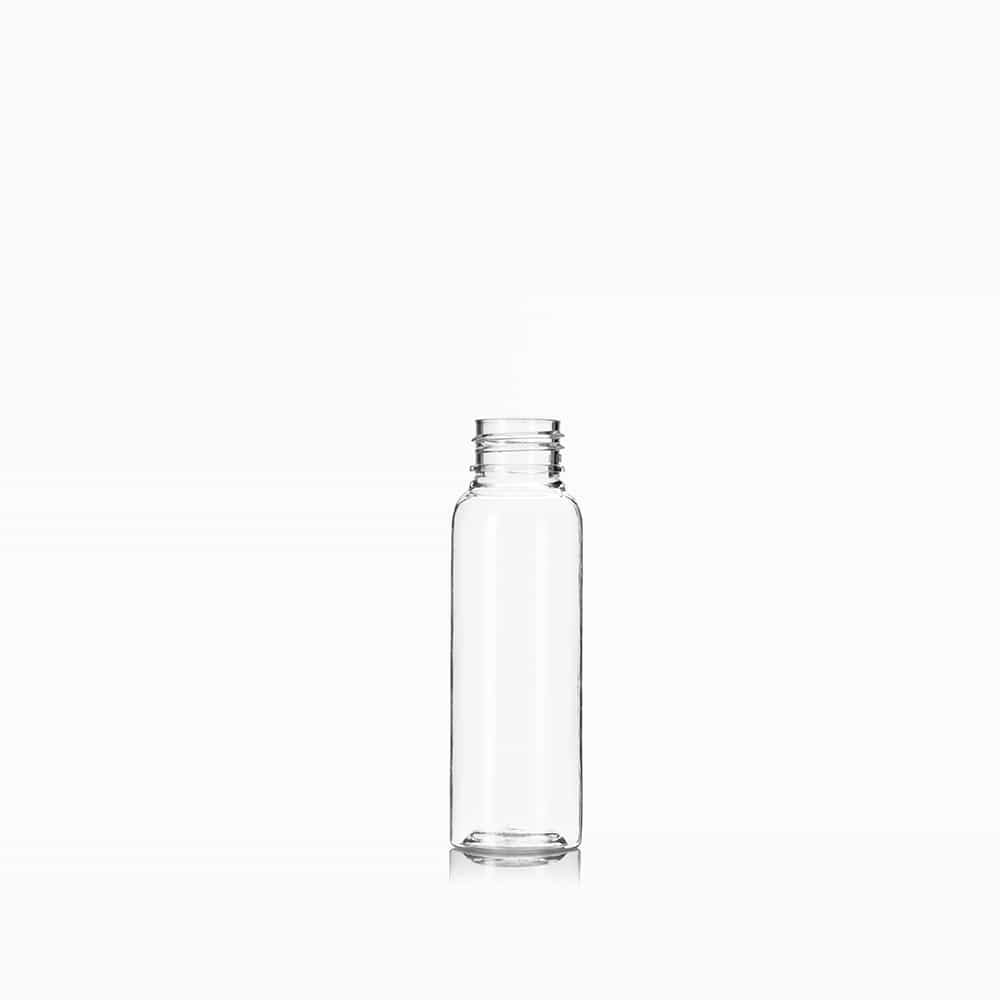
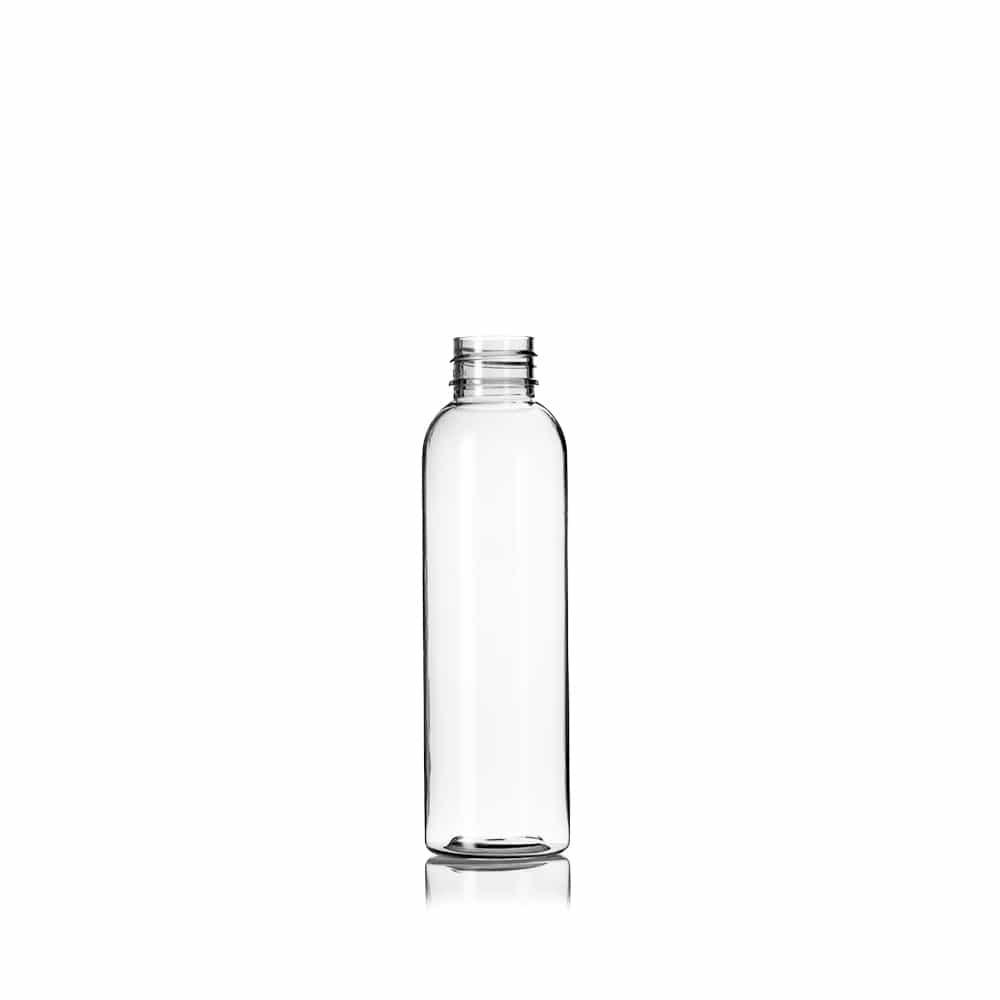
For shampoo, compare the pour opening or pump with the product's actual flow behavior. A bottle should be usable with wet hands and should dispense without excessive force or uncontrolled pouring. Browse shampoo bottle formats as candidates to test, not as a guarantee that every listed component suits every shampoo.
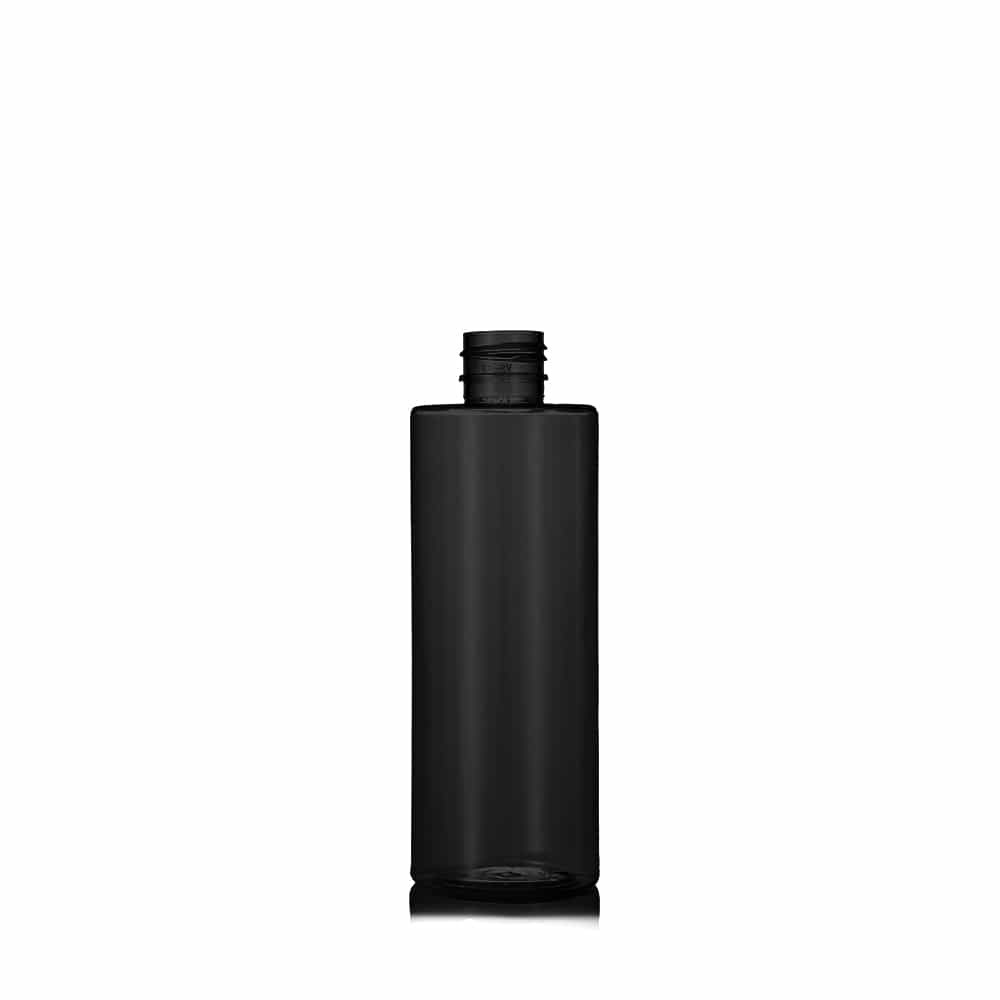
Conditioner often makes dispensing performance especially important. Evaluate pump priming, refill between strokes, dose consistency and access to the remaining product near the end of use. A squeezable format and a pump format may create different experiences even when both contain the same formula; conditioner bottle options need to be assessed with the filler's equipment as well.
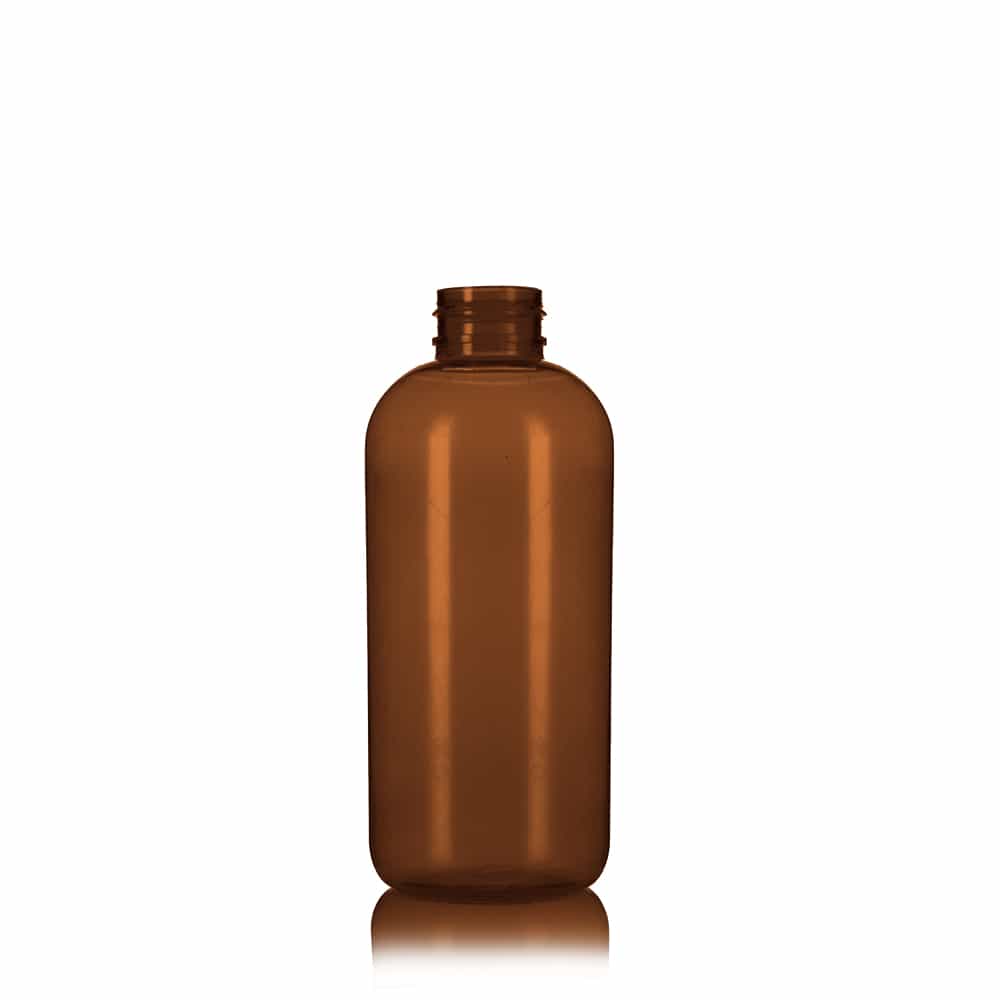
For hair-oil packaging, check controlled application, leakage and the complete closure assembly. Do not assume that all oils behave alike or that all amber packaging provides equivalent light protection. Where light sensitivity matters, obtain relevant package information and have the product's stability assessed in that package.
For non-aerosol hair sprays, evaluate the liquid through the intended sprayer. Check pattern changes, clogging, leakage and performance after repeated use. Aerosols, flammable formulations and other higher-risk products need a separate manufacturing and transport review; a general bottle guide is not sufficient.
Match the specified neck finish, such as 24-410, across the bottle and closure. Matching the designation is necessary but does not replace assembly testing. Confirm the seal, application settings and the selected pump output with actual filled samples.
Qualify the Formula, Bottle and Closure Together
Request packaging samples before buying a production quantity. Give the supplier the intended fill, dispensing requirements and relevant handling conditions without expecting the supplier to infer them from the word shampoo. The sample-testing guide explains how to turn an attractive sample into a practical evaluation.
Work with the formulator, manufacturer and an appropriately qualified laboratory or assessor to establish the test plan. Depending on the product, this may include stability, microbiological quality, preservative efficacy, packaging interaction, dispensing and distribution testing. Cosmetic safety substantiation is not the same as an automatic requirement that every product undergo an identical laboratory test battery.
The FDA's small-business cosmetics guidance places responsibility for product safety and proper labeling on the firms manufacturing or marketing cosmetics. The required evidence should be appropriate to the product. A natural positioning or a water-free formula is not a substitute for that assessment.
Test the actual final combination, including the formula, bottle, closure and decoration. Record changes in appearance, odor, viscosity, package dimensions, leakage and dispensing behavior against agreed acceptance criteria. Use qualified advice when selecting conditions and interpreting results rather than treating an improvised heat test as proof of a multi-year shelf life.
The chemical-compatibility guide provides background on package interaction. For a launch decision, obtain a product-specific assessment and documented acceptance criteria. Repeat the relevant review when a formulation, component, manufacturing process or intended use changes.
 Illustrative conditioner dispensing evaluation with cream texture, a hair tress and bottle-and-pump components.
Separate Cosmetic Claims From Drug Claims
In the United States, ordinary cosmetic products generally do not require FDA premarket approval, although applicable color-additive requirements remain. That does not mean products can be sold without safety evidence or correct labeling. The FDA's distinction between cosmetics and drugs turns on intended use, including claims.
A shampoo marketed for cleansing is different from one marketed to treat dandruff. Claims to regrow hair or treat a disease can bring a product under drug requirements. Depending on the product, the applicable route may involve an OTC monograph or an approved drug application; do not assume every therapeutic claim can be added to a cosmetic formula by changing the label.
Have claims reviewed across packaging, the website, advertising and instructions given to partners. Avoid writing a modest cosmetic claim on the bottle while making stronger treatment claims online. Keep evidence for performance claims and distinguish measured results from customer testimonials.
Under MoCRA, the responsible person has obligations that include maintaining adequate safety substantiation and reporting serious adverse events within 15 business days. Establish who performs these duties and how complaints are escalated. The reporting requirement for serious adverse events should not be confused with an instruction to submit every routine customer complaint as the same type of report.
The FDA's registration and product-listing guidance explains the respective facility and responsible-person obligations and limited small-business exemptions. Do not assume every brand owner operates a registrable facility, or that every small brand is exempt. Assess the business and product categories with qualified support; an exemption from particular provisions is not a blanket exemption from safety and labeling duties.
Approve the Label Before Ordering Production Artwork
Follow the FDA's cosmetic-labeling requirements for product identity, net quantity, business information, ingredient declaration and applicable warnings. Use the ingredient names and presentation required by the relevant rules. Do not assume that an ingredient supplier's marketing name can be copied onto the retail label.
Account for applicable MoCRA contact-information requirements so consumers can report adverse events. Have the finished label reviewed with the product's claims and intended market in view. Product listing or facility registration must not be presented as FDA approval of the cosmetic.
Test the artwork on the physical bottle. A shoulder taper, small label panel or curved surface can reduce usable space. Check legibility, barcode scanning, label adhesion and resistance to the water or oily handling conditions expected for that particular product.
For PCR packaging, make a precise statement about the component and recycled-content percentage that the supplier documentation supports. Recycled content, recyclability and formula compatibility are different claims. Do not describe the entire package as recyclable merely because the bottle contains recycled plastic.
Use the Pilot Run to Set Release Criteria
Agree the pilot quantity with the manufacturer and testing plan rather than treating a fixed unit count as an industry rule. The run should be large enough to evaluate the actual filling and closing process, package handling and relevant quality checks. Reserve sufficient samples for planned testing and retention.
Check filled weight or volume, headspace, closure application, label placement, dispensing and transport performance. Set acceptance criteria before reviewing results. An informal demonstration that one bottle did not leak is not a substitute for an agreed evaluation of the production combination.
Retain batch and component traceability records. Connect the finished-product batch to the relevant formula version, manufacturing records and packaging lots. That makes an investigation more useful if a later shipment shows a changed odor, a leaking closure or a dispensing problem.
Plan reorders around sales, remaining shelf life, supplier lead times and the cash needed for another run. Collect customer feedback on the experience as well as repeat purchasing. Expanding into conditioner, oil or spray should follow evidence that the first product and its operating process work, not merely the availability of matching bottles.
 Illustrative first-run hair-care assortment on a salon counter with sample packaging and styling tools.
Where Propacks Fits in a Hair Care Launch
Propacks supplies bottles and closures, including PCR options, with no minimum order quantity and US fulfillment from California. That makes it possible to compare packaging candidates and order smaller quantities while developing a first line. It does not remove the manufacturer's production minimum, testing requirements or the brand's regulatory responsibilities.
Bring the intended formula category, bottle size, dispensing requirements and proposed filling process to the packaging discussion. Confirm the actual component specifications and availability before approving a production order. Propacks is the packaging supplier in that process, not a substitute for a cosmetic formulator, qualified safety assessor or regulatory adviser.
Frequently asked questions
How much does it cost to start a hair product line?+
The cost depends on the manufacturing route, product quantity, development work, testing, packaging and launch channel. Obtain written quotes and separate one-time expenses from inventory and ongoing operations. The article's 500-unit example is an illustrative calculation, not a market price or minimum launch budget.
How do you start a hair care line?+
Define one customer and product, select a manufacturer or formulator, and build a complete budget. Qualify the actual formula and package together, substantiate safety and claims, review the label and applicable regulatory obligations, then approve a pilot before ordering a larger run.
Is selling hair products profitable?+
It can be, but a markup over manufacturing cost does not establish profitability. Calculate contribution after payment fees, fulfillment, shipping subsidies, returns and customer acquisition, then account for fixed overhead. Repeat purchasing and reliable production matter alongside the selling price.
How to start a cosmetic line with no money?+
You can research customers, test a business proposition and gather supplier quotes before making a large commitment. Producing and selling a safe, correctly labeled product still requires resources. No-MOQ packaging reduces one inventory constraint; it does not eliminate formulation, testing, filling or business costs.
Which is better, white label or private label?+
Suppliers use these terms differently, so compare the actual agreement. Ask whether the formula is shared, what customization is allowed, who owns any development, which testing is included and who handles changes. Choose the route that fits the product and budget rather than assuming one label guarantees exclusivity.

Written by
Queenie FongQueenie Fong is the founder of Propack Solutions, a woman-owned sustainable packaging company based in Ontario, CA. With nearly a decade of experience in the packaging industry, she specializes in post-consumer recycled (PCR) materials, helping brands source rPET, PCR HDPE, and PCR PP packaging that meets regulatory requirements and sustainability goals.