Tamper-Evident Packaging for Cosmetics: A Guide to Shrink Bands, Induction Seals, and Breakaway Caps


Why Tamper Evidence Matters for Cosmetics
Cosmetic brands face a dual packaging problem. They need to show a shopper that a product has not been opened before purchase, while also protecting the formula through filling, transit, and storage. A tamper-evident feature is evidence of access, not automatically proof that a package is leak-proof or that a formula is stable.
Selecting the right system means matching the closure, container material, formula, line speed, and sales channel. A serum in a dropper bottle has different failure modes from a cream in a wide-mouth jar. Start with the bottle and closure specification, then add the tamper-evident feature rather than treating it as decoration. ProPacks' bottle-and-closure guide is a useful first check for that base decision.
A tamper-resistant package uses an indicator or barrier that, if breached or missing, alerts a consumer to possible tampering. The federal cosmetics rule at 21 CFR 700.25 is narrower than many brands assume: it applies to liquid oral hygiene products and vaginal deodorants. It does not create a blanket requirement for every cosmetic.
The analysis changes when a product is also an over-the-counter drug. Products such as drug-acne treatments or sunscreens may fall under the OTC drug rules, where 21 CFR 211.132 sets tamper-evident packaging requirements for retail packages. Brands should have regulatory counsel confirm the product classification instead of copying a packaging convention from a competitor.
Tamper evidence is still commercially useful when it is not legally mandatory. A clearly intact feature can reduce customer anxiety, flag a fulfillment problem, and reinforce a disciplined quality process. It should sit alongside formula compatibility testing, correct closure torque, and a transit-tested shipper, not substitute for any of them.
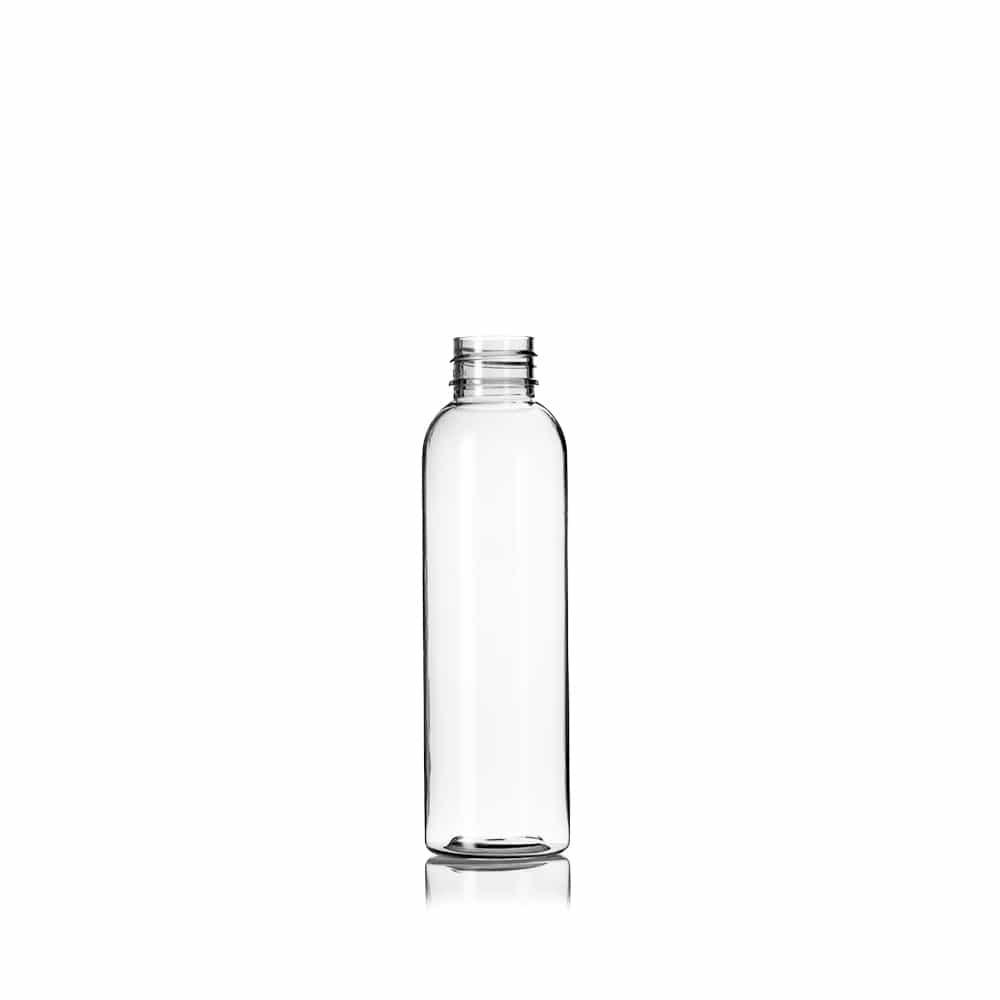
 Clear cosmetic pump bottle with a shrink band.
Shrink Bands: Flexible and Highly Visible
Shrink bands are perhaps the most common form of tamper-evident packaging in beauty. These sleeves of plastic film shrink around the cap and bottle neck when exposed to controlled heat. The consumer must tear or remove the band before opening the package, making a missing or damaged band easy to spot at retail.
Shrink bands work particularly well when the closure has an awkward geometry, including pumps, sprayers, and flip-top caps. Clear bands keep the package visually quiet; printed bands can carry a simple first-open instruction. Neither choice removes the need to specify the neck finish, cap dimensions, band layflat width, perforation, and film gauge together.
For small production runs, operators can apply bands by hand and shrink them with controlled heat. A production line needs a documented setup: tunnel temperature, airflow, conveyor speed, bottle orientation, and acceptable appearance standards. Test the same configuration after filling and capping, because a band that looks acceptable on an empty bottle can sit differently on the finished pack.
Qualification should include a shipment simulation and a consumer opening check. Look for loose bands, wrinkles over a tear tab, bands that slide off a hot bottle, and bands that are hard to remove without a tool. The Association of Plastic Recyclers publishes design guidance for improving plastics recycling; it is useful when reviewing band material, label coverage, and whether consumers can separate components.
 Cream jar with an intact foil induction seal.
Induction Seals: Strong Barrier, More Process Control
Induction sealing uses a foil liner under the cap of a jar or bottle. When the container passes under an induction sealer, the electromagnetic field heats the foil and bonds it to the rim. With the correct liner, bottle finish, torque, and settings, it can provide a strong barrier against leaks and product exposure before first opening.
Because the seal is applied directly to the opening, it can protect against leakage and unwanted exposure in ways an exterior shrink band cannot. Consumers also recognize a foil peel as an intact first-open signal. For creams, lotions, and other products that can leak through a loosened cap, that extra barrier can matter more than the visual signal alone.
Induction sealing requires equipment and liners that match the bottle material and finish. A PET bottle needs a liner engineered to bond to PET; a liner qualified for another substrate is not interchangeable. This decision belongs beside the liner specification in a cap-liner comparison, and it should be confirmed on filled production samples rather than an empty bottle alone.
Induction qualification is a process study, not a one-time visual check. Record the liner construction, bottle resin and finish, applied cap torque, coil height, line speed, and power setting. Then inspect seal coverage, opening behavior, leakage, and any deformation after the package has cooled.
An induction liner can provide a strong first-open barrier, but “induction sealed” does not automatically mean every pack is hermetic or formula compatible. The formula, headspace, bottle finish, liner chemistry, and distribution temperature all matter. A supplier setting sheet is a starting point; filled-pack testing is the release evidence.
Compared with a shrink band, induction sealing adds more equipment and material matching work but protects the actual opening rather than just signaling that a cap was accessed. That often makes it the stronger choice for creams, lotions, oils, or formulas with a meaningful leak and exposure risk.
 Cosmetic bottle with a breakaway cap ring.
Breakaway Caps: Built Into the Closure
Breakaway caps, often called tamper-evident closures, use a pre-scored ring at the cap base. When the consumer twists the cap open for the first time, the ring separates and remains on the bottle neck. The broken bridge is immediate mechanical evidence that the closure has been opened.
A breakaway closure removes a separate band application step and gives a clean first-open signal. It is useful for screw-cap bottles and some flip-top closures, provided the cap supplier offers the feature for the chosen neck finish. It does not add a secondary seal over the bottle opening, so it is not a substitute for an induction liner where leakage control is the main risk.
The practical specification is the bridge performance at the actual capping torque. The ring needs to survive capping, packing, and distribution without separating, then break predictably when a consumer opens the cap. ProPacks' closure-torque guide explains why that setting also affects leaks, opening force, and closure performance.
Review a filled sample, not only a cap sample. Check whether the ring stays attached during application, whether the cap has enough grip, and whether the opened package gives an unambiguous visual signal. Those tests are especially important when a brand changes cap suppliers, bottle molds, or capping equipment.
Choosing the Right System for the Line
Choosing the right system starts with the failure you need to prevent. Shrink bands are a visible, adaptable choice for pumps, sprayers, and varied bottle shapes. Induction seals are worth considering where leakage and first-open barrier performance matter. Breakaway caps remove a secondary application step, but do not replace an induction liner when the formula or distribution path needs a stronger seal.
Operational throughput is a major factor in the selection process for cosmetic manufacturers. High-volume production lines require automated solutions that can keep pace with filling and labeling equipment. Manual labor for applying shrink bands is often the first process to be automated as a brand grows. Induction sealers are typically integrated directly into the conveyor system, allowing for seamless operation without manual intervention.
Cost analysis should extend beyond the equipment quote. Include film or liner consumption, changeover time, labor, scrap from failed application, and the cost of a customer-facing leak or damaged seal. A packaging-quote review is where these line items should become visible, before the brand locks a design.
Sustainability, Testing, and First Orders
Sustainability is a real consideration, but it should not be reduced to “no shrink band equals sustainable.” Shrink bands add material and may complicate sorting. A breakaway cap avoids a separate sleeve, while an induction liner adds another component. The right decision depends on the primary package, the local recycling system, and whether the added feature prevents product loss or a damaged shipment.
The Ellen MacArthur Foundation advocates packaging systems that eliminate unnecessary material and improve circulation. If a shrink band is necessary, document its material and removal instructions in the packaging specification. Brands that are also weighing recycled resin can use ProPacks' PCR percentage guide to keep that decision separate from the tamper-evidence choice.
Brands also need to test the consumer experience. A seal that is difficult to remove creates frustration; a seal that opens or breaks too easily fails its basic job. Confirm the filled-pack spec with representative samples, document cap torque and induction settings, then test transit performance with the final bottle, closure, formula, and shipper. A sample-testing workflow is much cheaper than discovering a weak point after a launch.
Inspect that final configuration after distribution testing, too. The International Safe Transit Association provides resources and test procedures for transport packaging; a qualified lab can help select a test protocol appropriate to the distribution environment. For formula-sensitive products, pair it with the chemical compatibility testing guide so a mechanically intact package does not mask a material or formulation issue.
Digital authentication can complement a physical feature, but it does not replace a closure that survives real shipping conditions. The release package should be the final filled bottle, closure, formula, label, and shipper combination that will reach the customer.
Frequently asked questions
Are shrink bands required by law for all cosmetic products?+
Tamper-resistant packaging is not federally required for every cosmetic. The specific cosmetics rule covers liquid oral hygiene products and vaginal deodorants. If a product is also classified as an over-the-counter drug, such as certain sunscreens or acne treatments, the OTC drug packaging rule may apply; confirm the classification and applicable requirement before production.
What is the difference between shrink bands and induction seals?+
Shrink bands are plastic sleeves applied to the exterior of a cap and bottle neck that must be torn to open the container. Induction seals are foil liners heat-sealed directly to the bottle opening, providing a primary barrier that prevents leakage and oxidation before the cap is removed.
Can I apply tamper-evident shrink bands without an automated machine?+
Yes, for small production runs or indie brands, shrink bands can be applied manually using a handheld heat gun. As your brand scales, you may want to transition to an automated shrink tunnel to ensure consistent, professional-looking results across larger volumes.
Can I use shrink bands on pump and sprayer bottles?+
Yes, shrink bands are highly versatile and are commonly used on various closures, including pumps, sprayers, and flip-top caps. They provide a secure, professional finish that signals to the consumer that the dispensing mechanism has not been compromised.

Written by
Queenie FongQueenie Fong is the founder of Propack Solutions, a woman-owned sustainable packaging company based in Ontario, CA. With nearly a decade of experience in the packaging industry, she specializes in post-consumer recycled (PCR) materials, helping brands source rPET, PCR HDPE, and PCR PP packaging that meets regulatory requirements and sustainability goals.