Is PET Plastic Safe for Skincare? What Brands Need to Know About Material Safety and Compatibility


PET plastic is the most widely used packaging material in beauty and personal care, but "is it safe?" is the question that keeps showing up in every founder's DMs, Reddit threads, and supplier calls. The short answer is yes: PET is one of the safest plastics available for skincare packaging. The longer answer involves understanding what PET actually is at the molecular level, what the regulatory agencies say, where the real risks lie, and how PET compares to HDPE and glass for specific formula types. This guide covers all of it so you can make the right material decision before your first production run.
What Is PET Plastic and Why Is It Used for Skincare Bottles?
PET stands for polyethylene terephthalate. It is a thermoplastic polymer made by polymerizing ethylene glycol with terephthalic acid, creating a long chain of repeating ester linkages. Those ester bonds are what give PET its clarity, rigidity, and chemical profile. If you have ever held a clear plastic water bottle, that is PET.
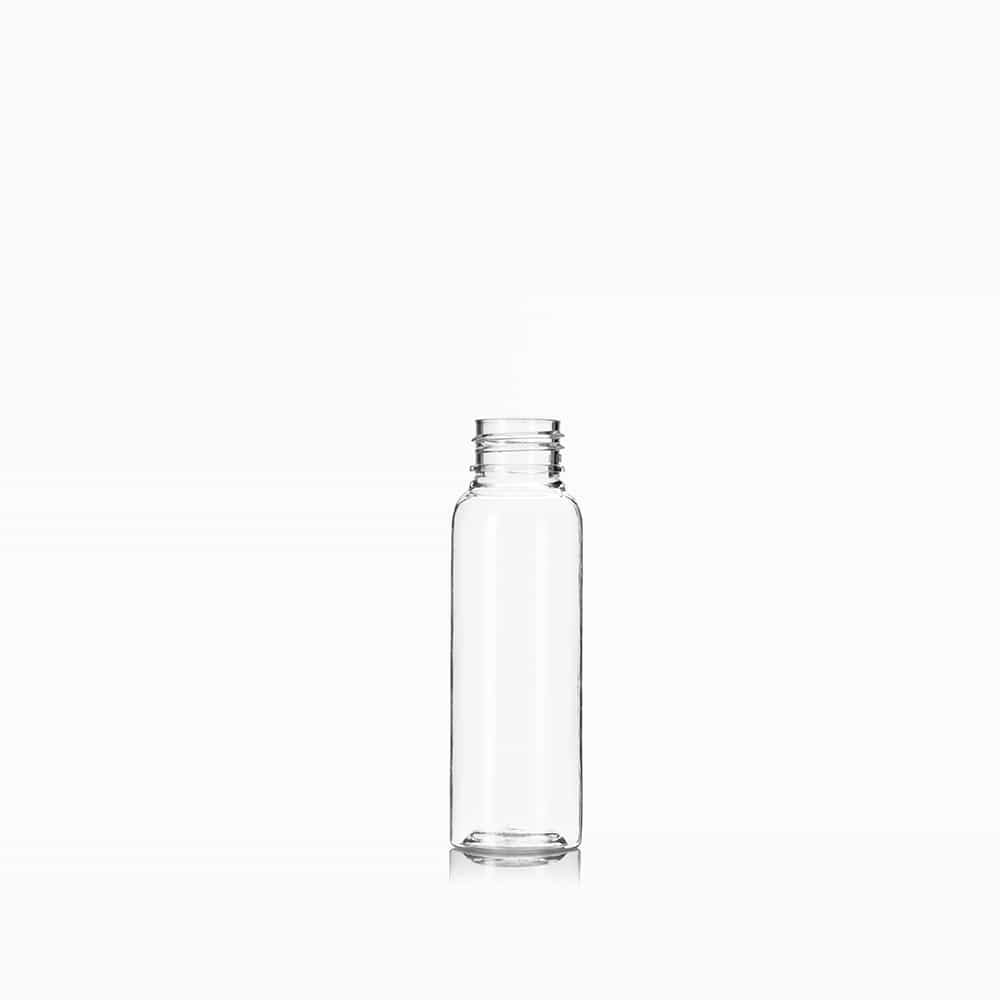
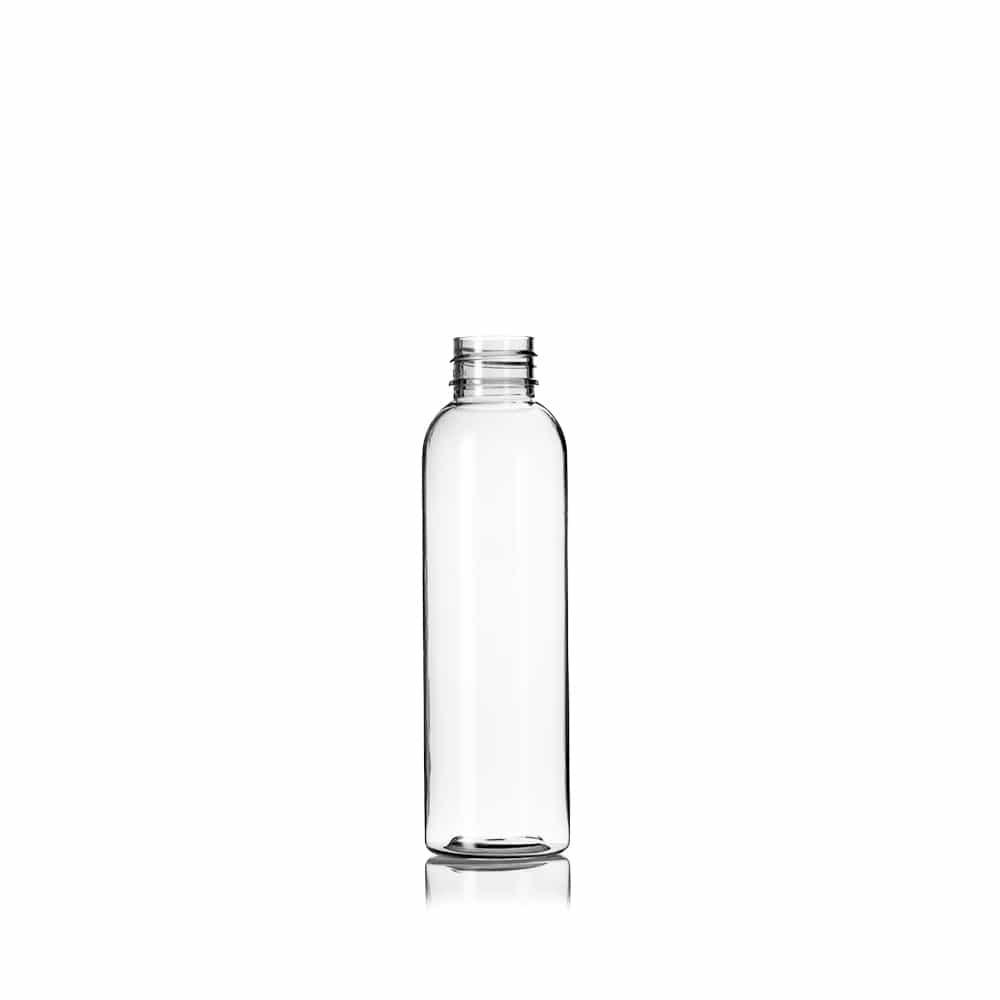
In the packaging world, PET dominates for three reasons. First, it has exceptional optical clarity. PET bottles transmit over 85% of visible light, which is why premium skincare brands choose it when they want customers to see the product inside. Second, it has a high strength to weight ratio. A PET bottle weighs 80% to 90% less than the equivalent glass container, which directly reduces shipping costs and carbon footprint. Third, PET has good barrier properties against moisture and gases, which helps protect formula stability during shelf life.
For a full breakdown of how PET compares to HDPE and PP in terms of mechanical properties, chemical resistance, recyclability, and cost, see our PET, PP, and HDPE material guide. That article covers the engineering side. This article focuses on the safety side specifically for skincare formulations.
Is PET Plastic BPA Free?
Yes. PET does not contain bisphenol A (BPA) and never has. This is probably the most common misconception about plastic packaging safety, so it is worth explaining clearly.
BPA is a monomer used to make polycarbonate plastic (recycling code #7) and epoxy resin linings. It is an endocrine disruptor that mimics estrogen, and it has been banned from baby bottles and infant formula packaging in the US since 2012. The concern is legitimate, but it has nothing to do with PET.
PET is made from entirely different monomers: ethylene glycol and terephthalic acid. Neither is BPA. The polymerization process for PET does not involve BPA at any stage. There is no BPA in PET resin, PET bottles, PET preforms, or any PET packaging product.
The confusion comes from the general "plastic = BPA" assumption that spread through consumer media in the late 2000s. Every PET bottle from Propacks is BPA free, and this applies to virgin PET, recycled PET (rPET), and PCR PET alike. If BPA safety is a concern you need to communicate to customers, see our label compliance checklist for guidelines on what claims you can and cannot make on packaging.
What Do the FDA and EU Say About PET Safety?
PET has one of the strongest regulatory safety profiles of any packaging material in commercial use.
FDA (United States). The FDA regulates food contact materials under 21 CFR 177. PET is approved for food contact under 21 CFR 177.1630 with specific extraction limits: chloroform soluble extractives must stay below 0.5 mg per square inch of food contacting surface. This is one of the strictest extraction limits in the entire CFR. For cosmetics, the FDA requires under the FD&C Act that packaging must not adulterate the product, but does not set specific migration limits for cosmetic containers. In practice, cosmetic brands that use FDA food contact compliant PET are exceeding the regulatory minimum for their category.
EU (European Union). The EU Regulation 10/2011 on plastic food contact materials sets an Overall Migration Limit (OML) of 10 mg per square decimeter of surface area for all food contact plastics, plus Specific Migration Limits (SMLs) for individual substances. For PET, the key SMLs include: acetaldehyde at 6 mg/kg of food, terephthalic acid at 7.5 mg/kg, isophthalic acid at 5 mg/kg, and ethylene glycol at 30 mg/kg. PET routinely passes these limits by wide margins. The EU Cosmetics Regulation 1223/2009 requires the Cosmetic Product Safety Report to address packaging material interactions but does not set its own migration limits, deferring to the food contact framework as the implicit safety benchmark.
EFSA (European Food Safety Authority). EFSA has reviewed PET multiple times and consistently concluded that it does not pose a safety concern for consumers at normal use conditions. Their most recent opinions confirm that migration levels from PET packaging are well below the established safety thresholds.
The bottom line: PET is approved for direct food contact by both the FDA and the EU, which means it has already passed safety standards far stricter than anything required for cosmetic packaging. If PET is safe enough to hold drinking water, orange juice, and salad dressing, it is safe for your serum.
What About Antimony in PET?
This is the one legitimate question mark in PET's safety profile, and it deserves an honest answer.
Antimony trioxide (Sb₂O₃) is the most common catalyst used in PET polymerization. It is present in finished PET resin at concentrations of approximately 200 to 300 parts per million (ppm). Antimony compounds are classified as possibly carcinogenic to humans by IARC (Group 2B) via inhalation, though the oral toxicity profile is much less concerning.
The key question is whether antimony migrates out of PET and into the product at levels that matter. The research is extensive:
Studies consistently show that antimony migration from PET into water at room temperature ranges from 0.1 to 0.6 micrograms per liter (µg/L), which is well below the EPA drinking water standard of 6 µg/L and far below the EU limit of 5 µg/L for drinking water (40 µg/L for food contact under EU 10/2011).
At elevated temperatures, antimony migration increases. At 60°C, levels can reach 1 to 2 µg/L. At 80°C, they can reach 3 to 5 µg/L. This is why PET bottles should not be used for hot fill applications without specific testing, and it is one reason hot filled products typically use PP or glass.
For skincare products stored at room temperature, antimony migration is negligible. The EU's SML for antimony in food contact PET is 40 µg/kg, and real world migration levels in room temperature applications are typically one to two orders of magnitude below that threshold. No regulatory body has identified antimony migration from PET at normal storage conditions as a health concern.
If you want to eliminate antimony entirely, some PET manufacturers now offer titanium catalyzed PET or germanium catalyzed PET, but these grades cost more and are not widely available for the standard bottle sizes most beauty brands order. For the vast majority of skincare applications, standard antimony catalyzed PET at room temperature storage presents no meaningful safety risk.
Is PET Safe for Specific Skincare Ingredients?
PET's general safety profile is strong, but compatibility depends on what you are putting inside the bottle. This is where the distinction between "is the plastic safe?" and "is the plastic right for my formula?" matters. These are two different questions. Safety is about whether the plastic leaches harmful chemicals into your product. Compatibility is about whether your formula degrades the plastic or whether the plastic absorbs or alters your formula.
Water based formulas (cleansers, toners, essences). PET is excellent for water based formulations between pH 4.0 and 8.0. No meaningful interaction, no degradation, no migration concerns. This is PET's sweet spot.
Hyaluronic acid serums. Fully compatible. Hyaluronic acid is a polysaccharide that has no chemical interaction with PET's ester bonds. The high water content of these formulas makes PET an ideal choice, and the clarity of PET bottles lets customers see the product texture.
Vitamin C (ascorbic acid) serums. Compatible with caveats. L-ascorbic acid serums are acidic (typically pH 2.5 to 3.5), which is at the lower edge of PET's comfortable range. At these pH levels, PET does not degrade significantly over a 12 to 24 month shelf life at room temperature. However, the bigger concern with vitamin C is oxidation and light sensitivity, not container compatibility. PET transmits UV light, which accelerates vitamin C degradation. This is why many vitamin C serums use amber or opaque colored bottles rather than clear PET. Airless pump systems also help by reducing oxygen exposure.
Niacinamide (vitamin B3). Fully compatible with PET at concentrations up to 10%, which covers the vast majority of niacinamide serums on the market.
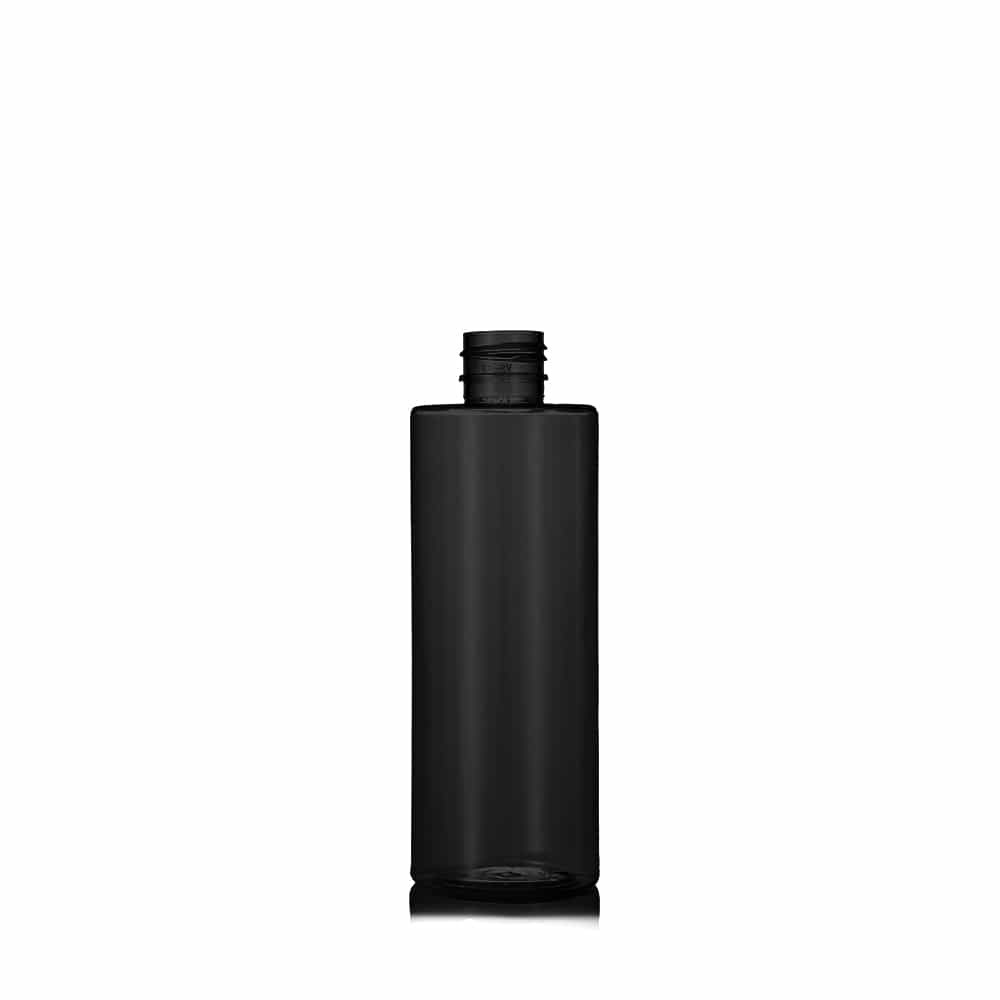
Retinol and retinoid products. Compatible with PET chemically, but retinoids are extremely light sensitive and oxygen sensitive. Clear PET is a poor choice for retinol products unless you are using an opaque bottle or an airless pump system. Amber PET or opaque HDPE are better options for light protection.
AHA/BHA exfoliants (glycolic acid, salicylic acid, lactic acid). Compatible at typical cosmetic concentrations (up to about 10% glycolic acid, up to 2% salicylic acid). These acids are well within PET's pH tolerance range. Professional strength glycolic peels at 30% and above push the pH low enough to warrant compatibility testing.
Essential oil heavy formulas. This is where PET can struggle. Essential oils contain terpenes and aromatic compounds that can act as solvents against PET, causing crazing, hazing, and absorption. d-Limonene (the primary component in citrus oils) is particularly problematic. At concentrations above 1%, you should test. Above 5%, switch to HDPE or glass. Our chemical compatibility testing guide covers this in detail with specific test protocols.
Products with triethanolamine or high amine content. Amines attack PET through aminolysis, breaking the ester bonds in the polymer backbone. Triethanolamine above 5% and monoethanolamine above 3% are specifically dangerous for PET. If your formula uses amine based pH adjusters at high concentrations, HDPE is the safer choice.
Sunscreens. Most chemical sunscreen active ingredients (avobenzone, octinoxate, homosalate) are compatible with PET at typical concentrations. Mineral sunscreens (zinc oxide, titanium dioxide) are inorganic particles that do not interact with the polymer. The main concern with sunscreen packaging is wall thickness and UV protection for photosensitive actives, not material safety.
PET vs HDPE for Skincare: Which Is Safer?
Both PET and HDPE are safe for skincare packaging. Neither poses a health risk at normal storage conditions. The question is not which is "safer" but which is more appropriate for a given formula type.
PET wins when you need clarity (customers can see the product), UV protection is not critical (or you are using a colored PET), and your formula is water based with a pH between 4.0 and 8.0. PET also has a better oxygen barrier than HDPE, which matters for oxidation sensitive actives.
HDPE wins when your formula contains surfactants at concentrations above 5% (shampoo, body wash, liquid soap), essential oils above 1%, strong bases above pH 10, or amine based ingredients above 3%. HDPE's all carbon backbone makes it immune to the hydrolysis and aminolysis reactions that can attack PET. However, HDPE is susceptible to environmental stress cracking (ESC) from surfactants, which is its own compatibility concern. See our guide to choosing PCR packaging for hand soap and body wash for specific HDPE considerations with high surfactant formulas.
For the full side by side comparison across eight criteria including barrier properties, cost, sustainability, and recyclability, our bottle material selection guide walks through the complete decision framework. And if you are specifically comparing PET to glass for premium positioning, the glass vs plastic guide covers the cost, weight, breakage, and perception tradeoffs.
Is Recycled PET (rPET) as Safe as Virgin PET?
Yes, with appropriate processing and certification. Recycled PET, also called rPET or PCR PET, goes through a decontamination process during recycling that removes residual chemicals from its previous use. The FDA evaluates recycling processes through its no objection letter system for food contact recycled plastics, and multiple rPET recycling processes have received FDA clearance for food contact use.
The EFSA evaluates PET recycling processes for food contact in the EU under Regulation 2022/1616, which requires demonstration that the recycling process reduces contaminant levels to below safety thresholds established through challenge testing.
For cosmetic packaging, rPET offers the same safety profile as virgin PET for water based formulas at room temperature. The molecular structure is identical; recycling does not change the fundamental chemistry. What recycling can do is slightly reduce the molecular weight (measured as intrinsic viscosity), which can marginally affect mechanical properties like drop resistance, but does not change the chemical safety profile.
Our rPET bottles explained article covers the material science in depth. For brands evaluating the PCR supply chain, our guide to how PCR plastic is made walks through the full process from curbside collection to finished bottle, and how to verify recycled content certifications explains what GRS, SCS, and ISCC PLUS certificates actually prove.
At Propacks, PCR PET bottles carry the same pricing as virgin PET because we believe sustainability should not come with a surcharge. Browse our PCR bottle catalog to see what is available.
Does PET Leach Chemicals Into Skincare Products?
Under normal storage conditions (room temperature, no direct sunlight, no hot fill), PET does not leach chemicals into skincare products at levels that are detectable through standard analytical methods or that approach any regulatory safety threshold.
The chemicals most commonly measured in PET migration studies are:
Acetaldehyde. A byproduct of PET thermal degradation during processing. Present in finished PET bottles at low ppm levels. Migrates into water at 1 to 5 µg/L at room temperature, far below taste threshold (20 to 40 µg/L) and orders of magnitude below any safety concern. The EU SML is 6 mg/kg, and real world levels are typically 100 to 1,000 times lower.
Antimony. Discussed above. Migration at room temperature is 0.1 to 0.6 µg/L, well below the EPA limit of 6 µg/L for drinking water.
Formaldehyde. Can form in PET at very low levels during thermal processing. Migration levels at room temperature are typically below 10 µg/L, which is below the WHO guideline of 900 µg/L for drinking water.
Phthalates. PET does not contain phthalate plasticizers. Phthalates are used in PVC (vinyl) and some other flexible plastics, not PET. Any trace phthalates detected in PET migration studies are typically attributed to environmental contamination during sample handling, not the PET itself. The recycling code on PET bottles is #1. Phthalate containing PVC is recycling code #3. They are entirely different polymers. Understanding what recycling codes mean can help you communicate material safety to customers who confuse different plastic types.
Microplastics. This is an emerging research area. Studies have detected microplastic particles in bottled water, including water in PET bottles. However, the source of these particles is debated (processing environment, cap material, filtration equipment versus the PET itself), and no regulatory agency has established safety thresholds for microplastic ingestion. For skincare applied topically, the dermal exposure pathway presents a fundamentally different risk profile than oral ingestion, and no safety concern has been established for microplastics in cosmetic packaging.
The bottom line: if you store PET bottles at room temperature and out of direct sunlight, chemical migration is not a practical concern for skincare products.
How Does Temperature Affect PET Safety?
Temperature is the single biggest variable that changes PET's behavior. At room temperature, PET is essentially inert for skincare packaging. As temperature rises, everything accelerates: migration rates, degradation rates, and the potential for interactions with formula ingredients.
Below 40°C (104°F). Normal storage conditions. PET performs as designed. No meaningful migration, no degradation, no concerns for skincare packaging.
40°C to 50°C (104°F to 122°F). Accelerated aging territory. Products stored in this range during warehousing or shipping (summer warehouses, container shipping through equatorial routes, delivery trucks) will experience slightly elevated migration rates, but still well below safety thresholds. This is the standard accelerated aging condition used in stability testing per ICH Q1A guidelines. If your packaging passes 3 months at 40°C, it validates approximately 2 years of room temperature shelf life. Our chemical compatibility testing guide walks through the full testing protocol.
50°C to 60°C (122°F to 140°F). Used for screening tests. Migration rates increase significantly. This is not a normal storage condition, but it simulates worst case scenarios and catches incompatibilities faster.
Above 60°C (140°F). Not recommended for standard PET bottles without specific testing. PET's glass transition temperature (Tg) is approximately 70°C to 80°C, and approaching Tg causes softening, dimensional instability, and dramatically increased migration. Hot fill applications require heat set PET (crystallized PET) or alternative materials like PP.
For brands shipping through fulfillment networks, the practical concern is not average warehouse temperature but peak temperature spikes during summer transport. A container sitting on a dock in Phoenix in August can reach internal temperatures above 60°C. This is where packaging lead time planning matters: timing production to avoid summer shipping through extreme heat corridors reduces exposure risk.
How to Test PET Compatibility With Your Formula
If you are launching a new product or switching from one packaging material to another, testing is not optional. It is cheap insurance. Here is the practical process:
Step 1: Order samples. Get actual production bottles in the PET grade you plan to use. At Propacks, you can request samples with no minimum order and no shipping fee. Get at least 5 to 10 identical bottles so you have enough for testing plus controls.
Step 2: Fill with your finished formula. Use your actual product, not a stand in. The specific combination of ingredients, pH, preservatives, and fragrance is what determines compatibility. Seal with your actual closure at normal application torque.
Step 3: Run the 14 day screen. Store filled bottles at 50°C for 14 days. This is your go or no go gate. Check daily for visual changes: cracking, cloudiness, warping, color shifts in either the product or the bottle, odor changes, leaking. Any visible failure at this stage means PET is not compatible with your formula.
Step 4: Evaluate results. Compare test bottles against a control bottle stored at room temperature. Look for weight change (more than 2% indicates permeation or absorption), pH change in the formula (more than 0.5 units indicates interaction), dimensional change in the bottle (more than 1%), and any visual or olfactory differences. Knowing what bottle defects look like helps you distinguish a compatibility failure from a manufacturing defect that was there before filling.
Step 5: Extended aging (if screening passes). Run accelerated aging at 40°C and 75% relative humidity for 3 months, testing monthly. This validates approximately 2 years of room temperature shelf life. If you are selling through channels that require stability data, you also need real time aging at 25°C for 12 months minimum.
If you find that PET is not compatible with your formula, the most common alternatives are HDPE (better chemical resistance for surfactants and moderate essential oil content), PP (better heat resistance), or glass (best chemical resistance overall but heavier, more expensive, and breakable). Our bottle and closure matching guide can help you narrow down the right combination.
What About UV Protection and PET?
Clear PET transmits UV light, which is a problem for light sensitive actives but not a material safety issue. UV exposure does not make PET unsafe. It can, however, accelerate degradation of your formula.
Ingredients that are UV sensitive and need protection from light include: retinol, vitamin C (L-ascorbic acid), alpha arbutin, certain essential oils, and some preservative systems. For these formulas, you have three options:
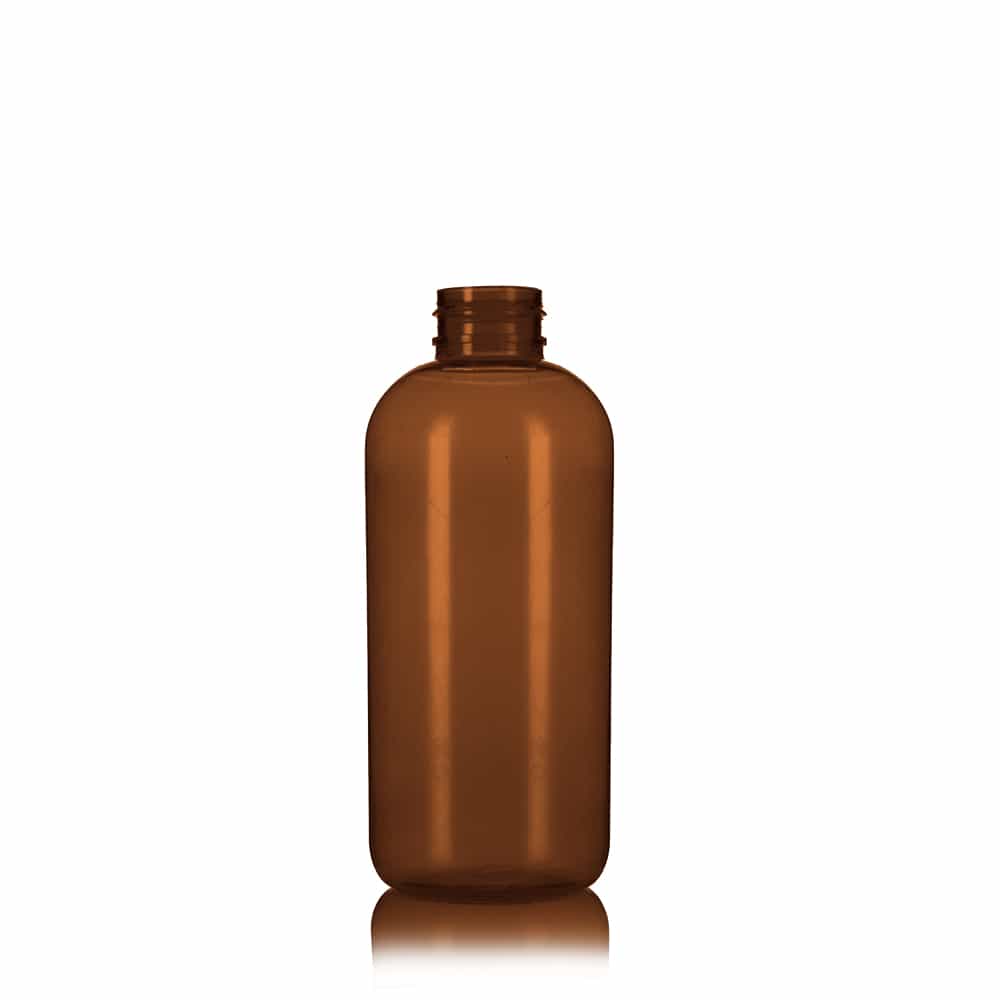
Option 1: Colored PET. Amber PET blocks over 99% of UV below 450nm. Green and cobalt blue PET also provide significant UV protection. Choosing the right bottle color based on your formula's light sensitivity is one of the simplest ways to protect product stability without changing materials.
Option 2: Opaque or shrink sleeved packaging. Full coverage labels or shrink sleeves provide complete light blocking regardless of bottle material. This is common for premium brands that want a specific visual identity.
Option 3: Secondary packaging. Cartons and boxes block light during storage and shipping. If your PET bottle is only exposed to light on the retail shelf for a few weeks, and the formula has a short use life after opening, secondary packaging may be sufficient.
UV protection is a formula stability issue, not a packaging safety issue. PET does not become toxic or unsafe when exposed to UV light at room temperature. It simply does not protect UV sensitive formulas the way colored or opaque containers do.
Sustainability and Safety: PET's Recycling Advantage
PET's safety profile extends beyond the product it holds. PET is the most widely recycled plastic globally, with recycling code #1. Unlike some other plastics that degrade in quality through recycling, PET can be mechanically recycled into high quality rPET that meets food contact safety standards.
This matters for brands that care about environmental impact without compromising product safety. Using PCR PET gives you the same material safety as virgin PET while reducing your brand's virgin plastic consumption. For brands selling in California, SB 54 is mandating minimum recycled content percentages that make PET's recyclability a compliance advantage, not just a marketing one.
PET is also mono material compatible when paired with PET closures and PET labels, which maximizes recyclability and simplifies compliance with extended producer responsibility (EPR) regulations.
If you are considering a transition to recycled PET, our guide on how to transition to rPET bottles under SB 54 covers the regulatory timeline, sourcing considerations, and practical steps. And for brands who want to verify that their PCR percentage claims are real, our guide on choosing the right PCR percentage explains the tradeoffs between 25%, 50%, and 100% PCR content.
Frequently asked questions
Is PET #1 plastic safe for skincare?+
Yes. PET (recycling code #1) is FDA approved for food contact, BPA free, phthalate free, and does not leach harmful chemicals at room temperature storage conditions. It is one of the safest plastics available for skincare packaging.
Does PET contain phthalates?+
No. PET does not contain phthalate plasticizers. Phthalates are found in PVC (recycling code #3), not PET. The two are entirely different polymers with different chemical structures.
Can PET bottles be used for organic skincare?+
Yes. PET does not interact with or contaminate organic skincare formulations at normal storage conditions. Organic certification bodies (USDA Organic, COSMOS, Ecocert) do not prohibit PET packaging. The organic certification applies to the formula ingredients, not the container material.
Is PET safe for baby skincare products?+
Yes. PET is BPA free and is approved for food contact by the FDA, including baby food applications. For baby skincare products, PET at room temperature storage presents no safety concerns. The CPSC does not restrict PET packaging for children's products.
How long can skincare products stay in PET bottles?+
PET is stable for 2 to 3 year shelf lives at room temperature for water based skincare formulas between pH 4.0 and 8.0. The limiting factor is usually the formula's own stability (preservative effectiveness, active ingredient degradation), not the container. Run compatibility testing to confirm your specific product's shelf life in PET.
Is PET safer than glass for skincare?+
PET and glass are both safe for skincare packaging. Glass has the advantage of being essentially inert to all formula types. PET has the advantage of being shatterproof, lighter weight, and cheaper to ship. For most water based skincare formulas, there is no safety difference between PET and glass. For essential oil heavy formulas above 5%, glass provides better chemical resistance.
Does freezing damage PET bottles?+
PET bottles can withstand freezing temperatures without becoming brittle or releasing chemicals. PET becomes more rigid below 0°C but does not crack under normal conditions. The concern with freezing is the expansion of water based product inside the bottle, which can deform or crack the container if filled above 95% capacity without headspace.
What is the difference between PET and PETE?+
They are the same thing. PETE (polyethylene terephthalate ethylene) is an older abbreviation that appears on some recycling symbols. PET is the standard abbreviation used by the resin industry, ASTM, and ISO. Both refer to recycling code #1 polyester plastic.
Should I use PET or HDPE for shampoo bottles?+
HDPE is generally preferred for shampoo because shampoo formulas contain high concentrations of surfactants that can cause environmental stress cracking in some containers. While PET is chemically resistant to surfactants (ester bonds are not attacked by SLS or SLES), HDPE's opacity provides better UV protection for color treated and dyed formulas. For light, clear shampoos without high surfactant loads, PET can work. For standard shampoo and conditioner formulas, see our guide to choosing PCR packaging for hand soap, body wash, and liquid cleaners which covers the HDPE considerations in detail.
Are PET bottles safe in hot weather?+
PET bottles stored at temperatures below 40°C (104°F) present no safety concerns. In hot warehouses or summer shipping, internal temperatures can exceed this, but short duration exposure to 40°C to 50°C does not cause meaningful migration. Extended storage above 60°C (140°F) is not recommended for standard PET. If your supply chain involves hot climate storage, plan your packaging lead times to minimize summer transit exposure.

Written by
Queenie FongQueenie Fong is the founder of Propack Solutions, a woman-owned sustainable packaging company based in Ontario, CA. With nearly a decade of experience in the packaging industry, she specializes in post-consumer recycled (PCR) materials, helping brands source rPET, PCR HDPE, and PCR PP packaging that meets regulatory requirements and sustainability goals.